Gianni Agnelli: Fiat, flair and the fine art of living

Few men have managed to inhabit the worlds of industry, politics and style with the sprightlier of Gianni Agnelli -- accomplished with an insouciant flourish.
Industrialist, aristocrat of taste, notorious playboy and master of effortless style, Gianni Agnelli turned business leadership into a spectacle of glamour.

As the living emblem of Fiat, he shaped modern Italian industry while simultaneously becoming the most dazzling symbol of the country’s post-war prosperity -- a man whose boardroom authority, Riviera romances, aristocratic friendships and impeccable elegance embodied the seductive spirit of La Dolce Vita.
Inheritance of industry
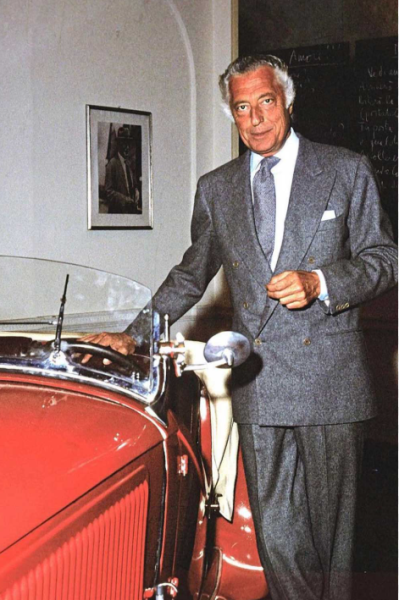
Giovanni Agnelli was born in Turin on 12 March 1921 into one of Europe’s most powerful industrial families.
His grandfather, Giovanni Agnelli, had founded Fiat in 1899, planting the seeds of what would become Italy’s industrial backbone.
The young Gianni grew up surrounded by wealth, influence and expectation. But history interrupted privilege.
During the Second World War, he served as an officer in the Italian cavalry, fighting on both the Russian and North African fronts. The war gave him something rare among heirs -- experience beyond salons and boardrooms.
When his father died in 1935, the burden of the dynasty began slowly shifting toward him. Yet it was only in 1966 that Agnelli formally became president of Fiat, inheriting not only a corporation but the economic heartbeat of Italy.
By the time he formally assumed leadership of Fiat, Italy had entered its economic miracle. Agnelli became both its architect and its most glamorous symbol.
Under Agnelli’s suave stewardship and pococurante charm Fiat became the engine of Italy’s postwar transformation.
Factories in Turin swelled with workers arriving from Italy’s poorer south. Roads filled with Fiat models that seemed to embody optimism, speed and the possibility of prosperity.
Fiat, under Agnelli, dominated European automobile production and employed hundreds of thousands. It expanded into engineering, aviation, publishing and finance.
Cars such as the Fiat 500 and Fiat 124 became symbols of Italy’s post-war modernisation, allowing ordinary families to join the mobility revolution sweeping across the continent.
Agnelli understood that industrial leadership required political fluency. He navigated labour unrest, the ideological turbulence of the Cold War and the complexities of Italian coalition politics with quiet authority.
For decades, Fiat’s fortunes seemed almost indistinguishable from those of Italy itself.
La Dolce Vita
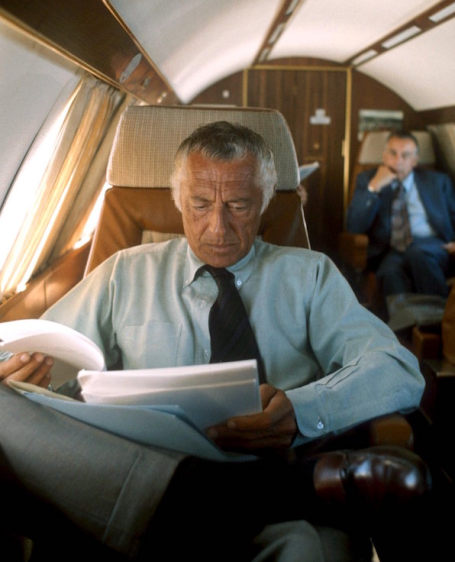
What truly distinguished Agnelli was not merely his wealth or influence. It was the manner in which he wore them.
The mood captured in La Dolce Vita, the 1960 cinematic ode by Federico Fellini to Italian decadence and beauty, conveys the colours that constituted Gianni Agnelli.
His social circle included artists, aristocrats and statesmen. Agnelli cultivated friendships with some of the most dazzling figures of the international jet set.
 For all latest news, follow The Daily Star's Google News channel.
 Among them were the formidable shipping magnate Aristotle Onassis, political royalties like Henry Kissinger, John F. Kennedy, and fashion titans like Yves Saint Laurent.
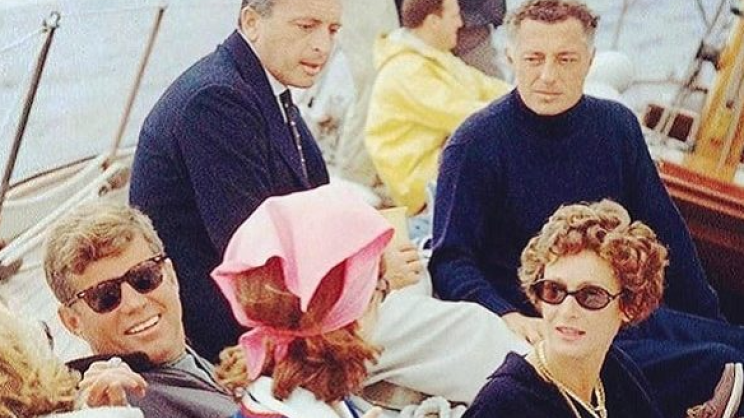
Their gatherings, often aboard yachts or at Riviera villas, were gatherings where wealth, beauty and influence mingled freely.
Agnelli’s habits became legend -- his watch worn casually over his shirt cuff, his tie slightly loosened, his suits tailored by Caraceni and his cars drawn from the Fiat empire itself.
He supported Italian art institutions, museums and intellectual circles, treating culture not as ornament but as national capital.
Under his stewardship the Agnelli family foundation funded education, architecture and heritage preservation.
His most visible cultural passion, however, lay in football.
The Agnelli family’s ownership of Juventus FC turned the club into one of Europe’s most successful teams. Turin’s stadium became an extension of the Agnelli aura.
Tall, handsome and possessed of a languid charm, he was linked with a constellation of movie stars, aristocrats and socialites across Europe and America. The Italian press chronicled his affairs with a mixture of fascination and indulgence.
His marriage to Marella Agnelli, the cultured and statuesque noblewoman who became one of Europe’s great style icons, added further glamour to the mystique. Together they formed a couple that seemed to epitomise continental sophistication.
Yet Agnelli’s reputation as a libertine never quite faded.
Stories of Riviera romances and Manhattan escapades travelled through the gossip columns of Europe’s newspapers with the inevitability of folklore.
Silhouette of Sprezzatura
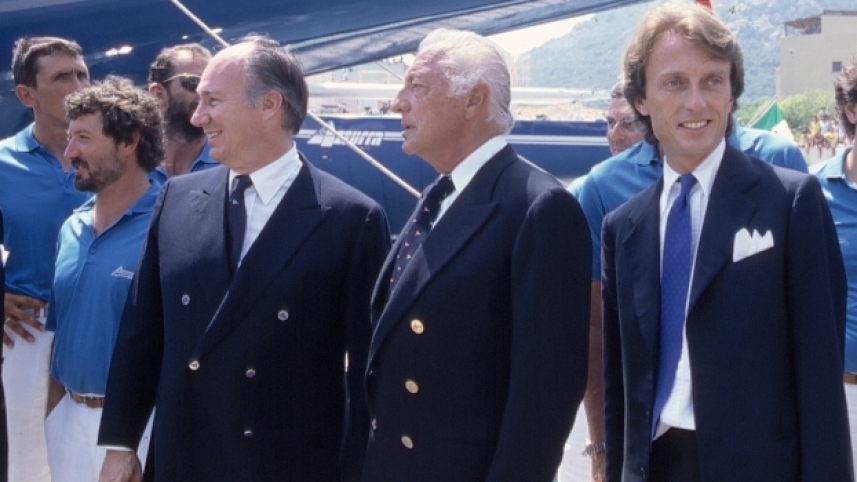
When Agnelli died in 2003, world mourned not merely a businessman but a cultural archetype.
Agnelli belonged to an era when charisma could shape institutions and personality could symbolise a nation’s ambitions.
His legacy persists in the continuing evolution and the mythology of Italian style.
Gianni Agnelli left behind an idea -- that power, when worn lightly, can look like elegance.
Trends / The story behind Zaineen Karim’s crimson Fondazione Prada look

Six modern safety habits every parent needs today
Perspective / The real reason Dhaka’s women-only buses are running empty

Why lightweight printed sarees are the ultimate everyday wear

Dhaka’s office lunch: What are we actually eating?

Cooking with sugarcane

Aarong Home Summer Collection: A Sanctuary in Full Bloom

Events / The new wedding mood: Personal, expressive, and unmistakably you

Perspective / In Delaware’s autumn, I remember Dhaka’s winter