


The democracy of iftar’s aroma

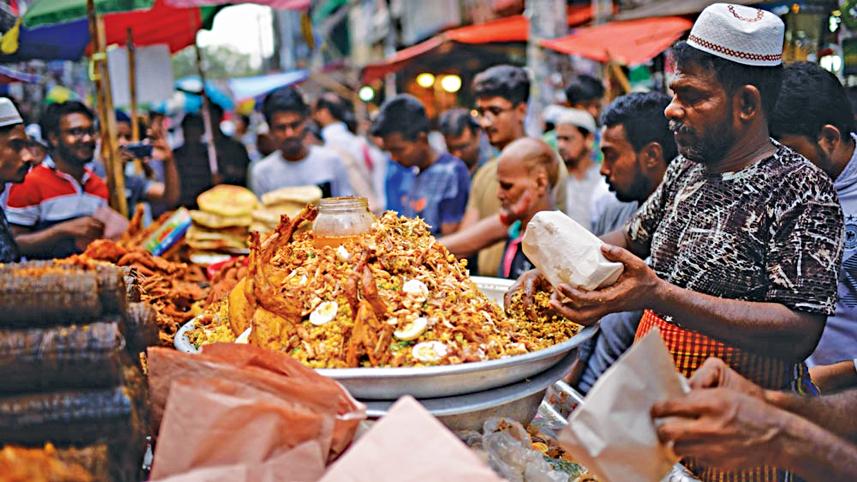
There is something magnificently egalitarian about the melange of scents that lead to iftar -- spicy, citrus-laced, herbaceous, warm, and alive with stories.
By the time the sun begins its measured descent, Ramzan afternoons acquire distinct olfactory anecdotes.

The atmosphere itself begins to change timbre, regardless if it is a chaotic city like Dhaka or some suburb in the outskirts, town or village -- vaulting over walls of all kinds and disregarding socioeconomic stratification.
The aromas do not confine themselves to kitchens. They seep into offices, corridors, street-side stalls, cafés -- into the very marrow of the afternoon.
In those pastiches, stories stitched to the scents find their subtle poise -- they all leave an imprint in the air, palpable, if ephemeral.
Oil hums in deep pans. The fritters frying declare their existence to the next. Somewhere, onions collapse into golden submission; elsewhere, aubergines are dipped and lowered into sputtering oil with priestly concentration. Gram flour consorts with turmeric and chilli. Lentils concede to a patient flame -- from an impatient capital to the many languid mofussil towns and villages.
Lemons and limes are halved and quartered with decisive strokes, their sharp perfume released in an instant absolution of fatigue. Sugar dissolves as syrups blush in tall jugs.
Fresh herbs introduce a green counterpoint. Coriander, mint, green chillies: chopped, crushed, scattered -- linger in the creases of the afternoon.
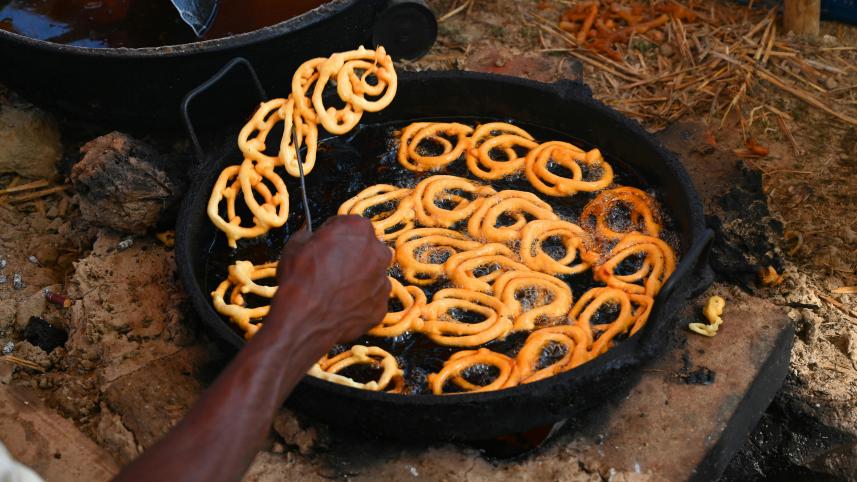
With almost democratic inevitability, muri makha is prepared -- puffed rice poured into a capacious bowl paired with mustard oil, austere and assertive, drizzled in amber ribbons; onions diced to a confessional fineness and chillies with reckless optimism. Coriander and mint are flung like a green benediction. Hands enter the scene. Mixing is not delegated to utensils; it is tactile, intimate, communal. The ingredients are folded into one another until no grain remains unacquainted. Then controversy arrives punctually -- to add jilapi or not to add jilapi.
The debate is perennial, affectionate, and never quite resolved. In that playful dispute lies a microcosm of generational preference and culinary theology.
The season itself contributes. In some years, the air carries a faint dustiness, sun-warmed and nostalgic. In others, a premature rain perfumes the streets with petrichor. The scent of frying mingles with the scent of earth. A breeze ferries both through narrow lanes and broad avenues alike. The result is a pirouette where the scent of spice and season converse without discord.
Yet to reduce these afternoons to gastronomy would be an unforgivable impoverishment.
Within each aroma resides an anecdote, and even maybe accolades new and old.
The woman who measures salt by instinct, her wrists moving with ancestral confidence. The youngster tasked with squeezing citrus, surreptitiously checking the clock between chores. The father who gets a pot of haleem on his way back from work, the child hovering near the jilapi tray, negotiating for an early concession.
Fasting itself lends the scene its moral architecture. In an age intoxicated by immediacy, abstention is an act of quiet defiance.
As Maghrib approaches, the moments seem to elongate. Conversations soften. Plates are arranged. The ruby glow of syruped sweets catches the amber of the fading sun. Outside, the air is a palimpsest of everything prepared within walls.
With the call to prayer, the intermezzo finds its coda.
 For all latest news, follow The Daily Star's Google News channel.