


The quiet lives of Dhaka’s flute artistes
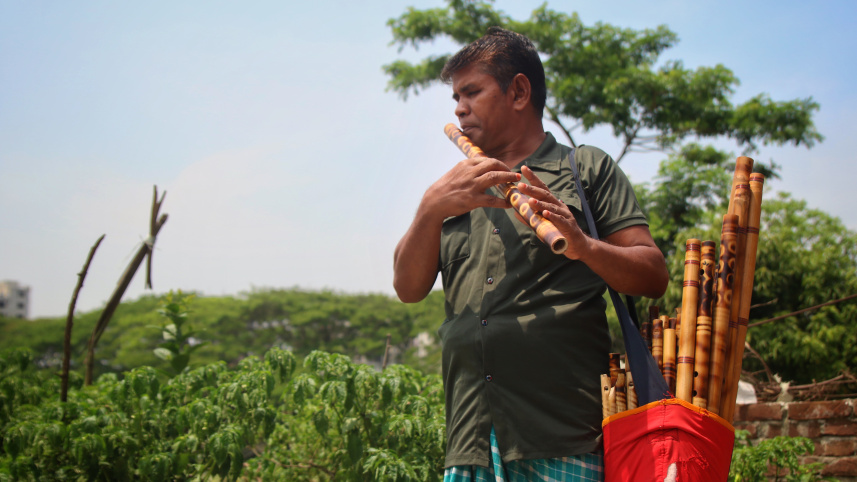
In the busy streets of the city, we rarely take a moment to cherish the little things around us. If you pause briefly and look closely, you will notice people doing all sorts of things just to make a living. While most serve a large market of customers, there are some who do it out of sheer love for their work. One such sight will make you pause: a street flute artiste, locally known as a “bongshibadok”, playing on the streets of Dhaka, usually carrying a sack of flutes made of bamboo.
Mokbul Hossain is one such flautistwho spends his days navigating the Mohammadpur area of the city, selling and playing flutes. By late afternoon, when the streets of Mohammadpur begin to grow vibrant, he turns to his instrument. Roaming among passersby, he plays simply because it brings him peace and offers a moment of joy to others.

“I play the flute, usually in the afternoon when I feel good, to give people some joy,” he says.
He often plays various “Lalongeeti”, “Bonde Maya Lagaise”, “Aage Ki Shundor Din Kataitam”, and other folk songs that reflect the sentiments of Bengali culture.
Come to think of it, it is not just music, it is a quiet resistance against the cacophony of the city. Some stop and listen to his melodic tunes, while many curious passersby step forward to browse his collection of crudely made bamboo flutes.
Mokbul’s introduction to music came from his own curiosity rather than family tradition. “I have been playing the flute for about 20–23 years. I have been selling them for 15 years. I travel all over Bangladesh — to fairs, markets, and mostly cultural spots. Back in the day, I started playing regularly out of passion. It began as a hobby. Later, I learned the craft under an ustad (teacher).”
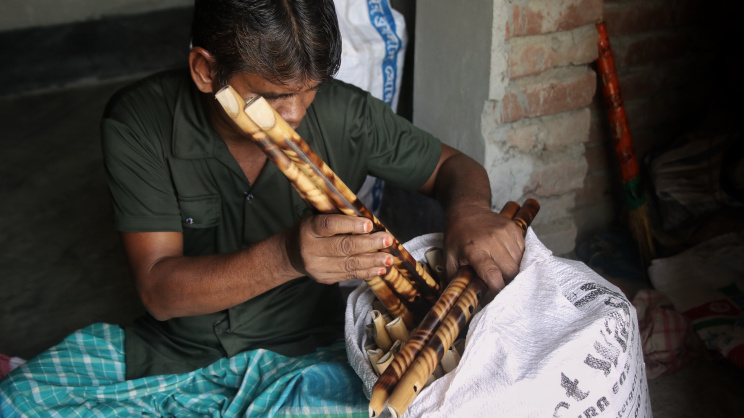
He even offers to teach curious visitors the basics of playing the flute and plays their requested songs to attract potential buyers. He sources his flutes from local artisans in the village of Sreemoddi, under Cumilla’s Homna upazila. He oversees the entire manufacturing process of his flutes, making necessary adjustments to improve both sound and look, and occasionally takes part in the work himself.
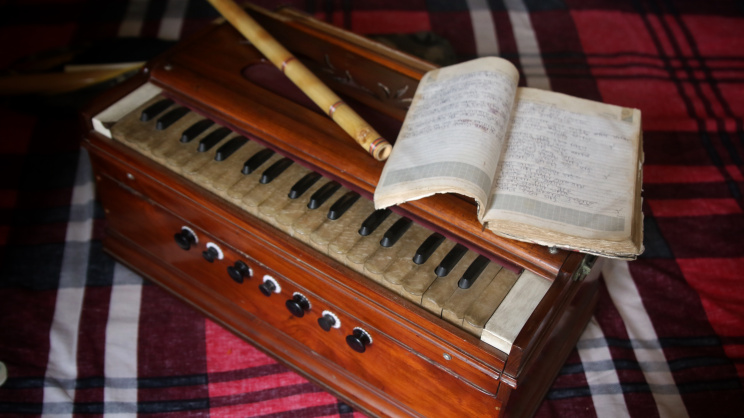
Today, his relationship with music extends into the next generation. His daughters, both pursuing postgraduate studies, have inherited not just his flute skills but perhaps a deeper love for music. “Whether it be flute, violin, or dotara, my daughters actually play them even better than I do,” he expressed, with a mix of pride and humility.
Mokbul Hossain is one of many, and the streets of Dhaka are alive with dedication of several other street artists. In another part of the city, a similar story repeats itself in the life of another flute artist.
Monir Hossain is another flautist navigating the Gulshan 2 area. Pleased by his melodic renditions of Lalon songs, passersby occasionally offer him a small token of appreciation, commonly referred to as “bokhshish”.
He hopes for a country where artists can live with dignity. “I just want to live in a country where artists and creative workers can freely practice their art and make a living with the same respect as anyone else,” he asserted. “We do not expect anyone to feed us for free. We just want to coexist with everyone — with respect.”
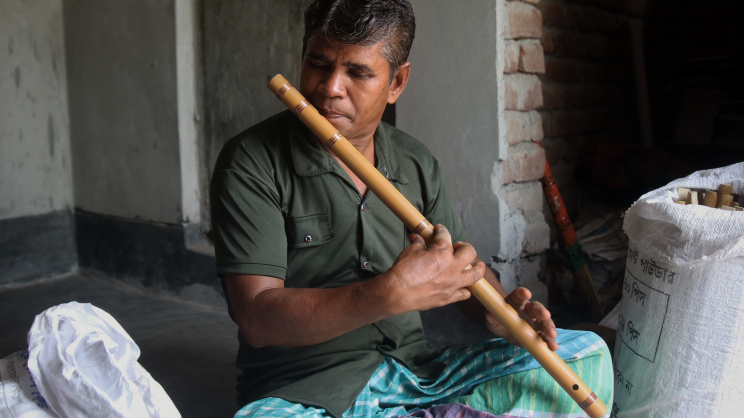
Like many other flute artists, he supplements his street performances by seeking opportunities at birthday parties, weddings, and small events — anywhere his music might be valued enough to bring in a modest income.
It does not fully feed their families, nor does it guarantee them due recognition. Yet, their dedication for the pursuit of music thrives despite their daily struggles.
The Pied Piper of Hamelin led people with his flute toward an unknown destination, to their oblivion, when he was not paid his dues. Mokbul and Monir ask for no such thing, they just want a little appreciation, and perhaps, a little respect. In a society increasingly driven by material gains, their flutes tell a rather different story, one where value is not always measured in money.
 For all latest news, follow The Daily Star's Google News channel.
Comments