


Why measles cases are rising rapidly across Bangladesh right now
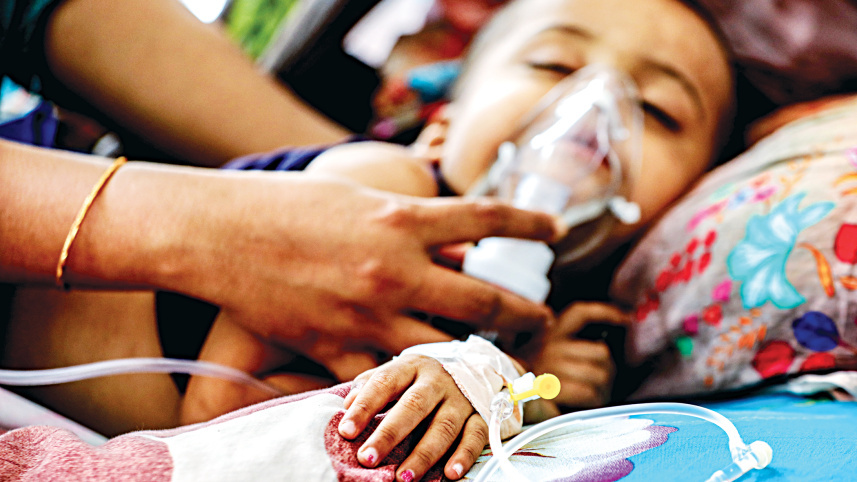
As Bangladesh is facing a worrying rise in measles cases, health experts are urging parents and communities to pay attention to vaccination and early symptoms. In a recent interview, Dr Syed Abu Sayeed, an emergency medical officer currently working for the International Organisation for Migration (IOM), explains why the outbreak is happening, how to identify measles, and what steps can help to control its spread.
When vaccination rates begin to slip
According to Dr Sayeed, the comeback of measles is not sudden but the result of various underlying factors. One of the main reasons is a decline in vaccination coverage.

Bangladesh follows the Expanded Programme on Immunisation (EPI), where children receive two doses of the measles-rubella vaccine, MR1 and MR2.
In 2024, MR1 coverage was 96.61 per cent and MR2 coverage was 96.15 per cent, which is impressively high. However, by 2025, this has dropped to 92.73 per cent and 90.78 per cent, respectively.
“This drop in rate might seem small, but for a highly contagious disease like measles, it is significant,” he explains.
He further added, “Measles can be successfully controlled through vaccination, but when vaccine coverage falls from 95 per cent, herd immunity weakens.” As a result, the population becomes at risk of these outbreaks. Malnutrition also plays an important role, as it weakens children’s immune systems, making them more vulnerable to infection.
How measles begins and spreads
Recognising early symptoms of measles is very crucial. Dr Sayeed describes the initial symptom as a fever which lasts one to three days, often along with coryza (a runny nose). By the fourth day, a distinctive maculopapular rash appears, starting from the face, and gradually spreading to the whole body.
Unlike other viral infections or chickenpox, the fever tends to increase once the rash starts to show. Also, in advanced stages, he warned that the complications can increase. These include pneumonia, diarrhoea, and encephalitis, which is an inflammation of the brain that can lead to seizures, confusion, or brain damage.
Conjunctivitis, commonly known as ‘pink eye,’ is also a common effect and, in severe cases, can create vision problems.
Differentiating measles from other illnesses such as flu or chickenpox, is important. In measles, the rash on the face appears on the fourth day, typically, whereas in other illnesses, rashes may appear earlier. Moreover, while fever usually subsides once a rash appears in diseases like chickenpox, it often increases in measles. Due to its airborne nature, the disease spreads rapidly.
“Measles is one of the most contagious diseases,” Dr Sayeed emphasises. It spreads through respiratory droplets released when a measles-infected person coughs or sneezes. The thing that makes it more dangerous is that the virus can remain active in the air or on surfaces for up to two hours. A single infected child can transmit the virus to 18-20 others, leading to exponential spread.
Children are the most vulnerable group, he mentioned, especially those between nine months and two years of age. This is the period when the MR1 and MR2 vaccines are administered. Due to gaps in vaccination coverage in 2025, this age group is currently facing the highest number of infections.
Vaccination and early response
In spite of the alarming rise in cases, the solution is still straightforward — vaccination.
“If 95 per cent of the population receives both MR1 and MR2 doses, herd immunity can effectively prevent outbreaks,” says Dr Sayeed. The decline in vaccination rates in 2025 means that the protective barrier is down, unfortunately.
For parents, early action can make a big difference. If someone is suspected of measles, immediate isolation is necessary to prevent further spread. Monitoring symptoms closely is equally crucial. If difficulties like breathing issues, diarrhoea, or unusual drowsiness appear, immediate hospitalisation is a must.
Managing measles and preventing complications
Treatment for measles is predominantly supportive. Ensuring proper hydration, maintaining nutrition, and observing symptoms like fever so that it does not develop post-measles pneumonia or encephalitis.
Prevention is always better than a cure. Securing timely vaccination and maintaining good nutrition are the key steps to protecting your children. He also recommended vitamin A supplements because they help nourish the immune system and reduce the risk of the disease.
As Bangladesh is witnessing this renewed challenge, the advice from health experts is straightforward: measles is a preventable disease, but only if vaccinations are properly taken, and awareness is increased.
For parents, attentiveness and timely action can make a huge difference between a mild illness and a life-threatening complication.
 For all latest news, follow The Daily Star's Google News channel.
Comments