


Organ donation and the question of legal consent
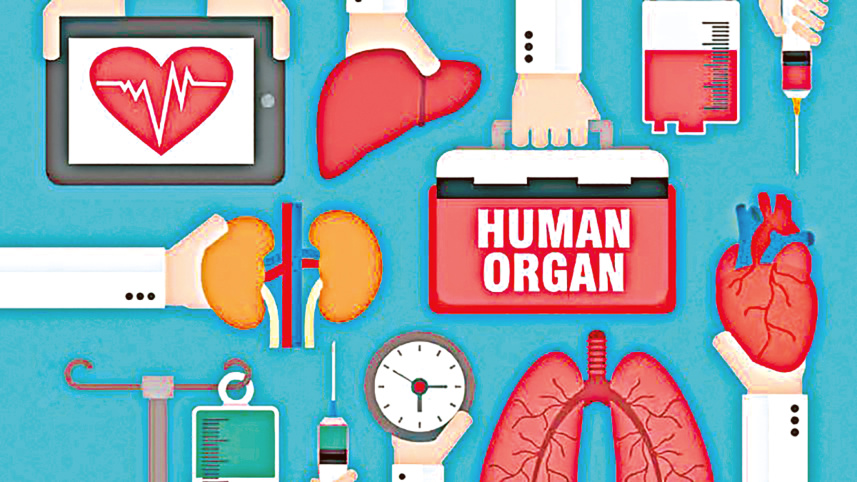
Organ donation is considered one of the most humanitarian activities. It turns the tragedy of death into hope since the organs of a deceased person can save or improve the life of another suffering person. However, the authority to decide on the manner in which a deceased person’s body is to be disposed of is one of the most important legal issues associated with the practice of organ donation. Any such law has to incorporate the considerations of human dignity, free consent, and the right not to be exploited. This is why the legal and ethical dilemma in such situations is hard to reconcile.
In Bangladesh, organ transplantation was previously regulated by the Human Organ Transplantation Act 1999, which has been repealed by the Human Organ Transplantation Ordinance 2025. This Ordinance sets clearly the eligibility criteria for both organ donors and recipients. The donors must not have serious health conditions or infectious diseases (like HIV or hepatitis), most types of cancer, kidney diseases, any condition that could affect the proper functioning of the organ, etc. The law not only allows the living relatives to donate their organs but also permits the donation of organs from brain-dead persons.

However, although the law allows organ donation from deceased persons, the actual number of such donation is low. In the majority of cases, organ transplants come from living family donors. In Bangladesh, experts estimate that about 5,000 kidney transplants are needed each year, but only about 400 such procedures are actually performed annually. In my opinion, this large gap between demand and supply hints towards the inadequacy and complications arising from our legal and policy framework. The first problem in our legal framework relating to organ transplantation has to do with consent. It remains a critical question whether a person’s decision to donate their organs after death should be automatic, or whether relatives should still have the final say. In Bangladesh, the family’s consent is essentially deemed final, even if the deceased had consented to donate their organs. However, I believe this can undermine the principle of personal autonomy. Moreover, such practice also discourages individuals to make the decision to donate their organs as the relatives in any case can choose to refuse later. As a result, this contributes to the inadequate amount of organ transplantation compared to the demand.
The other component that should be present in any ideal organ donation system in any country is public trust in the system. However, in South Asia, especially, we have a serious problem with illegal organ trade and unethical organ transplantation. This has naturally created fear in people for the possibility of forcible organ transplantation, extortion, abduction, etc. As a result, organ transplantation gets discouraged and becomes more difficult to do. This further worsens the already bad situation relating to organ transplantation.
Finally, the problem of organ donation in Bangladesh is not merely a medical problem; it is a legal, moral and human rights issue. The legal and policy framework should be modified to protect the individual decisions better, build public trust, and thereby encourage more ethical and legal organ transplantation.
Alph Imran Chowdhury
Law Student
The University of London.
 For all latest news, follow The Daily Star's Google News channel.
Comments