


Experts call for stronger focus on prevention to build a healthier Bangladesh
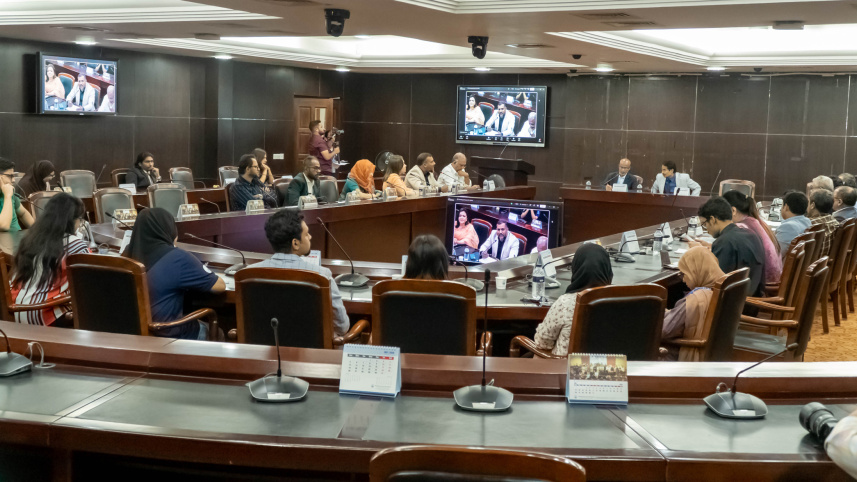
Health experts, academics and public health professionals have urged Bangladesh to place prevention at the centre of its healthcare system, arguing that reducing the burden of disease before it develops is both more effective and more affordable than relying primarily on treatment.
The recommendations emerged from a roundtable discussion titled “Prevention Before Prescription: Why Bangladesh Must Prioritise Preventive Healthcare?”, organised by the Department of Public Health, North South University (NSU), as part of Health Fest 2026. Held at the university’s Syndicate Hall on July 16, the discussion brought together leading physicians, researchers, policymakers and public health specialists to examine how Bangladesh can move towards a more prevention-focused healthcare model.

The session was chaired by Prof Nasir U Ahmed, Vice-Chancellor of North South University, while Dr Mohammad Zahirul Islam, Assistant Professor in the Department of Public Health at NSU, moderated the discussion.
Participants agreed that although Bangladesh has made significant progress in expanding healthcare services, the country’s health system remains heavily oriented towards treating illness rather than preventing it. They stressed that rising rates of diabetes, heart disease, respiratory illnesses and other long-term conditions demand greater investment in health education, early screening and community-based interventions.
Speakers noted that preventing disease not only improves quality of life but also reduces pressure on hospitals and lowers healthcare costs for both families and the national health system. They argued that encouraging healthier lifestyles, increasing awareness of risk factors and strengthening primary healthcare services could significantly reduce preventable illnesses.
The panel also highlighted the importance of addressing the wider factors that influence health, including nutrition, environmental conditions, education and workplace wellbeing. They emphasised that improving health outcomes requires coordinated action across multiple sectors rather than relying solely on medical care.
Several experts called for stronger collaboration between government agencies, universities, healthcare providers and development partners to design evidence-based policies and expand preventive health programmes nationwide. They also underlined the need to strengthen research and public awareness so that prevention becomes an integral part of everyday life instead of a response after illness occurs.
The discussion featured contributions from Dr Zahirul Islam, Health Advisor at the Embassy of Sweden; Dr Golam Mohiuddin Khan Sadi, Health and Nutrition Specialist and Trustee Board Member of icddr,b; Prof Dr Moilnuddin Ahmed of United Medical College; Assoc Prof Dr Hossain Imam of Medix Signature Clinic; Dr Chowdhury Tamanna Tabassum, Dr Md Ashraful Haque, Dr Mst Rummana Islam Bisty and Dr S M Sanayet Bin Mustafiz Srijon from United Medical College Hospital. Public health perspectives were further enriched by Dr Mahfuzar Rahman, Dr Kamran Ul Baset, Prof Dr Mohammad Delwer Hossain Hawlader and Prof Dr Dipak Kumar Mitra.
Throughout the session, participants agreed that preventive healthcare should be viewed not as an additional expense but as a long-term investment in the nation’s wellbeing. They maintained that sustained public awareness, stronger policies and cross-sector collaboration would enable Bangladesh to shift from treating disease after it occurs to protecting health before illness begins.
The roundtable concluded with a shared commitment to advancing prevention as a national priority, with participants expressing hope that discussions such as these would help shape future policies and encourage greater public engagement in building a healthier Bangladesh.
 For all latest news, follow The Daily Star's Google News channel.
Comments