


WHO warns against mixing, matching jabs
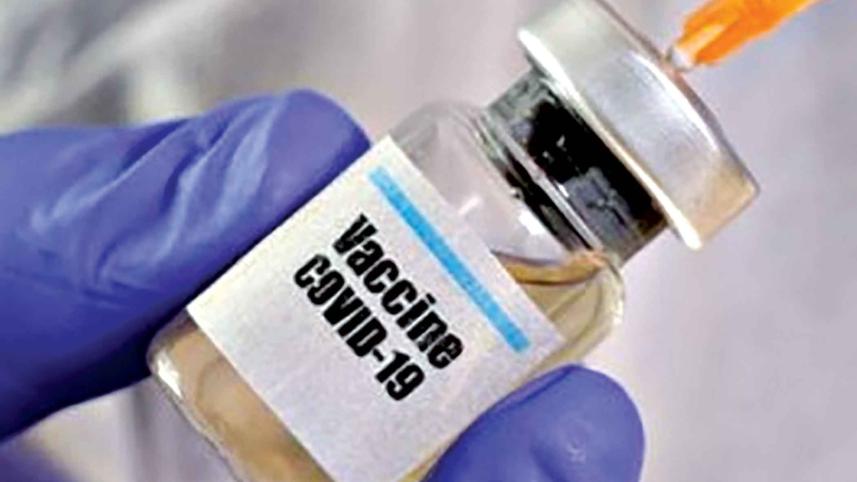
The World Health Organization's chief scientist advised against people mixing and matching Covid-19 vaccines from different manufacturers, calling it a "dangerous trend" since there was little data available about the health impact.
"It's a little bit of a dangerous trend here. We are in a data-free, evidence-free zone as far as mix and match," Soumya Swaminathan told an online briefing on Monday.

"It will be a chaotic situation in countries if citizens start deciding when and who will be taking a second, a third and a fourth dose."
Thailand yesterday defended mixing two different vaccines to battle a surge in infections. The kingdom is struggling to contain its latest outbreak fuelled by the highly contagious Delta variant, with cases and deaths skyrocketing and the healthcare system stretched thin.
Authorities said they will mix a first dose of the Chinese-made Sinovac jab with a second dose of AstraZeneca to try and achieve a "booster" effect in six weeks instead of 12.
Thailand's chief virologist Yong Poovorawan said this would be possible by combining an inactivated virus vaccine -- Sinovac -- with a viral vector vaccine such as AstraZeneca.
"We can't wait 12 weeks (for a booster effect) in this outbreak where the disease is spreading fast," he said.
"But in the future, if there are better, improved vaccines... we will find a better way to manage the situation."
The UN health body also said rich countries should not be ordering booster shots for their vaccinated populations while other countries have yet to receive Covid-19 vaccines.
WHO Director-General Tedros Adhanom Ghebreyesus said deaths were again rising from the Covid-19 pandemic, the Delta variant was becoming dominant, and many countries had yet to receive enough vaccine doses to protect their health workers.
'IT'S GREED'
"The Delta variant is ripping around the world at a scorching pace, driving a new spike in Covid-19 cases and death," Tedros told the briefing, noting that the highly contagious variant had now been found in more than 104 countries.
"The global gap in Covid-19 vaccine supply is hugely uneven and inequitable. Some countries and regions are actually ordering millions of booster doses, before other countries have had supplies to vaccinate their health workers and most vulnerable," said Tedros.
He said vaccine nationalism was "prolonging the agony" and there was only "one word that can explain this... it's greed".
Tedros also singled out vaccine makers Pfizer and Moderna as companies that were aiming to provide booster shots in countries where there were already high levels of vaccination, reports Reuters.
He said they should instead direct their doses to COVAX, the vaccine sharing programme mainly for middle-income and poorer countries.
Mike Ryan, head of the WHO's emergencies programme, said: "Right now, we are condemning hundreds of millions of people to having no protection.
"We will look back in anger, and we will look back in shame", if countries use precious doses on booster shots, at a time when vulnerable people are still dying without vaccines elsewhere, Ryan said.
"These are people who want to have their cake and eat it, and then they want to make some more cake and eat it too," he said.
The pandemic has killed at least 4,044,816 people since the virus first emerged in December 2019, according to an AFP compilation of official data yesterday.
 For all latest news, follow The Daily Star's Google News channel.
 Russia yesterday set another record for coronavirus-related deaths over a 24-hour period, despite efforts from authorities to slow a rampant third wave of infections. A government tally reported 780 pandemic fatalities and 24,702 new cases.
Germany is not planning to follow France and other countries in introducing compulsory Covid-19 vaccinations for parts of the population.
"We do not intend to go down this road," Chancellor Angela Merkel said in Berlin after visiting the Robert Koch Institute (RKI) public health agency.
COVID TREATMENTS
Scientists have used CRISPR gene-editing technology to successfully block the transmission of the SARS-CoV-2 virus in infected human cells, according to research released yesterday that could pave the way for Covid-19 treatments.
Writing in the journal Nature Communications, researchers in Australia said the tool was effective against viral transmissions in lab tests, adding that they hoped to begin animal trials soon.
CRISPR, which allows scientists to alter DNA sequences and modify gene function, has already shown promise in eliminating the genetic coding that drives the development of children's cancer.
The team in yesterday's study used an enzyme, CRISPR-Cas13b, that binds to relevant RNA sequences on the novel coronavirus and degrades the genome it needs to replicate inside human cells.
Lead author Sharon Lewin from Australia's Peter Doherty Institute for Infection and Immunity told AFP that the team had designed the CRISPR tool to recognise SARS-CoV-2, the virus responsibly for Covid-19.
"Once the virus is recognised, the CRISPR enzyme is activated and chops up the virus," she said.
Comments