


Young cancer patients need more than treatment — they need support

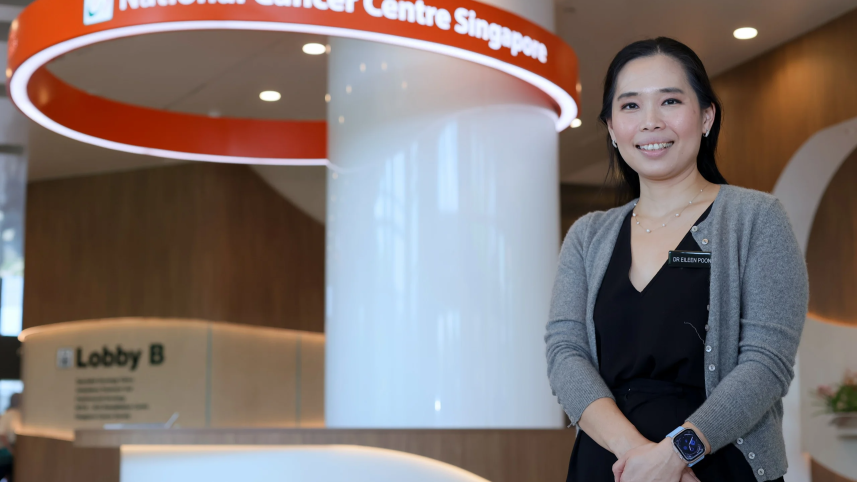
At the 3rd SingHealth Peritoneal Surface Oncology Conference, held in Singapore this March, one message stood out with striking clarity: cancer care for young people cannot follow the same template as that for older adults.
Clin Asst Prof Poon Yi Ling Eileen, a medical oncologist at the National Cancer Centre Singapore (NCCS), is at the forefront of a growing movement to rethink how adolescents and young adults (AYAs) experience cancer diagnosis, treatment, and survivorship.

Dr Poon leads initiatives focused on improving outcomes for patients typically aged between their mid-teens and early forties—a group often overlooked in traditional oncology frameworks. While definitions vary globally, her team at NCCS adopts a broader range, recognising patients aged 16 to 45 years .
“Cancer in young people presents very differently,” she explains. “Not only biologically, but also emotionally and socially.” Unlike older adults, young patients are navigating critical life milestones—education, career, relationships, and family planning—at the very moment they are confronted with a life-threatening illness.
One of the most concerning issues is delayed diagnosis. Many young people do not perceive themselves at risk of cancer, and even healthcare providers may initially attribute symptoms to less serious conditions. As Dr Poon notes, it is not uncommon for patients to consult doctors multiple times before cancer is suspected, often leading to diagnosis at more advanced stages.
The challenges extend far beyond the disease itself. According to her presentation, young patients face a complex interplay of medical, psychological, and social difficulties—from financial toxicity and disrupted education to fertility concerns and mental health struggles. These layered challenges demand a more comprehensive approach to care.
To address this gap, NCCS has developed the EMPOWER programme—“EMPowering Our young ones to live WELL through cancER”—which provides holistic, age-appropriate, and individualised support alongside standard oncology treatment. Rather than replacing medical care, the programme works in tandem with oncologists, focusing on counselling, patient education, and care coordination.
“We want them not just to survive, but to live well,” says Dr Poon.
A key innovation of the programme is its structured assessment of patient distress. Traditional tools often fail to capture the full spectrum of challenges faced by young patients. By breaking distress into multiple domains, the team can identify and prioritise specific needs—whether emotional, financial, or informational—and intervene accordingly. Over time, this approach has shown measurable reductions in patient distress levels.
The emotional toll of cancer in young patients is profound. Feelings of disbelief, anger, and anxiety are common, often accompanied by a deep sense of “why me?”. Even after successful treatment, many survivors experience heightened health anxiety and long-term psychological effects.
Family dynamics also play a crucial role. In many Asian contexts, parents may take control of treatment decisions, sometimes limiting the patient’s autonomy. Dr Poon emphasises the need for families to support—not override—the voices of young patients.
Despite representing a smaller proportion of total cancer cases—estimated at around 7–10 percent—the impact of cancer in this age group is disproportionately high due to their role in the workforce and society. Each case represents not just a medical challenge, but a disruption to a life in its prime.
Looking ahead, Dr Poon underscores the importance of awareness and early detection. Persistent symptoms—such as unexplained pain, weight loss, or changes in bodily function—should never be ignored. At the same time, she calls for region-specific guidelines that reflect the unique realities of Asian populations, rather than relying solely on Western models.
“Cancer care for young people must evolve,” she says. “Because their needs are different—and so must be our response.”
 For all latest news, follow The Daily Star's Google News channel.
Comments