


Is outdoor exercise healthy in Dhaka? Think again...
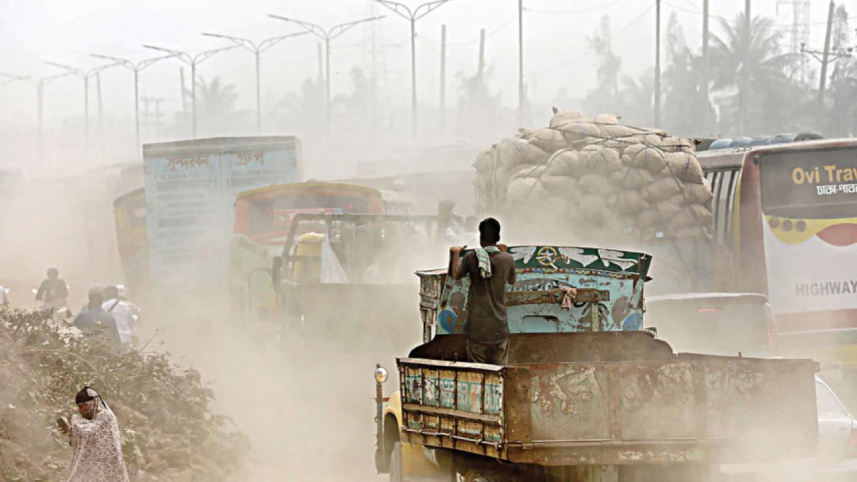
For many people, good health brings to mind walking or running in the fresh morning air, or exercising in open spaces. For children and adolescents, outdoor play is especially important -- not only for physical fitness, but also for mental and emotional development.
However, this long-held idea of a healthy lifestyle is now being questioned, especially for residents of Dhaka.

In recent years, air pollution in the capital has worsened so much that simply stepping outside has become a health risk, even for people who exercise regularly. Children are the most vulnerable, as their lungs and immune systems are still developing.
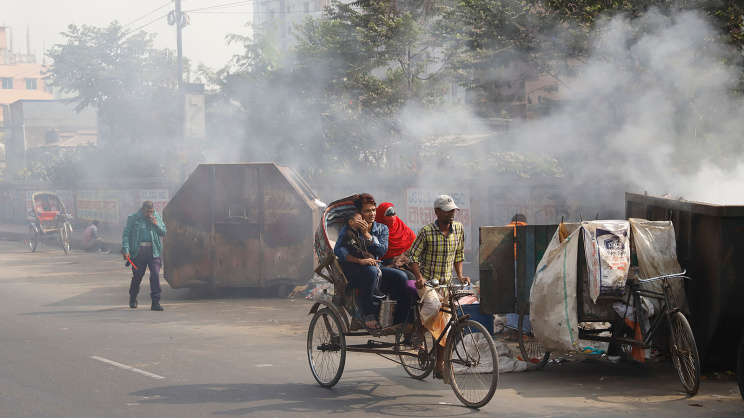
Almost every day, the capital appears in the top ten of the Air Quality Index (AQI) list for polluted cities. This morning, Dhaka ranked first among cities with the most polluted air in the world with AQI score of 316.
Given this reality, it is time to rethink how safe the common advice of “going outdoors to stay healthy” really is for Dhaka’s residents.
The state of air pollution in Dhaka
Air pollution in Dhaka has become a long-term public health crisis. According to the State of Global Air report, around 173,000 people die each year in Bangladesh from air pollution-related causes.
The Air Quality Life Index of the University of Chicago’s Energy Policy Institute (EPIC) shows that air pollution reduces the average life expectancy in Bangladesh by nearly seven years.
From November to February, humidity levels remain low, allowing dust particles to stay concentrated close to the ground. During this period, Dhaka’s air becomes especially dangerous.
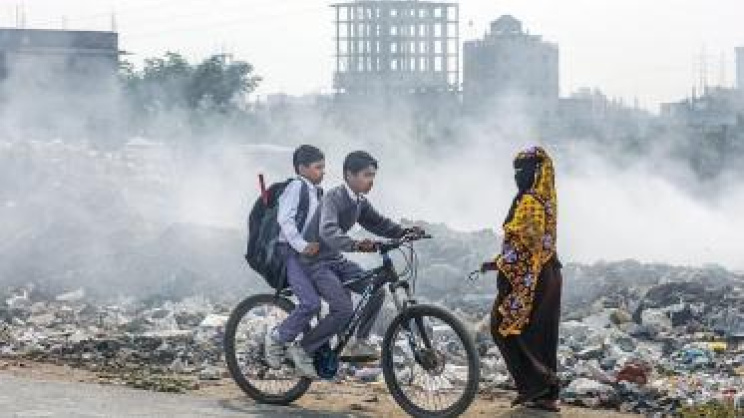
According to the Air Quality Index of international air-monitoring organisation IQAir, an AQI score of 0–50 is considered “good”, 50–100 “moderate”, and 101–150 “unhealthy for sensitive groups”. Scores between 151 and 200 are “unhealthy”, 201–300 “very unhealthy”, and anything above 300 is classified as “hazardous”.
IQAir data show that in January and February 2025, Dhaka often topped the list of the world’s most polluted cities, with AQI scores ranging between about 341 and 422 -- well into the “hazardous” category. In November, AQI scores ranged from 193 to 255.
The level of fine particulate matter (PM2.5) in Dhaka’s air frequently remains 10 to 20 times higher than the annual limit recommended by the World Health Organization (WHO).
The World Bank estimates that air pollution causes economic losses equivalent to around 4.4 percent of Bangladesh’s GDP each year.
Why exercising in polluted air is risky
Professor Ahmad Kamruzzaman Majumder, chairman of the Centre for Atmospheric Pollution Studies (CAPS), told The Daily Star that people breathe faster and deeper during exercise. When exercising in polluted air, PM2.5 particles can enter deep into the lungs, increasing the risk of asthma, bronchitis and heart disease.
According to guidance from IQAir and the WHO, outdoor exercise should be avoided when the AQI score reaches 151 or higher.
Children face greater risks because their lungs are not fully developed and their metabolic rate is higher. This means they inhale more oxygen -- and more polluted air -- than adults, which can harm lung development.
What time of day is safest for exercise?
 For all latest news, follow The Daily Star's Google News channel.
 A 2024 study by the Centre for Atmospheric Pollution Studies found that air quality in Dhaka is worst between 9:00pm and 10:00am.
During these hours, office-goers and school and college students are exposed to the highest levels of pollution. As a result, the traditional “morning walk” is no longer considered safe.
Air quality is relatively better between 11:00am and 8:00pm, with the cleanest window generally between 3:00pm and 5:00pm.
Is indoor air safer?
Indoor air is not always safe either. According to the United States Environmental Protection Agency (EPA), indoor air can be two to five times more polluted than outdoor air if ventilation is poor.
Cooking smoke, dust from carpets, and chemicals released from furniture are common indoor pollutants. Using indoor plants and good-quality air purifiers can help improve indoor air quality.
Which areas of Dhaka are most and least polluted?
Data from Switzerland-based IQAir show that several areas of Dhaka experience particularly high pollution levels.
This morning, Kurmitola recorded the highest AQI among Dhaka neighbourhoods, with a score of 527 -- classified as “hazardous”.
In recent years, data from IQAir and the Centre for Atmospheric Pollution Studies at Stamford University show that Khilkhet and Nikunja, Dhanmondi, Mirpur, Gulshan and Baridhara, Old Dhaka, South Pallabi and Goran regularly rank among the most polluted areas.
Major sources of pollution include construction work and road digging, industrial activity, brick kilns, black smoke from vehicles, household and cooking activities, and waste burning.
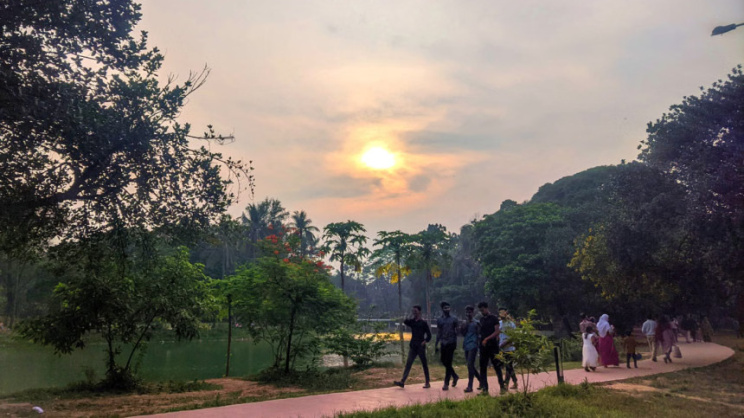
Areas with more trees and nearby water bodies tend to have comparatively lower pollution levels. These include the University of Dhaka campus, Ramna Park, the Botanical Garden, and areas inside the cantonment.
Why outdoor exercise still matters
Despite the risks, regular physical activity and sunlight exposure remain important for good health. Exercise improves blood circulation and metabolism, helps the body produce vitamin D, and reduces mental stress.

For children and adolescents, outdoor play is essential for bone and muscle development and helps build social skills such as empathy and teamwork.
Safer ways to exercise in Dhaka
During winter, pollution levels are highest early in the morning. Instead of going out very early, spending a short time in sunlight between 10:00am and 11:00am is safer. If possible, afternoon exercise is an even better option.
When the AQI exceeds 200, it is best to avoid outdoor activity. Indoor exercises such as yoga, free-hand workouts or treadmill exercise are safer alternatives.
Ordinary surgical masks do not block air pollution. If outdoor exercise is unavoidable, using an N95 or FFP2 pollution mask is recommended.
Avoid exercising near busy roads or areas with heavy traffic. Parks such as Ramna Park or the Botanical Garden generally have cleaner air than main roads.
Pollution levels often drop for a few hours after rainfall, making that time safer for outdoor activity.
People with asthma or heart disease, as well as children and the elderly, should avoid going outdoors during periods of high pollution.
A simple but effective habit is to check the AQI score regularly before stepping outside.
Comments