


Gas crisis shuts down 5 of 6 major urea fertiliser plants

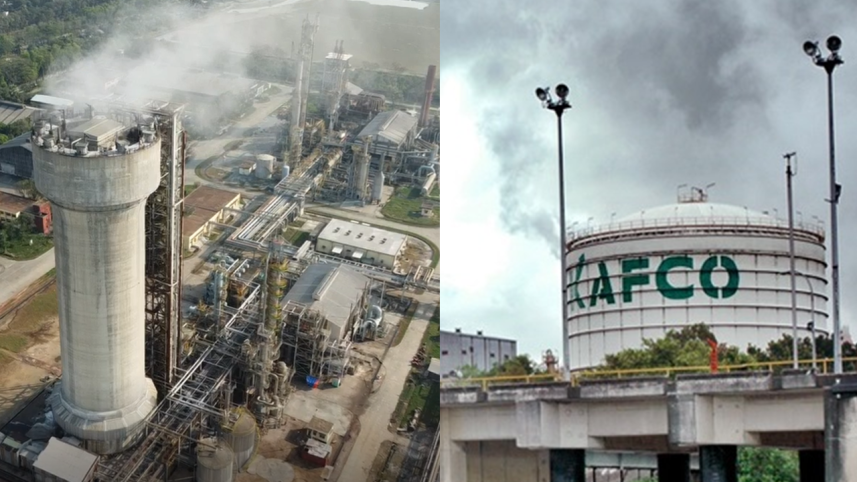
A gas crisis has forced closure of five out of six major urea fertiliser factories in Bangladesh.
According to Bangladesh Chemical Industries Corporation (BCIC), there are five major urea plants under its management. Only Shahjalal Fertilizer Co Ltd remains operational among them, though officials warn its production may not last.

The other four BCIC plants -- Ghorashal Polash Fertilizer, Chittagong Urea Fertilizer Factory (CUFL), Jamuna Fertilizer, and Ashuganj Fertilizer & Chemical Company -- were shut down Wednesday afternoon.
BCIC Director (Commercial, Production & Research), Engr Moniruzzaman, said, “Around 197 million cubic feet of gas per day are required to run all five factories at full capacity. We are unable to produce even a third of our capacity every year because of recurring gas shortages.”
An official, speaking anonymously, said, “Although the target for fertiliser production in the 2025-26 fiscal year was 1 million tonnes, only 550,000 tonnes have been produced in the past eight months till February.”
He expressed doubts about meeting the target in the remaining months.
Uttam Chowdhury, CUFL’s chief chemist, said, “Production can resume once gas supply is restored,” noting the plant had remained closed for six consecutive months last year due to gas shortages.
Privately managed Karnaphuli Fertilizer Company Limited (Kafco), with a daily capacity of 1,725 tonnes of urea and about 1,500 tonnes of ammonia, has also halted operations.
Together, the six plants have a total daily production capacity of around 7,100 tonnes.
Officials from Karnaphuli Gas Distribution Company Limited (KGDCL) confirmed gas supply to CUFL and Kafco was cut at 3:00pm Wednesday under government instructions.
Engr Syed Abu Naser Md Saleh, KGDCL general manager, said the two plants previously received 70-80 million cubic feet of gas daily.
CUFL, established in 1987 with Japanese assistance, has a capacity of 1,100 tonnes of urea and 800 tonnes of ammonia per day but has faced frequent shutdowns. Last fiscal year, it produced only 250,000 tonnes of urea, remaining operational for about two and a half months.
Bangladesh requires roughly 2.6 million tonnes of urea annually for its agriculture sector. Factories under the BCIC produce about one to ten million tonnes, while the remaining 1.6 million tonnes have to be imported at higher costs.
 For all latest news, follow The Daily Star's Google News channel.
Comments