Before Sophia Loren became a global icon, she was a girl shaped by post-war Italy

Before Sophia Loren became Sophia Loren, there was Sofia Villani Scicolone, a child growing up amid poverty and privation in Pozzuoli, in the shadow of a war that had left Italy battered and hungry.
Born on September 20, 1934, her early life possessed little of the glamour that would later become synonymous with her name. Raised by a single mother in post-war Italy, she knew deprivation before she knew couture, and survival before she knew stardom.

Loren’s legend has often been reduced to the architecture of her face -- the feline eyes, the voluptuous silhouette, the monumental hair, the cinematic poise.
But beauty explains only the entrance into her story. It does not explain its endurance.
There is, in fact, something almost neorealist about Loren’s trajectory.
She emerged from precisely the Italy that filmmakers such as Vittorio De Sica sought to capture -- impoverished, bruised, hungry, yet stubbornly alive. Her ascent from destitution to international celebrity therefore seemed less like the manufacture of a star than the improbable continuation of a national story of recovery.
By the 1950s and 1960s, Loren had become a formidable cinematic presence.
Yet what distinguished her was not merely that she could command a camera. It was that she could inhabit a character.
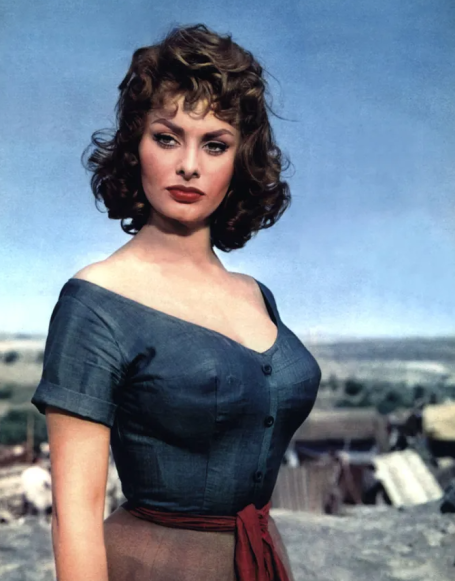
In Two Women (1960), she gave that distinction its definitive form. As Cesira, a mother confronting the brutality and devastation of war, Loren discarded the protective armour of glamour and performed with an almost startling emotional nakedness. The role earned her the Academy Award for Best Actress, making her the first actress to win the Oscar for a performance in a foreign-language film.
The achievement was more consequential than another trophy on an already crowded mantelpiece. It established that Loren could move beyond the narrow expectations traditionally imposed upon beautiful women in cinema.
She could be sensual without being superficial, glamorous without being frivolous, and powerful without sacrificing vulnerability.
Loren's greatest triumph may have been her refusal to remain imprisoned by her own appearance.
Cinema has always possessed an uneasy relationship with beautiful women. It celebrates them while simultaneously attempting to reduce them. A beautiful actress can become a screen icon precisely because the camera desires her, but that same desire can become a cage. Loren escaped it.
In Marriage Italian Style (1964), she brought humour, sensuality, wounded pride and emotional complexity to Filumena Marturano. The fiery Neapolitan woman she created was not an abstraction of feminine allure but a fully inhabited human being, possessed of contradictions, appetites and an indomitable will.
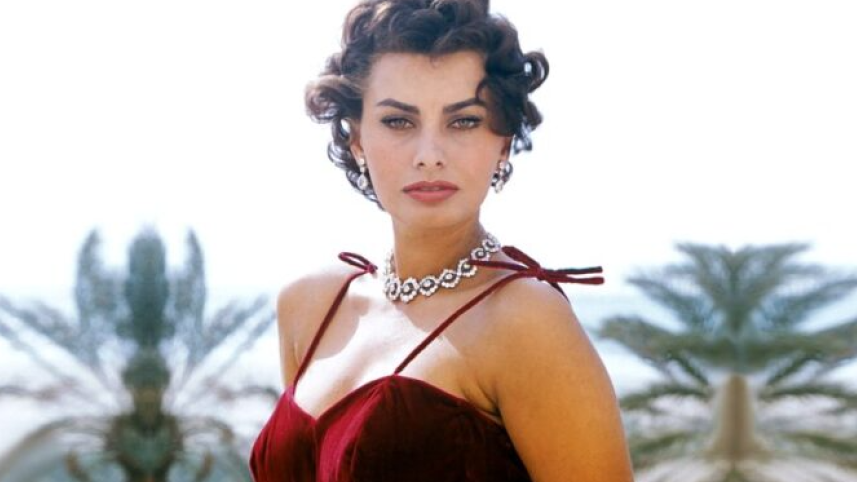
Her collaborations with De Sica were particularly significant. Their creative partnership brought together his instinct for humanistic, neorealist storytelling and her extraordinary capacity to make heightened emotion feel intimate.
Loren often seemed to carry within her characters the accumulated fatigue, hope, humour and resilience of post-war Italy itself.
That is why her best performances have survived the fashions of their era. They are not merely performances of women. They are performances of people.
Hollywood inevitably beckoned.
Her transition from Italian cinema to American productions in the late 1950s demonstrated an adaptability that was unusual among European actors crossing the Atlantic.
In The Pride and the Passion (1957) and Houseboat (1958), Loren entered an American cinematic landscape populated by stars such as Cary Grant and Frank Sinatra without allowing herself to become merely another exotic import.
 For all latest news, follow The Daily Star's Google News channel.
 She brought Italy with her.
That duality became one of the defining tensions of her career -- internationally celebrated yet emotionally rooted in the country from which she had emerged.
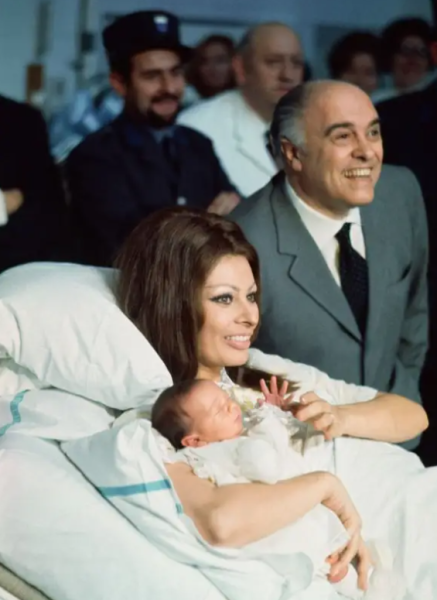
Hollywood could provide scale, but Italy provided texture. The world could consume the image of Sophia Loren; Italy remained the landscape from which Sofia Scicolone had been forged.
And then there was the matter of beauty.
Loren understood, perhaps better than most, that beauty is both power and peril. Her physical allure was unmistakable, but her enduring fascination came from the confidence with which she inhabited it.
As she aged, her beauty did not simply persist; it acquired another dimension, one shaped by experience, intelligence and self-possession.
Her famous observation that nothing makes a woman more beautiful than believing that she is beautiful captures something essential about her public persona. Loren's beauty was never presented as an apology or an accident. It was worn with conviction.
Her influence on fashion followed naturally. The hourglass figure, elegant gowns, dramatic eyes, cat-eye makeup and oversized sunglasses became components of a visual vocabulary that remains recognisably Lorenesque.
She embodied the sensuality associated with la dolce vita, yet there was always more substance beneath the surface than the phrase might suggest.
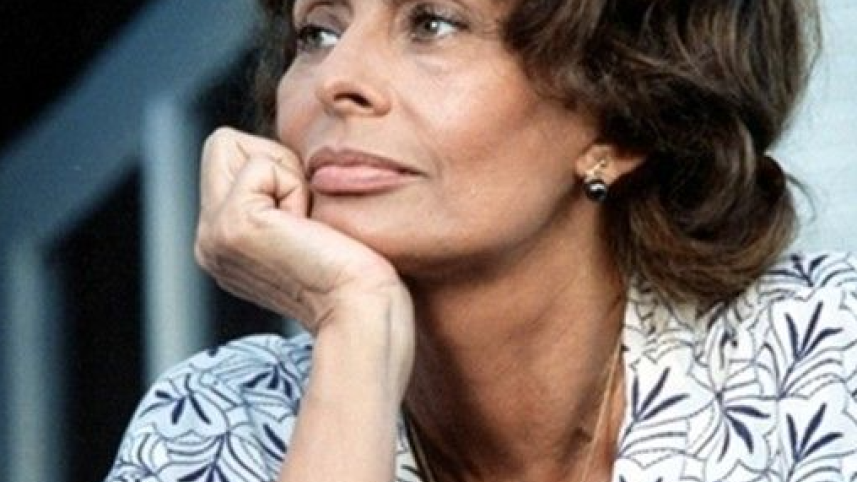
She was not simply a woman who became famous. She became a woman who learned to negotiate fame without surrendering herself to it.
Her career extended beyond acting into producing and directing, reflecting a desire to exercise agency beyond the roles offered to her.
Her appearance in The Life Ahead (2020), directed by Edoardo, carried an almost elegiac quality.
Sophia Loren emerged from the austere Italy of the post-war years, flourished amid the exuberance of mid-century cinema, crossed successfully into Hollywood and remained culturally resonant long after the cinematic grammar that created her had changed.
That longevity cannot be explained by glamour alone.
The young woman from Pozzuoli became a symbol of Italian sensuality, but the older woman became something more interesting -- a symbol of endurance.
Her face carried the memory of the girl she had been, while her career carried the evidence of everything she had survived.
Perhaps that is why Sophia Loren has remained so difficult to reduce to a single image.
Jaya and Churni’s silence speak volumes in ‘Aajo Ardhangini’

Rajshahi University-based film ‘Chirkut’ set for Durga Puja release

Rifat Chowdhury hospitalised over health issues

Deepika Padukone, Ranveer Singh welcome second daughter

Suchanda’s six decades of cinematic brilliance
The songs that keep Salman-Shabnur’s ’90s romance alive

Salman Shah tribute short film ‘Backdated’ to release today marking his birth anniversary
Rubaiyat Hossain’s ‘The Difficult Bride’ wins praise at Toronto Film Festival

Oishee ‘Soldiers’ on towards new dimension