


Reality through the canvas: ‘Annual Art Exhibition 2025’ reflects the world around us

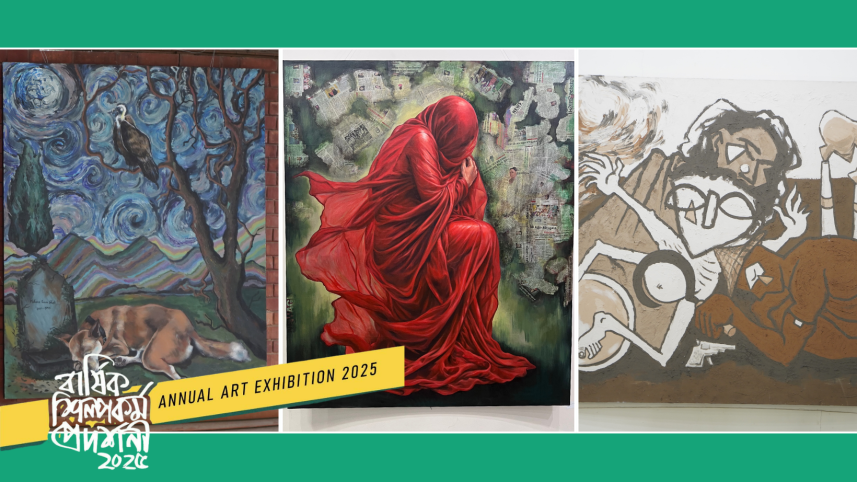
Whenever you step into the Faculty of Fine Arts of the University of Dhaka, also known as Charukola, you will find students painting by the pond, sketching under trees or drawing quietly in front of their classrooms. It is a scene that feels almost timeless. Nature here is not just a backdrop, it becomes part of the process. Some paint, some sketch and others simply sit and observe their surroundings before putting what they see on paper. That everyday practice has now found its way into the galleries.
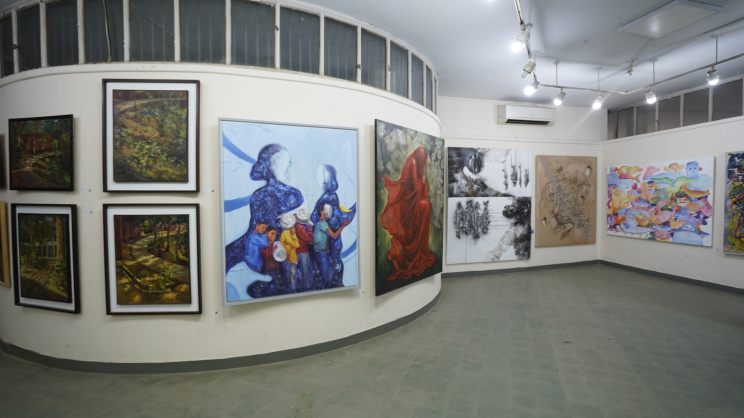
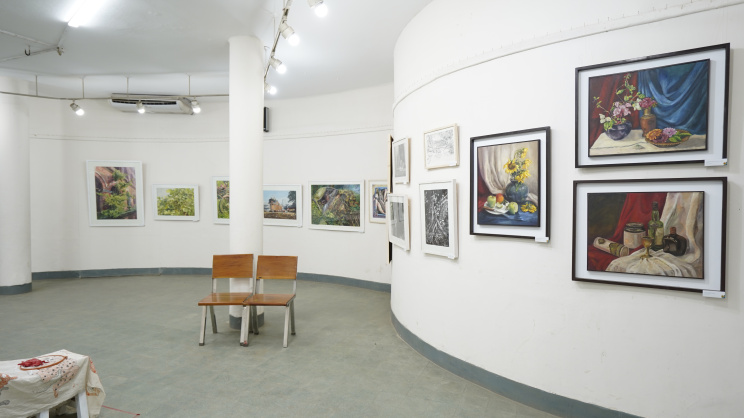
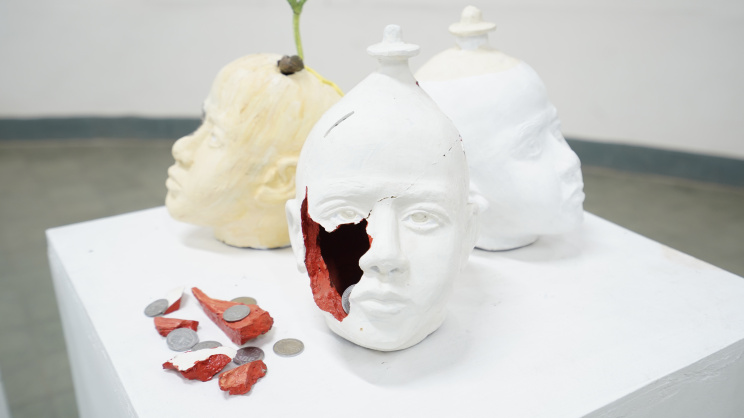
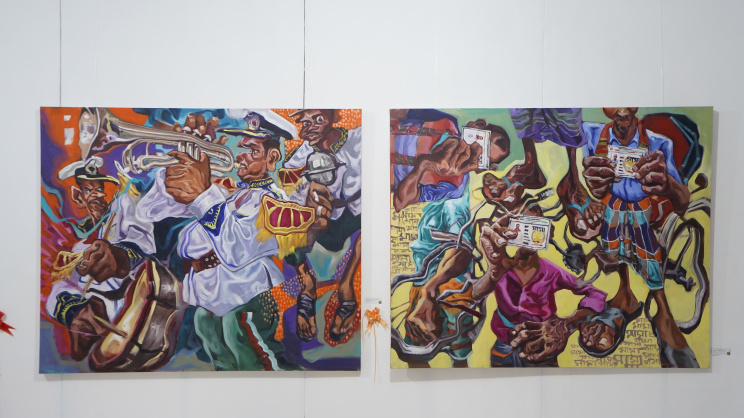
The “Annual Art Exhibition 2025-2026” of the Department of Drawing and Painting brings together the works of 72 undergraduate and postgraduate students. The exhibition was inaugurated on August 24 at Zainul Gallery 1 and 2 of the Faculty of Fine Arts, University of Dhaka. It features oil paintings, acrylic works, watercolours, pencil sketches, charcoal drawings, pen drawings and mixed media works.

The inauguration ceremony was presided over by the chairman of the Department of Drawing and Painting, Professor Dr Mohammad Iqbal Ali. Professor Dr Abdus Salam, Pro Vice Chancellor of Dhaka University, attended as chief guest and formally opened the exhibition before distributing certificates and prizes to the winning artists. Engineer Moynul Abedin and the Dean of the Faculty of Fine Arts, Professor Dr Md Azharul Islam Sheikh, joined as special guests. Thirteen students were awarded prizes in different categories at the ceremony.
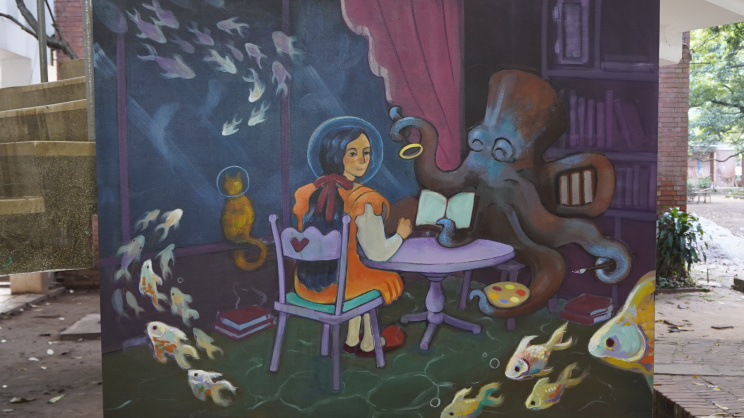
The moment you enter the gallery, two paintings catch your eye straight away, both carrying a soft, aquamarine tone. The first is by Nishat Subah. It shows a girl's childhood, but set inside a marine world. An octopus drifts nearby. Colourful fish swim around her. The painting feels gentle and dreamlike. It takes you straight into a world that lives only in the artist's imagination.
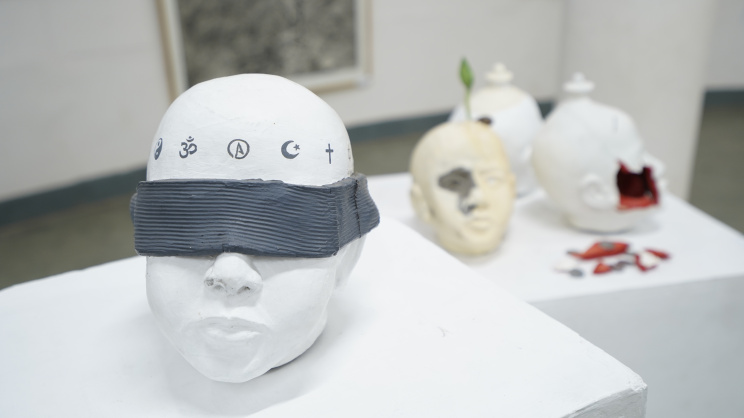
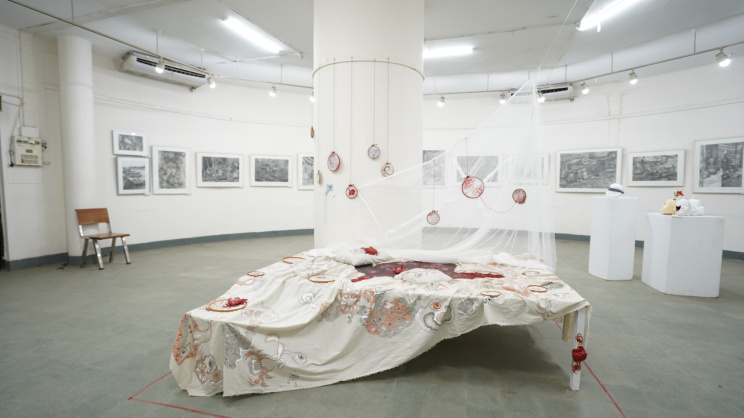
Beside it stands the second piece, an installation titled "An Imitation of Life", made in mixed media. It makes you feel as though you have dived into the deep sea.
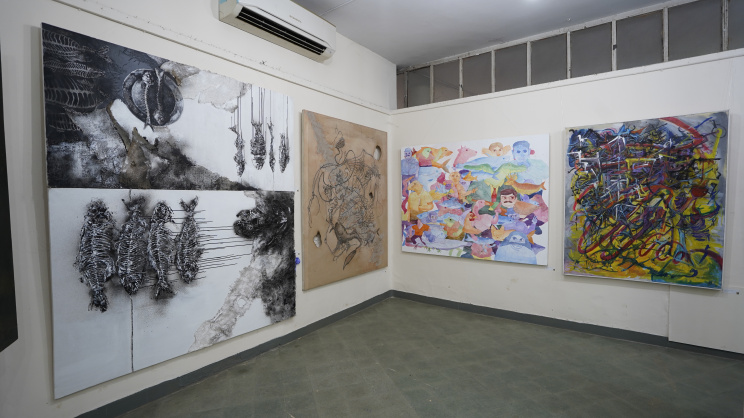
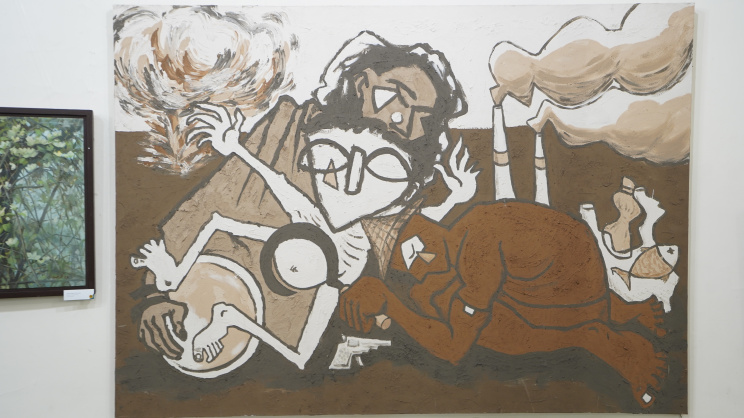
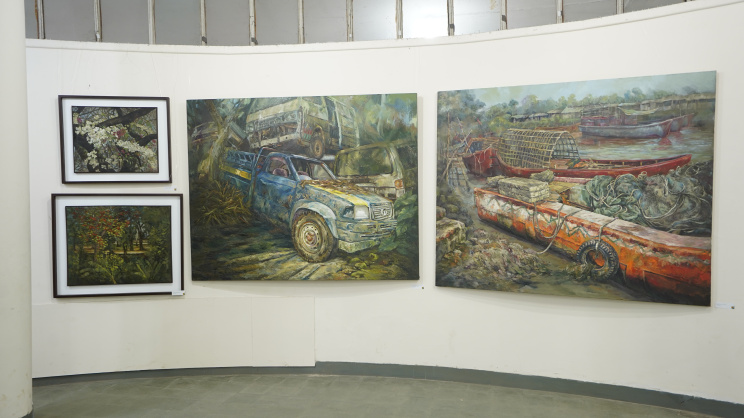
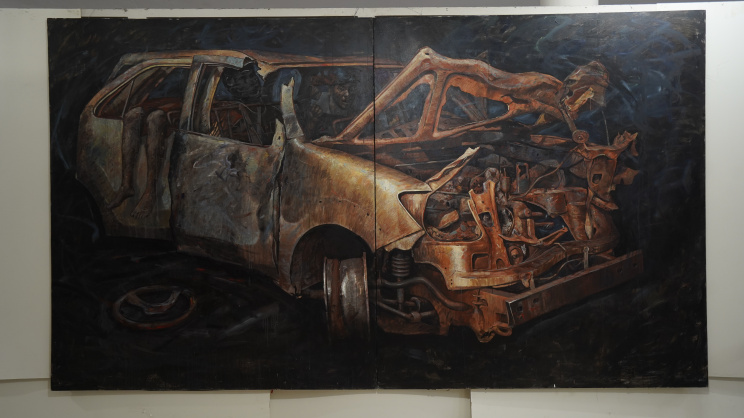
The first room holds mostly acrylic and oil paintings. It opens with two oil paintings of plants, simple scenes from daily life rendered so beautifully that they feel new again. There are oil paintings of fishermen's boats and broken cars, and scenes of krishnachura and bougainvillea in bloom. One painting stands out for its material alone, "The Ultimate Sufferers" by Showhat Rasadin Showkhin, made with soil on canvas. It shows farmers, common people and an explosion, and its abstract meaning feels heavier because of the earth it is made from. Further along is "Sleep Amidst the Chaos" by Nadia Tanjum Biva, a mixed media work showing devastated people, mostly children, sleeping alongside stray dogs, most likely on a street. It paints a cruel picture of our society, where street children sleep not only on empty stomachs but also amid the chaos around them.
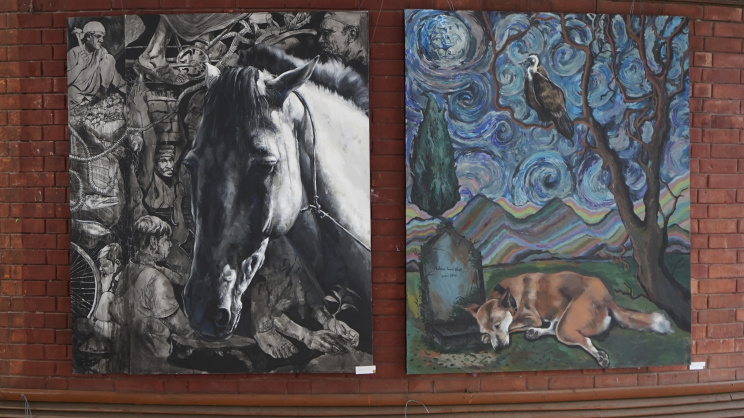
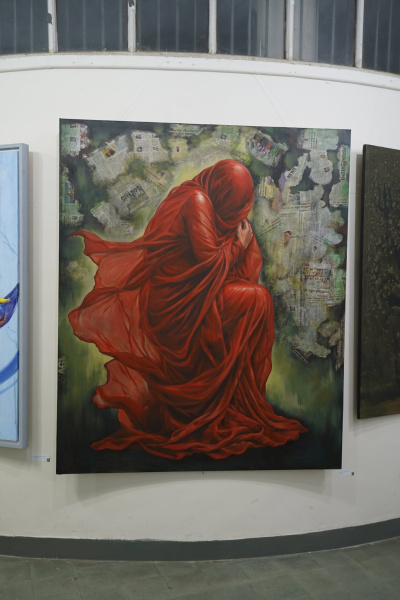
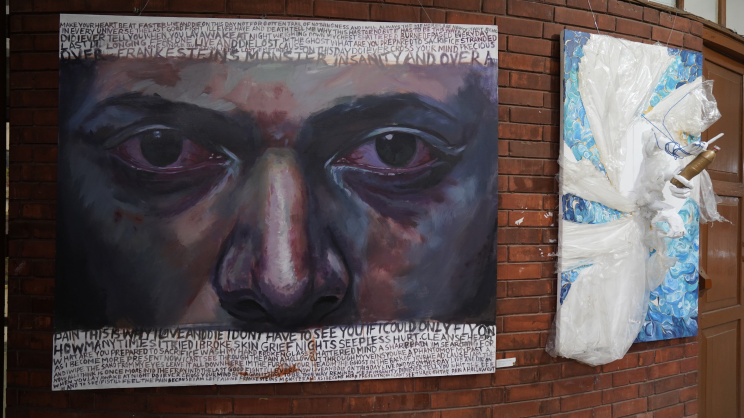
There is also a striking, futuristic piece titled "The Becoming" by Bishal Kumar Das. It shows a girl whose body is half robotic, with mechanical fingers and two robotic flies nearby. Trees and objects in the painting all carry a robotic quality, hinting at a world where humans and animals may vanish and only machines remain. Another painting worth mentioning is "Veiled" by Banya Mazumder, also in mixed media. It shows a girl wrapped in a red veil, hiding herself, with only her hand visible. The background is filled with paper cuttings depicting the daily injustices faced by girls. It reflects on the abuse and unfairness women face every day, and how they are so often expected to remain hidden away.
The first room also holds several paintings of scenes from the Charukola campus itself, its pond, its classrooms, its trees.
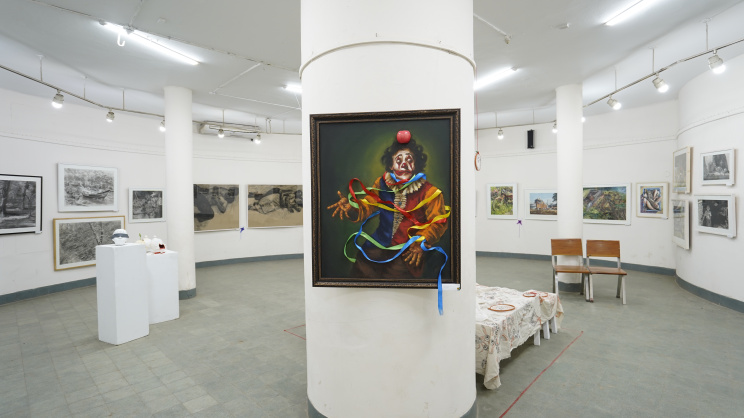
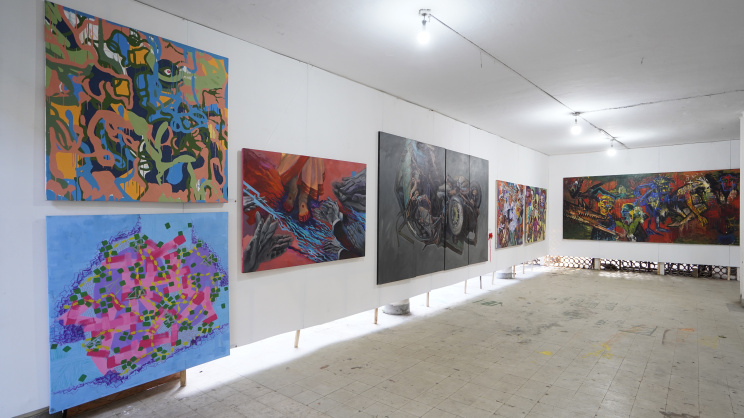
The second room is dominated by watercolour, pencil sketches, charcoal on paper and some mixed media work. One watercolour painting named "Rui" by Preyrona Das is so realistic that the fish almost seems ready to swim off the page.
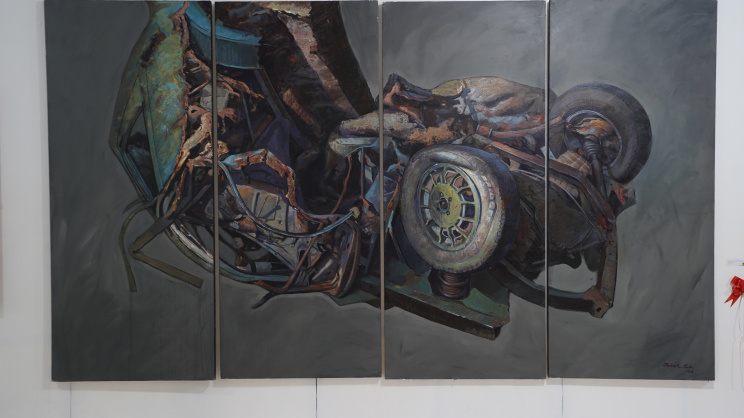
Watercolour gives these works a different kind of depth. A broken engine, a broken motorcycle, a view of the Buriganga riverbank or a glimpse from Curzon Hall, all feel unusually alive under this medium. The detail in these paintings is astonishing, enough to make you feel as though you have stepped into that world yourself.
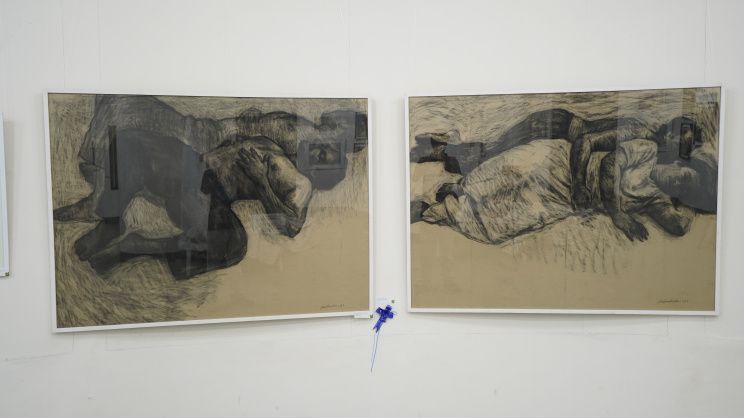
Two charcoal on paper works by Fahim A Chowdhury deserve special mention. Titled "Antarghat", the piece won the Best Award in Drawing. Made in two parts, it reflects on what life looks like in poverty, capturing the moment when poor people go to sleep at night with empty stomachs, some managing to sleep, others unable to.
There are also pen and paper works, where each stroke is drawn with quiet precision, capturing the details of ordinary objects like plants and boats, and showing how even common things can become art. Further on are charcoal and pencil drawings of household items, wrecked engines, cars, motorcycles and a tabla. These are everyday objects we walk past without a second glance, yet here, without colour, they carry you into a different world altogether, one shaped entirely by each artist's own vision.
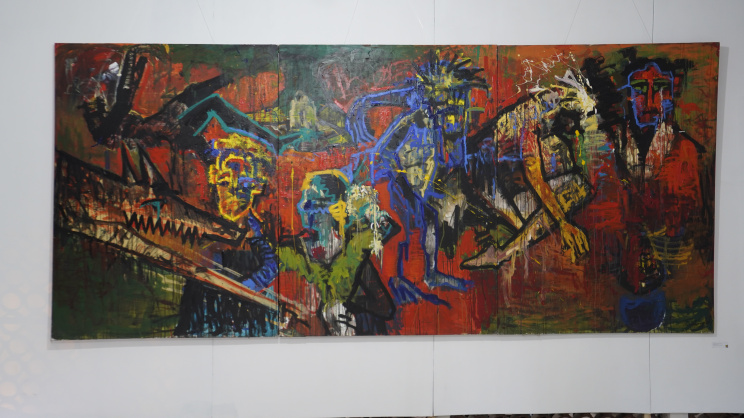
More than a display of paintings, the exhibition feels like a collection of 72 different ways of seeing the world. It is a reminder that at Charukala, art does not simply stay inside a frame. It grows beside the pond, under the trees, in classrooms and in the minds of the students who turn everyday life into something worth looking at again. The “Annual Art Exhibition 2025-2026” will continue until August 30 and will be open daily from 10am to 8pm.
 For all latest news, follow The Daily Star's Google News channel.
Comments