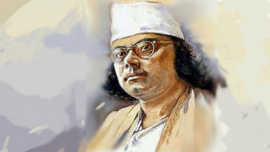
The world changed. Nazrul did not become obsolete

Kazi Nazrul Islam died in 1976, when the world was still divided by the ideological masonry of the Cold War and the internet belonged to the realm of science fiction.
Fifty years later, we inhabit a world that would have seemed almost thaumaturgical to him.

We carry libraries in our pockets, converse across continents without leaving our chairs, ask machines to compose our prose and have made the planet so interconnected that a war, a virus or a financial tremor in one corner can reverberate almost instantaneously through another.
And yet, for all this technological legerdemain, Nazrul's most elemental questions remain stubbornly contemporary.
He was, after all, temperamentally hostile to petrification. His rebellion was not merely against British colonialism; it was against every hierarchy that presumed some human beings were intrinsically superior to others.
That is why the adjective “rebel” can become misleading when used lazily. Nazrul was not enamoured of rebellion for its own sake. His revolt had an ethical destination -- human dignity. Scholarship on his work repeatedly identifies the conjunction of rebellion, equality, humanism, social justice and religious harmony as the philosophical core of his oeuvre.
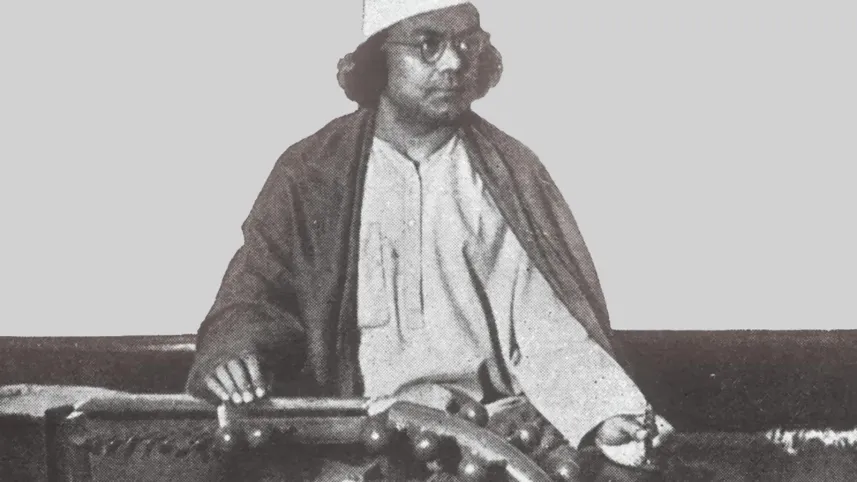
His was therefore a curious radicalism. He could summon the vocabulary of Islam and Hinduism in the same imaginative universe, write Islamic devotional songs and Shyama Sangeet, and insist that humanity preceded the labels by which societies sorted themselves.
Nazrul’s religious pluralism was not the bland tolerance of people agreeing to disagree from a safe distance.
It was more audacious, an insistence that cultures could intermingle without losing their dignity. That proposition acquires an almost incendiary relevance today.
Nazrul lived in a colonial world in which religion, class and imperial power could be manipulated into instruments of domination.
We have supposedly progressed beyond that age, yet the machinery has merely become more sophisticated.
The pamphlet has become the algorithm. The inflammatory speech has become the viral post. The mob has acquired a smartphone. Sectarianism can now travel at the speed of light and prejudice can be manufactured, monetised and amplified by platforms whose architecture rewards outrage.
Nazrul's answer would not have been virtue signalling, nor to abandon religion. He distrusted precisely the reduction of religion into tribal possession.
For him, faith without humanity was a contradiction in terms. His poetry and prose attacked fanaticism, hypocrisy and social oppression while affirming freedom of conscience and fraternity.
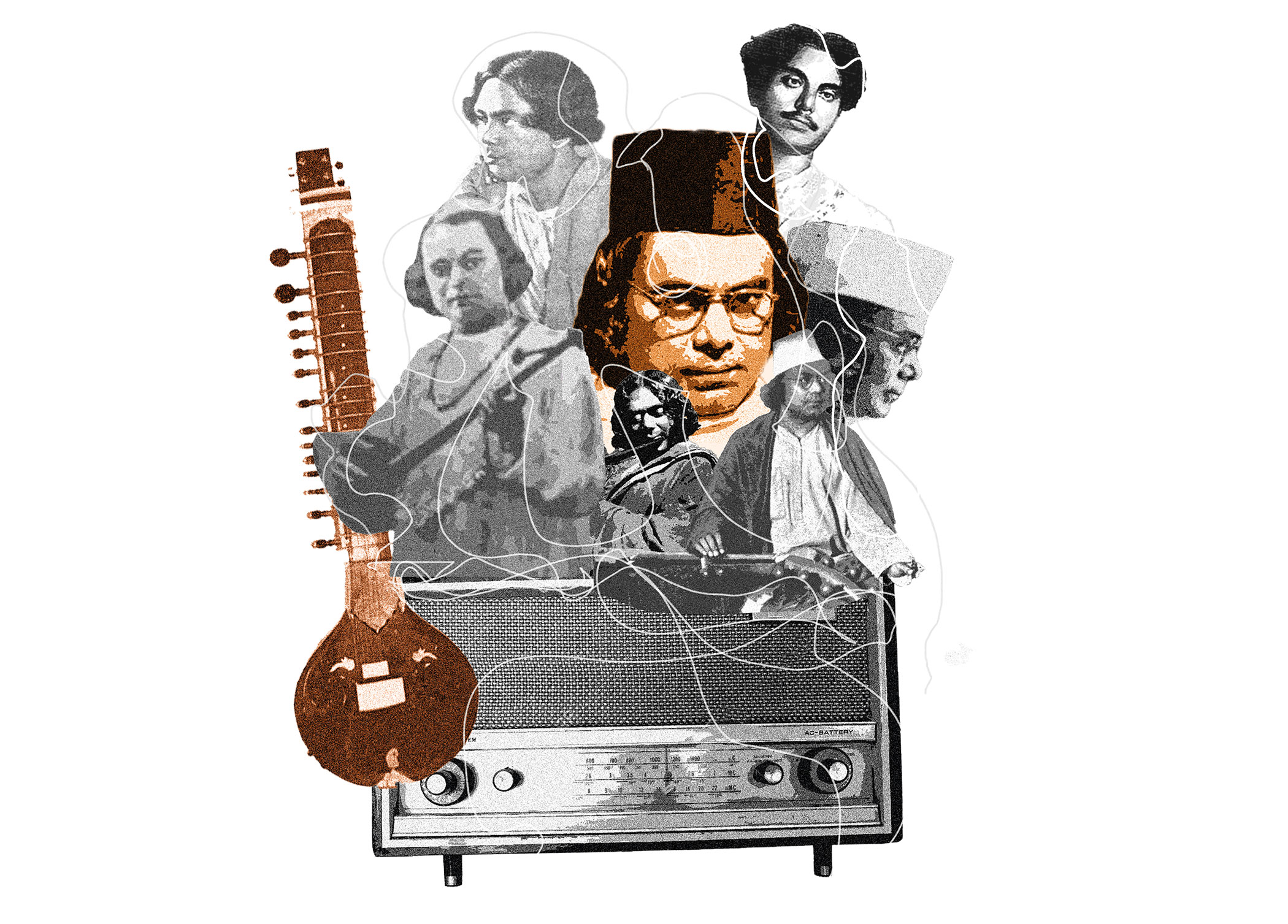
Then there is inequality, that old and remarkably well-upholstered vice.
The world has generated unprecedented wealth since Nazrul's death, but prosperity has not abolished precarity. The language of progress has become more elaborate while poverty remains inconveniently visible.
Nazrul's egalitarian imagination, expressed in works such as Samyabadi and Sarbahara, refused to treat labourers, peasants and the dispossessed as picturesque scenery in somebody else's civilisation.
His conception of equality extended into gender, class and caste, challenging the social orthodoxies of his time.
He was similarly unwilling to place women at the ornamental margins of history.
 For all latest news, follow The Daily Star's Google News channel.
 In Nari, he challenged the hierarchy between male and female achievement, arguing for a shared human inheritance rather than masculine proprietorship over civilisation. For a poet writing in the early twentieth century, this was not merely progressive; it was intellectually insurgent.
And perhaps this is where Nazrul becomes most uncomfortable for many.
We like our great men safely historical. We prefer them embalmed in anniversaries, quoted in textbooks and invoked in speeches.
A living Nazrul would be considerably less convenient. He would probably irritate every camp that wished to claim him exclusively. He would challenge the powerful and interrogate the revolutionary; defend the oppressed while refusing to sanctify oppression merely because it wore a different ideological uniform.
Fifty years have also altered the meaning of rebellion itself. In Nazrul's age, the rebel confronted the censor, the colonial state, the orthodox pulpit and the coercive social order. Today rebellion can be commodified overnight.
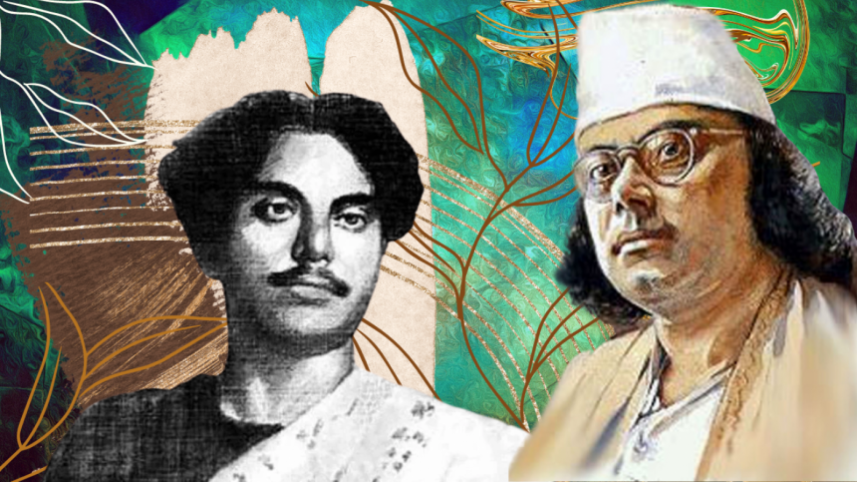
Dissent can become merchandise, an aesthetic, a profile picture, a hashtag. We have acquired infinite means of expression while sometimes losing the courage to say anything that might actually cost us something.
Nazrul's rebellion therefore asks a more exacting question: what are you rebelling for? Not merely against whom.
Anger is plentiful. Moral courage is rarer. Nazrul's great contribution was to yoke fury to compassion, revolt to responsibility, freedom to equality.
Beneath the thunder of Bidrohi was not nihilism but an immense faith in humanity. His rebellion was ultimately an argument that no political order, religious doctrine, social convention or economic arrangement should be allowed to diminish the human being.
Half a century later, borders have shifted, empires have changed their costumes, human beings have walked on the moon, built a planetary information network and taught machines to imitate human intelligence.
But we have yet to master the far older art of being human.
And that is why, half a century after Nazrul’s death, in a Bangladesh and a subcontinent still negotiating the terms of pluralism, his songs endure not as elegy, but as a moral imperative.

The pain Babita still carries after all these years

Television and film organisations protest legal notice seeking to halt romantic projects
Asha Bhosle's final film song set for release on her birth anniversary
'Loud City: Takeover' to honour Ark’s Hasan and protest concert incident
Traditional Puthi Path revives folk heritage in remote Chalan Beel village

Peter Cullen, iconic voice of Optimus Prime, dies at 85
Chhayanaut marks Nazrul’s 50th death anniversary with music, dance and recitation
Together We Can to stage inclusive musical performance ‘Dhoronir Gaan’
‘Bonolota Express’ to screen at ASEAN Film Festival in Hong Kong