


Bubly Barna reimagines motherhood in ‘Fragmented yet Tangled: Living within 2’
Motherhood—a word often related to glorified sacrifice, completion and the supposed purpose of a woman’s life. But what does motherhood do to a woman?
A mother is strong, but only because she has offered herself up to be torn apart from within—both physically and mentally. So, the question remains: why must pain and suffering be the ultimate requirements for being worthy of respect? A mother’s emotions and sense of self after childbirth have to be stitched together, yet a smile is expected from a woman who may feel as though she has returned from the dead.
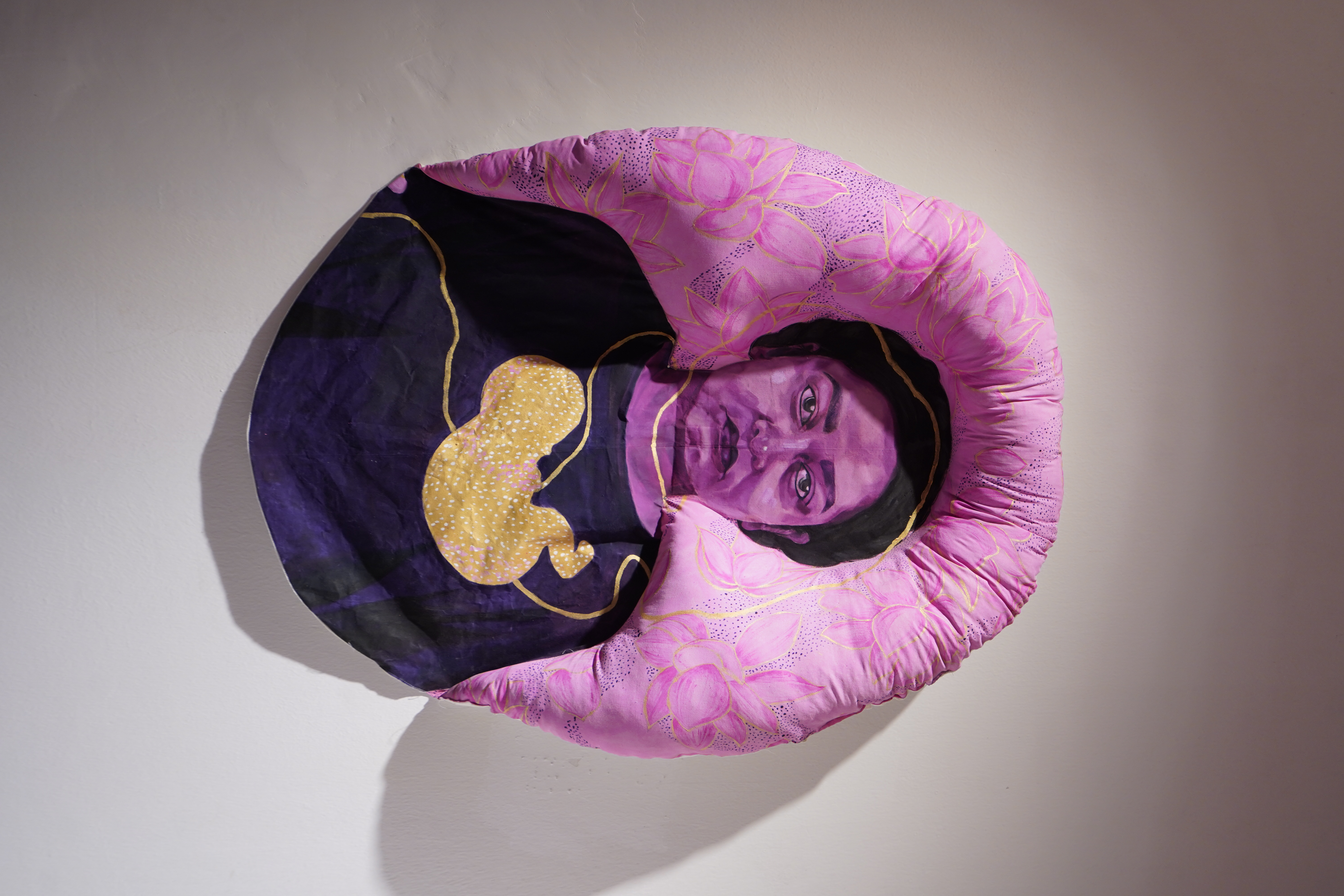
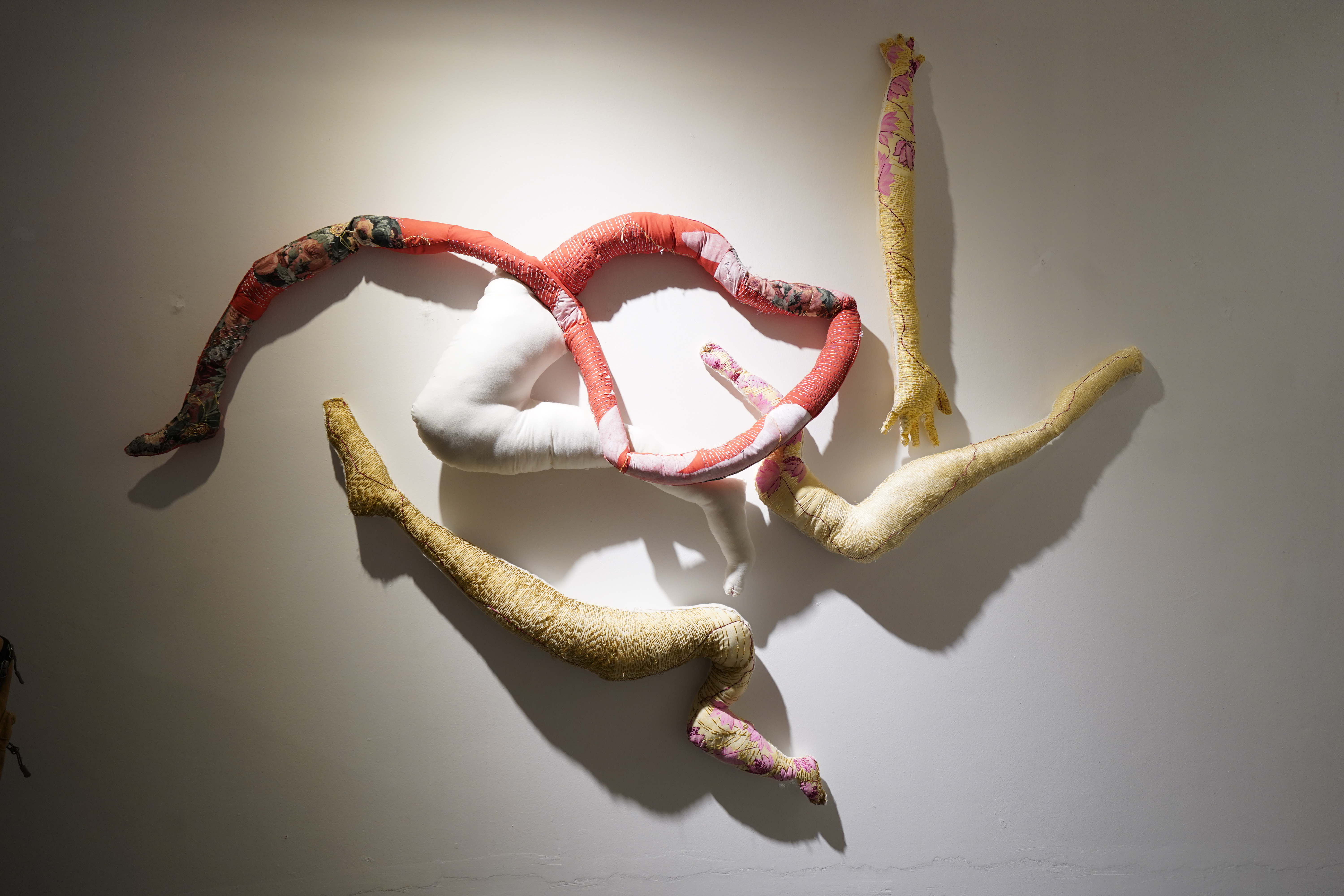
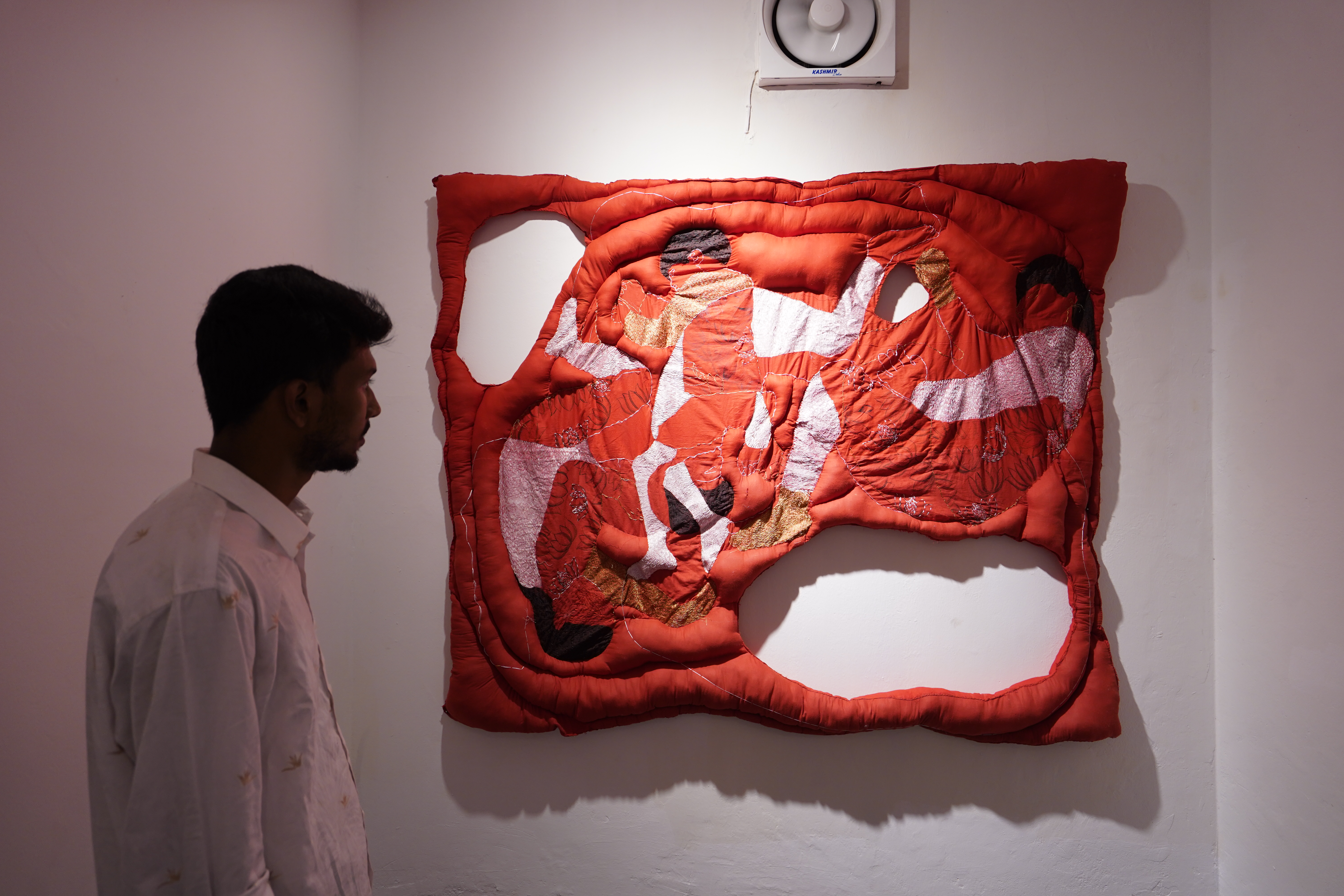
This is the message Bubly Barna sought to convey in her solo exhibition, “Fragmented yet Tangled: Living within 2”, which opened on July 4 and will conclude on July 25 at Kala Kendra’s Lalmatia space. Through textile installations, stuffed sculptures, quilts, photographs and stitching, Barna portrays motherhood as a profound rearrangement of body, labour and identity instead of the traditional, polished image of fulfilment. The exhibition was inaugurated by artist Nisar Hossain and Bengal Foundation Director General Luva Nahid Choudhury.

Bubly was inspired by her own experiences of childbirth and postpartum emotions. She emphasised that when a mother’s body feels as though it has been torn into pieces, each piece still works to create and do something. Across generations, mothers in every home have taken up the role of caregiver—sewing, cooking, taking care of the household and raising children.
These are the societal expectations placed upon a mother who has already gone through the excruciating experience of creating life. But nobody pays attention to the immense pain and emotional whirlwind that a mother has to suppress in order to fit into that role.
This does not mean that the child is the reason for all the hurt. According to Bubly, the cutting of the umbilical cord does not mean the end of the relationship between a mother and her child. In fact, the connection remains. Maternal love and maternal pain can coexist.
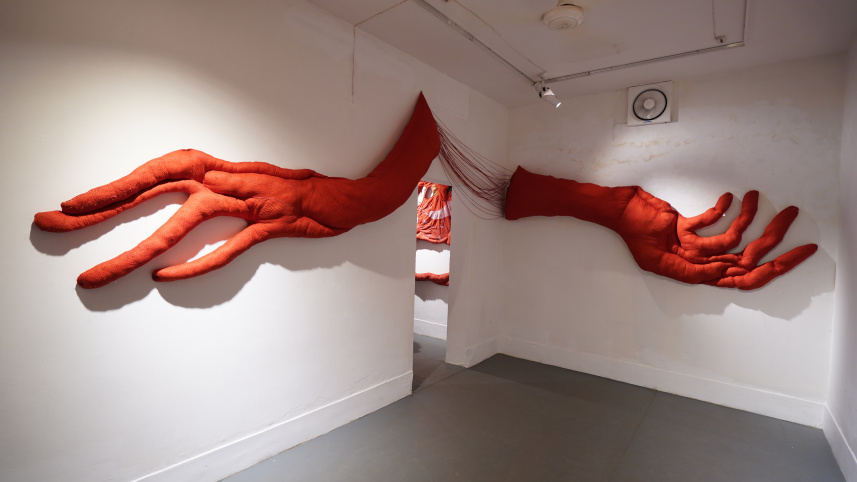
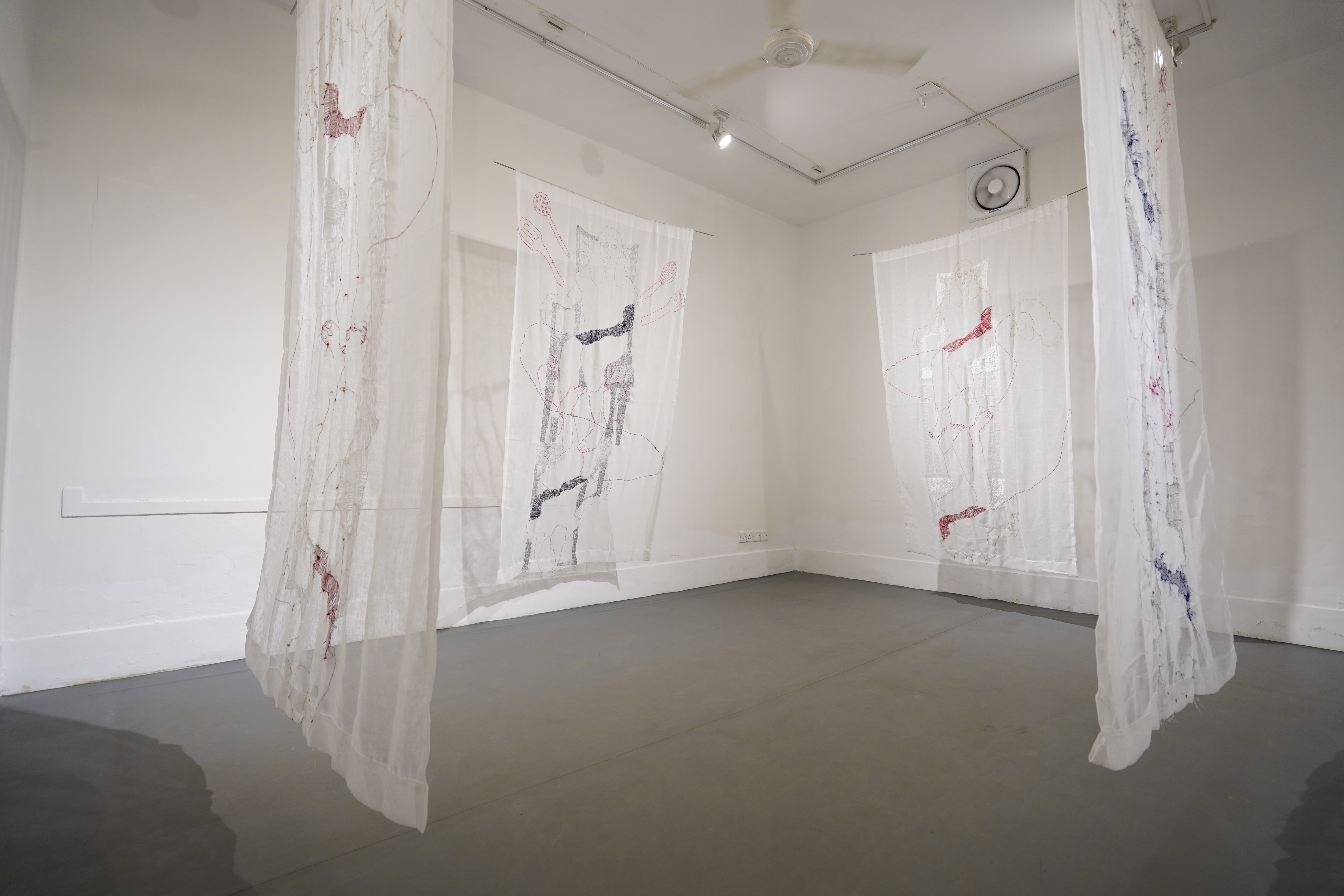
Through her incredibly raw work, Bubly shows how motherhood is complex—a grey area. Oversized red hands share the gallery with hanging kitchen utensils, turning familiar objects into an unsettling domestic constellation. The work asks what happens when care is treated as a woman’s natural duty rather than labour.
Even the promise of heaven becomes suspect: would a mother finally be permitted to rest there, or would service follow her into paradise?
Sleep, too, becomes a political subject. In “I haven’t slept for a thousand nights”, mattresses, quilts and pillows no longer offer uncomplicated comfort. They hold bent bodies, tangled figures and traces of prolonged exhaustion. The exaggerated title captures how childcare can distort time.
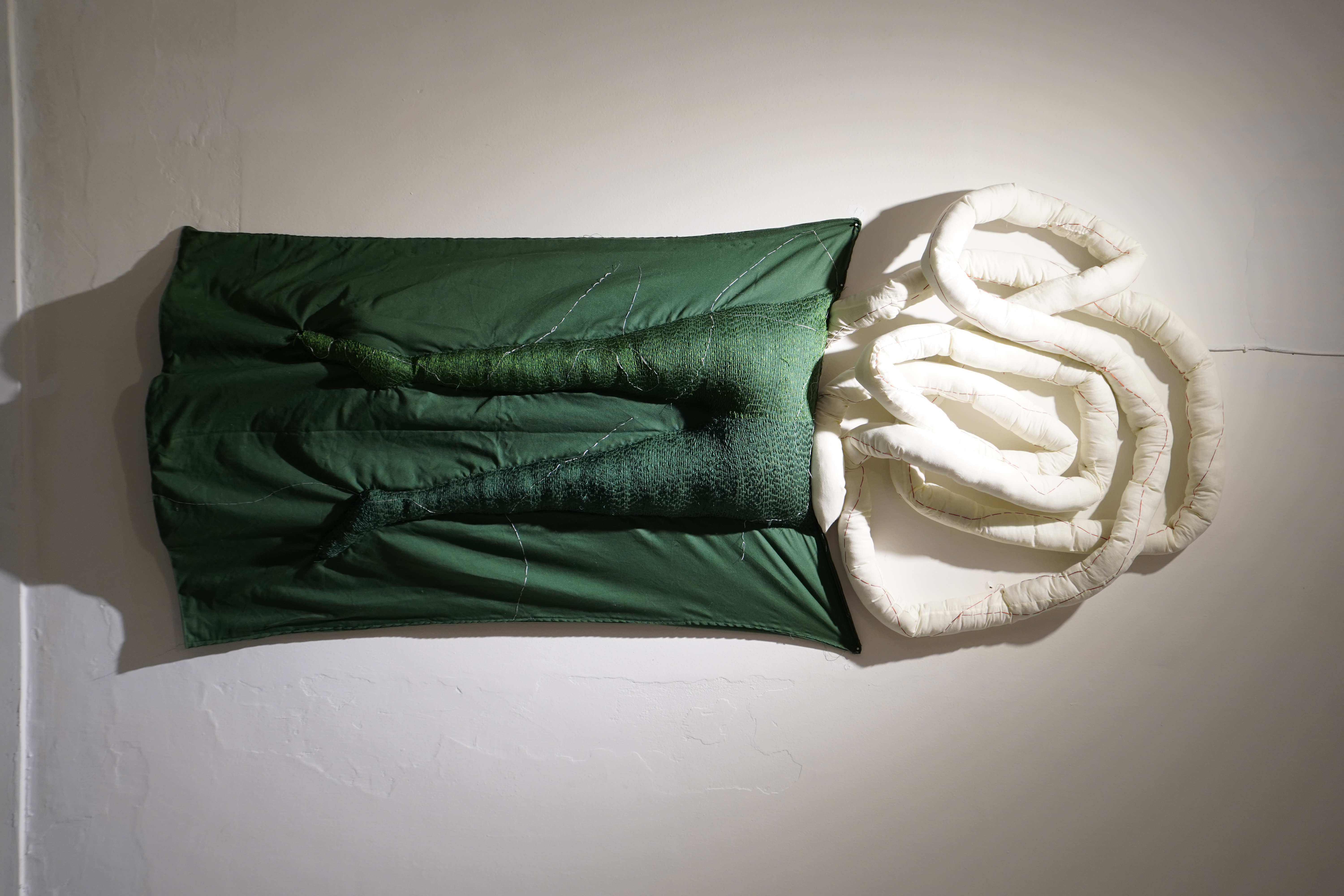
Choosing stitches to portray this idea of motherhood turned out to be an appropriate decision. The strain is visible, the severed limbs are distorted, and the countless strands of shed hair on the pillow are all evidence of a mother’s sacrifice that remains ignored even to this day.
By choosing sewing—a practice traditionally linked to women—Bubly turns it into a tool for expressing the unpaid labour of motherhood. The stitches connect the pieces, but the visible seams ensure that the pain and fragmentation are never entirely concealed.
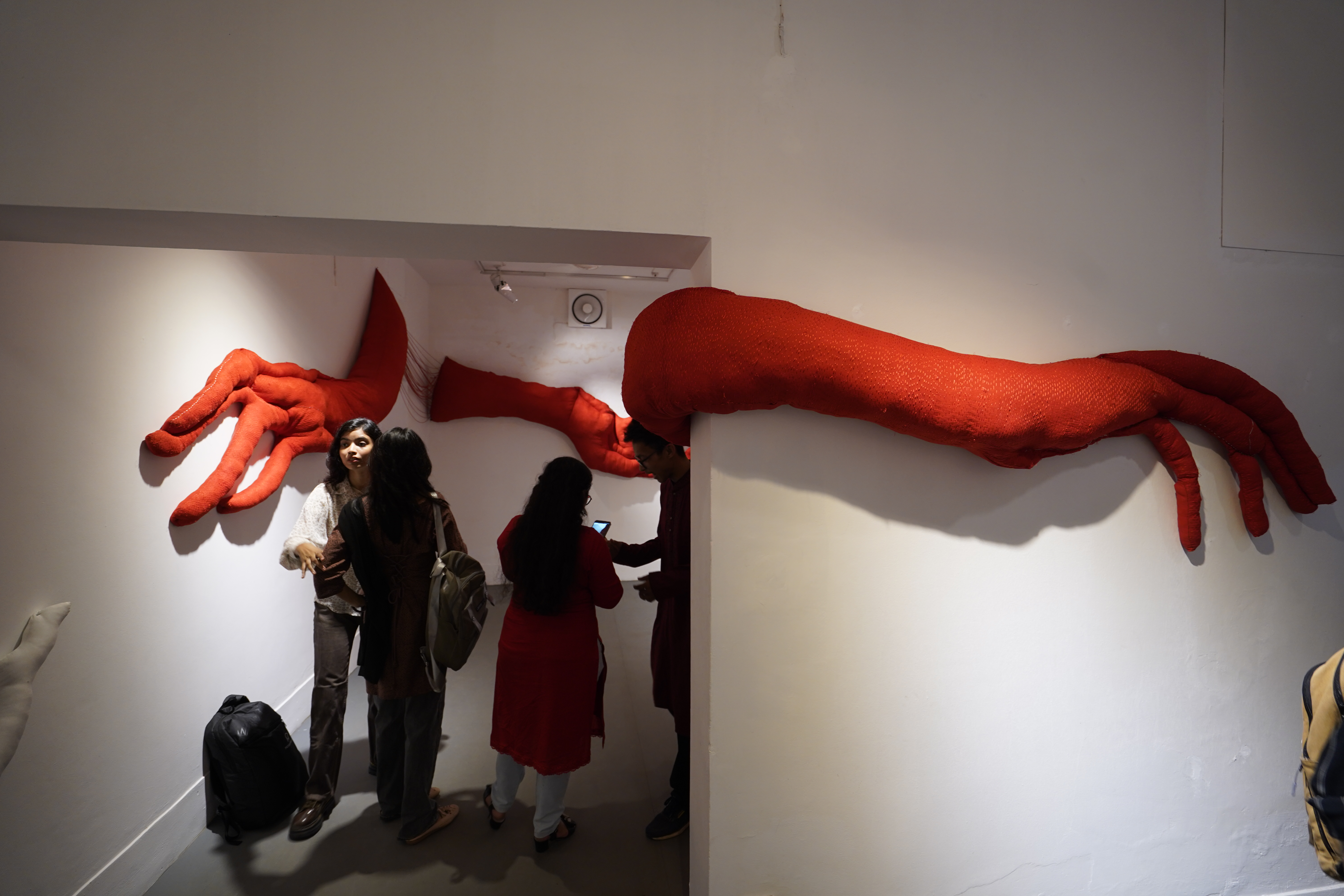
Barna studied painting at the University of Dhaka before pursuing another MFA in Studio Art at Miami University in Ohio. Her practice has increasingly moved from painting towards textile-based forms, allowing maternal experience to occupy physical space rather than remain confined within an image.
“Fragmented yet Tangled: Living within 2” does not deny the tenderness of motherhood. Instead, it refuses the expectation that love must erase exhaustion, resentment, bodily change or the struggle to recognise oneself. Barna’s stitches keep her figures connected, but never conceal where they have been pulled apart.
 For all latest news, follow The Daily Star's Google News channel.
Comments