


‘The Emperor of Gladness’: On living only once
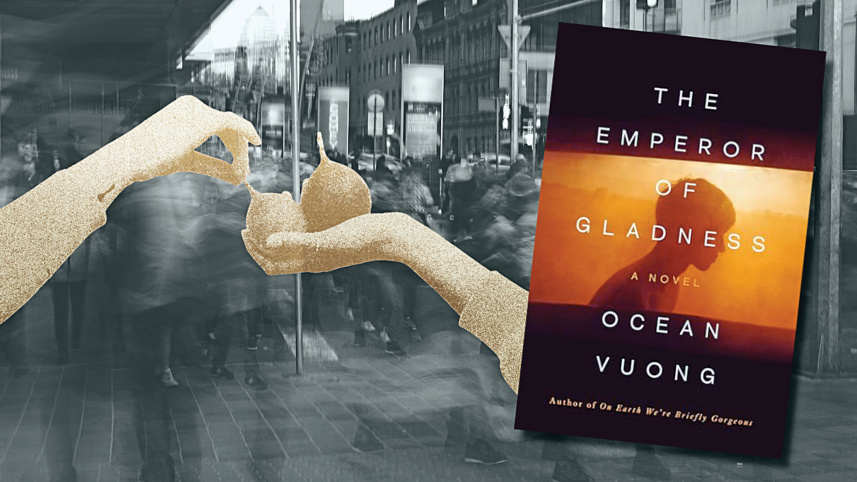
I didn’t want to finish reading The Emperor of Gladness. This feeling invariably revisits me when I deeply enjoy reading a book, becoming completely attached to the characters through a surrender to the ‘willful suspension of disbelief’. This novel deals with the expansive forms of love, loss, belonging and the impulses that shape the fragile lives of people left at the edges of America.
The story centers on Hai, a 19-year-old Vietnamese American, recently out of rehab and quietly sinking into despair in East Gladness, Connecticut. His mother believes he is in medical school; in truth, he is working shifts at a fast-food restaurant, scraping by in the ruins of his own adolescence. One evening, Hai stands on a bridge in the pelting rain on the verge of suicide. He is spotted and interrupted by Grazina Vitkus—an 82-year-old Lithuanian woman, in the first throes of dementia, struggling to hang laundry in the rainstorm. Mistaking his collapse for something else, she calls out to him and pulls him back from the edge. What follows is an unlikely companionship: Hai moves into her deteriorating riverside home, where the walls are cracking and the river itself seems to be drying up, and begins to care for her even as he struggles to care for himself.

Ocean Vuong is, at heart, a poet. His sentences follow a metaphorical flow, yet the language is never decorative for its own sake. Each metaphor depicts Hai’s inner condition—his loneliness, his hesitant steps toward belonging.
Ocean Vuong is, at heart, a poet. His sentences follow a metaphorical flow, yet the language is never decorative for its own sake. Each metaphor depicts Hai’s inner condition—his loneliness, his hesitant steps toward belonging. The prose carries weight without losing air, balancing the heaviness of addiction, lies, and displacement with moments of startling levity. This, in fact, makes the interactions between characters more relatable. It is in such moments—the stolen laughter with coworkers at HomeMarket, Grazina’s fleeting clarity, the mundane grace of cooking and sharing a meal, the innocent bond between two cousins and the memories of their past lives—that the novel earns its title. Gladness here is fragile, yet it is enough. There are no sweeping redemptions in this story, instead, Vuong shows how people survive in fragments: through kindness, through witness, through the stubborn refusal to vanish. It is about “soft, simple people, who live only once”.
This book isn’t linear, it drifts between the stories the characters tell themselves and others, their memories, and the present that demands compassion to mend their broken lives (so what if those stories aren’t completely true?). To me, this intentional move by the author helps us understand the different relationships. The emotional intensity, too, may feel unrelenting for readers unwilling to dwell in prolonged discomfort, as Hai struggles to tell his mother the truth or even when he hides and watches her from afar. But these imperfections are also part of its honesty.
Vuong does not write toward resolution; he writes toward acceptance and contentment. What The Emperor of Gladness achieves, above all, is a sense of gratitude. It sees those who work thankless jobs, who lie to protect their families, who live in houses that are falling apart yet still manage to hold someone else up.
Rifat Islam Esha is a poet. For more updates on her work, follow her on Instagram: @rifatiesha.
 For all latest news, follow The Daily Star's Google News channel.
Comments