


A painful goodbye to Jhalakathi's natural canals
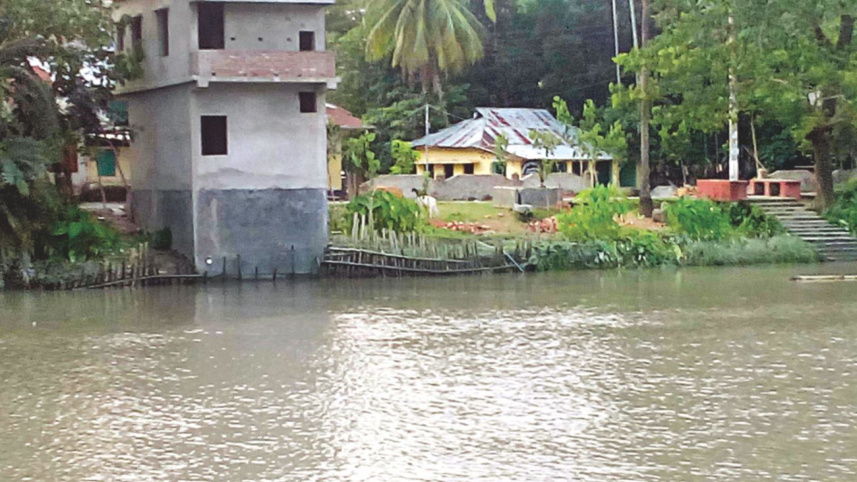
As in neighbouring Barisal, canals have been a defining part of Jhalakathi's landscape for centuries. Being the principle source of irrigation water and a nursery for various fish species, canals have had such an impact on local life that they have earned cultural significance as well. For many, a Jhalakathi without canals could barely be Jhalakathi.
Yet within the last decade the district has lost about half of its 489 canals due to land grabbing. It's a destructive process that continues.

"Canals are the soul of Jhalakathi's agriculture," says Md. Riaj Bahadur, upazila agriculture officer in Rajapur. "They provide most water to farmland during the dry season; but these days our farmers are not getting enough water and many are unable to grow any kind of crop."
According to the agriculture department all of Jhalakathi's canals are under threat of being grabbed by locals.
"The land-filling of canals has already affected around 19,990 hectares of agricultural land," says Sheikh Abu Bakar, deputy director of the district agriculture office.
"With the canals no longer available for irrigation farming becomes difficult," Abu Bakar continues, "especially because by tradition Jhalakathi's farmers don't tap into underground supplies with pumps. They've never needed to."
"I used to grow watermelon," says Putiakhali village farmer Hemayet Uddin, "but for the last three seasons I couldn't grow anything because canal water for irrigation was no longer available."
In addition to the lack of irrigation water, when canals are lost the benefit of easy water transport is lost; and other areas of land become waterlogged due to the absence of the previous drainage channels.
Moreover the encroachment seriously impacts indigenous fish. "These canals are the breeding site for many fish species, and for others their natural habitat," says Pritish Kumar Mallick, Jhalakathi's deputy director of fisheries.
"Destroying canals means destroying fish stocks," he says.
A local fisherman, Masum, agrees that the number of fish has fallen drastically over the last few years.
Yet according to locals responsible government agencies are yet to take any action regarding the filling of canals. They hope the grabbed canals can be re-excavated in the nearest future.
In the meantime it seems as if land grabbing canals has the green light. "I find no fault in filling a canal," says one local, Ali Hossen from Rajapur, a landholder who has encroached on part of an adjoining canal, "because many other people are doing the same." He says he is unaware of any adverse consequences from filling waterways.
In response to the issue, Jhalakathi's deputy commissioner Md. Mizanul Haque Choudhury says all the canals will be freed from land grabbing very soon. "We will run eviction drives against it," he says, "We will write to higher authorities for instruction to re-excavate Jhalakathi's canals."
Relying on the district's canals for their livelihoods, many local fishermen, farmers and boat operators hope the deputy commissioner's words prove true.
 For all latest news, follow The Daily Star's Google News channel.
Comments