


Jute plants drying due to lack of rain
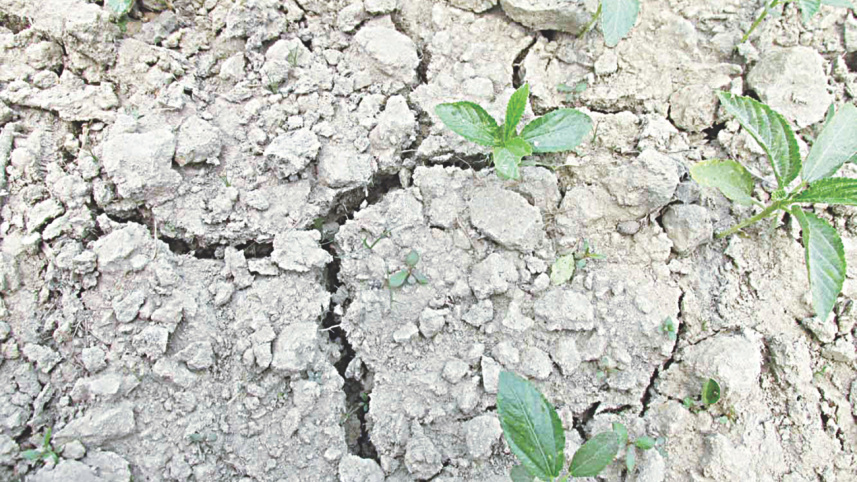
Jute plants on vast tracts of land are drying up due to unceasing drought that has been prevailing in Fulchhari upazila of the district for the last one and a half months.
Although farmers irrigate the land with water raised from underground by pumps, the situation remains unchanged. The scorching sun is drying out the tender jute plants, and jute seeds cannot germinate due to the dryness of the land.

Farmers made good profit from jute cultivation in the last two years, so many of them took it up, but the drought this season might seriously reduce production, said local farmers.
This year, rivers and other sources of water went dry much earlier, which badly affected crop production, said Saidur Rahman, a farmer of Golna village in the upazila.
Farmers of the upazila prefer cultivating early variety of jute to avoid damage by flood, as the area is flood prone and they cannot harvest jute plants after the fields get submerged by flood water, said Abul Kashem, another farmer.
Although the agriculture department assured better production of late sowing jute seeds after harvesting boro crop, flood water often submerges vast tracts of land in Fulchhari much earlier, he added.
According to the upazila agriculture office, 4,000 hectares of land will be brought under jute cultivation this season. Meanwhile, farmers sowed seeds on about 3,000 hectares.
While visiting some drought hit areas of Kanchipara, Uriya and Gajaria villages, this correspondent saw that farmers were irrigating dried up jute fields with deep tubewells, but the jute plants still could not survive.
The tender jute plants are gradually dying in the scorching sun, said Akbar Ali, a jute grower of Kanchipara.
"We are worried about the production of jute this season, because drought will hinder normal growth of jute stalk," he added.
"This season, we had to sow seeds twice or thrice, as the seeds failed to germinate due to acute drought, forcing us to incur additional expenditure," said Altaf Hossain, a jute farmer of Uriya.
"At present, we have nothing to do against natural calamities, especially the changing trend of climate. However farmers still have time to sow jute seeds soon after rain," said Tahajul Islam, upazila agriculture officer.
 For all latest news, follow The Daily Star's Google News channel.
Comments