


Fodder crisis in haor areas
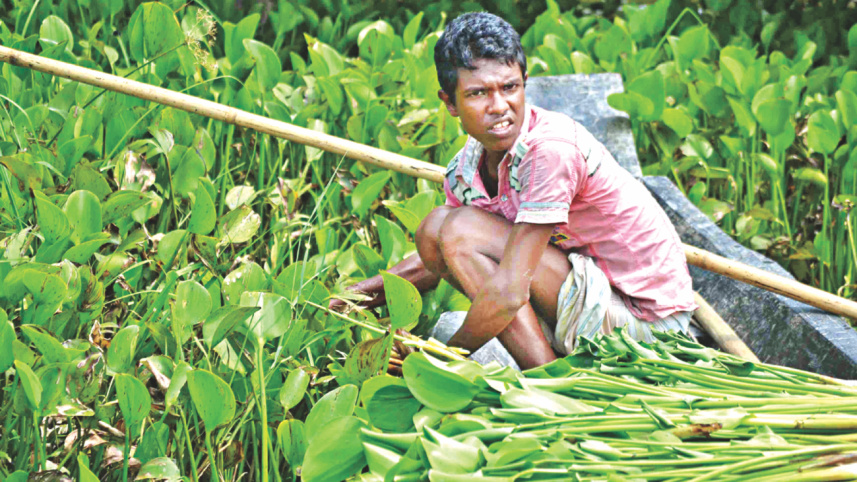
Due to flooding in the Hakaluki Haor region covering five Sylhet upazilas, livestock rearers are facing a crisis in finding feed for their stock.
"For lack of available grass and the high price of substitutes like hay, oilcake and wheat bran I had to sell some of my cows," says Mafur Ali from Chandpur village in Sylhet's Fenchuganj upazila.

"Due to their poor diet at present many cows have fallen ill."
"Cow milk is my only income source," says Monohor Ali from Pushainagor village in Moulvibazar's Kulaura upazila. "These days I am facing a serious crisis in finding pasture. I have been trying to manage my cattle by collecting water hyacinth, but I think in the coming week I'll have to sell some since so much pasture has been damaged and submerged by the floods."
Ramjan Ali from nearby Bhuksimuil village is in a similar situation. "My two acres are underwater," he says, "Most of the grass available for livestock is damaged. In the last two days of April from three cows I could produce twelve litres of milk; but from May my cattle only produce about three litres every few days." Milk is Ramjan's main income source; and several other local dairy producers spoke of similar difficulties.
Yet water flow from the hills and continuing rainfall is further raising the level of the haor and submerging greater portions of pasture across the affected Juri, Kulaura and Barlekha upazilas in Moulvibazar and Fenchuganj and Osmaninagar upazilas in Sylhet.
"I took a loan during Ramadan month to buy two cows," says Bodrul Hosain from Bhuaimil village in Juri upazila. "Now I am in financial crisis since the cows' milk production is decreased from a lack of available pasture for them; and I can't make the loan repayments as they become due."
Hay seller Moin Uddin Chowdhury, from Kathaltoli Bazar in Fenchuganj meanwhile, finds his hay in great demand. The selling rate for hay has increased substantial since last month.
Divisional deputy director of the livestock department Dr. Achintya Kumar Saha says many in the haor area rely on small-scale cattle rearing, for either milk or meat, for their livelihoods. He says he has informed higher authorities concerning the problems they are experiencing due to the floods.
In addition to the needs of livestock, residents too are suffering from a crisis of both clean drinking water and food.
 For all latest news, follow The Daily Star's Google News channel.
Comments