


Cox's Bazar Tourism Industry in Crisis

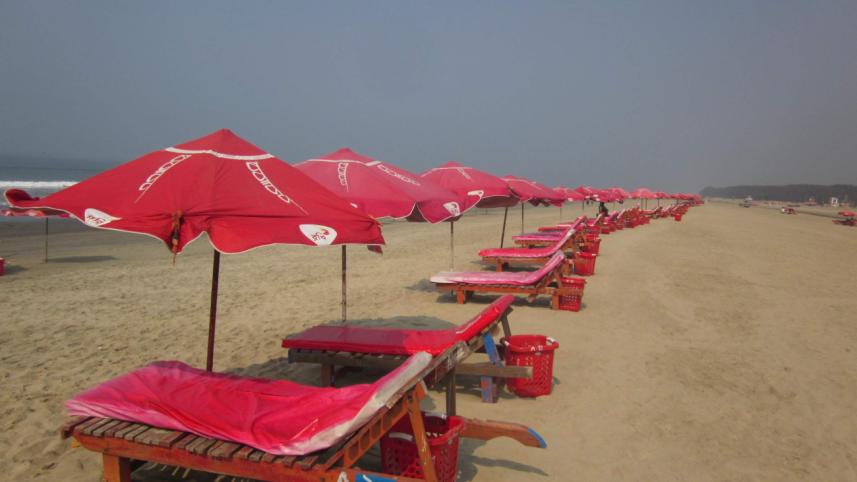
"All the hotel rooms in Cox's Bazar are empty," says Md Azad, manager in-charge at mid-range Hotel Ovisar, located some 100 metres from Laboni Beach.
In the peak months of November to February, the 55-room mid-range hotel anticipates 40 rooms on average will be occupied. Sometimes the hotel is full. These days just four rooms house guests. "We've been losing money since January," Azad says.

Meanwhile at the upmarket Long Beach Hotel, the situation is no better. According to its head of operations Mohammed Tarek, the occupancy rate at the 110-room hotel which would normally sit between 80 -90 percent has fallen dramatically since BNP recommenced their political agitation programme on January 5. "Only five or six rooms are occupied on any day," Tarek says.
At the lower end of the market, the GM Guest House with 8 rooms renting for 300 taka each would usually be full. Only 3 rooms are rented.
In the scramble for tourists, both Ovisar and Long Beach are offering discounts of at least 50 percent.
It's not necessary to speak to hotel managers to understand the scale of the crisis. Usually bustling Laboni Beach is all but deserted. Rows of empty deck chairs are left to take in the sun by themselves. Only a handful of beachfront hawkers have bothered turning up. There's just one man selling shells. A horse and a jet ski find nobody to ride them.
The lack of safe and affordable transport is crippling the local economy. "Most people like to come by road," says Azad, "Now there's risk. There's future planning for a train service but at the moment plane is the only reliable option and fares are too expensive for many families."
Both managers believe an airfare from Dhaka of around 3,000 taka could help draw in tourists. "Fares are from 5,500 to 8,000 taka," says Tarek. "Bangladesh Biman used to offer a 3,800 taka fare but that stopped in 2013." He suggests government initiative to regulate airfares during the crisis would be invaluable to a tourism industry on its knees. A resumption of Chittagong flights could also help.
Delays in school exams have also worked against the industry. "Families can't come until exams are over," says Azad, who hopes the situation may marginally improve in coming months.
At the Long Beach losses are compounded by conference cancellations. "Organisations have cancelled due to political uncertainty," Tarek says. He estimates hotel losses from January are not less than 3 crore taka.
Yet both the Ovisar and Long Beach Hotels are responsible employers. Elsewhere, hotels have told staff to go home without pay, causing untold hardship to their families. "We don't send the room attendants home," says Azad. "They need money to survive. It's better if they stay."
Even so, with more than half their usual income consisting of tips and now reduced to base rate pay, retained staff members are suffering.
Azad remembers better times. On his phone he keeps a video of the beach party last 31 December. There's barely standing room on the sand.
Tarek also enjoys when his hotel is busy. "A hotel should always be crowded, with music, noisy…" he says, "Without noise it's not a hotel."
By Tarek's definition, there aren't many hotels in Cox's Bazar right now. "People in Cox's Bazar are tired of politics," says Azad. "They no longer support any party. We want our livelihoods back."
 For all latest news, follow The Daily Star's Google News channel.
Comments