


Human traffickers must get harsh punishment
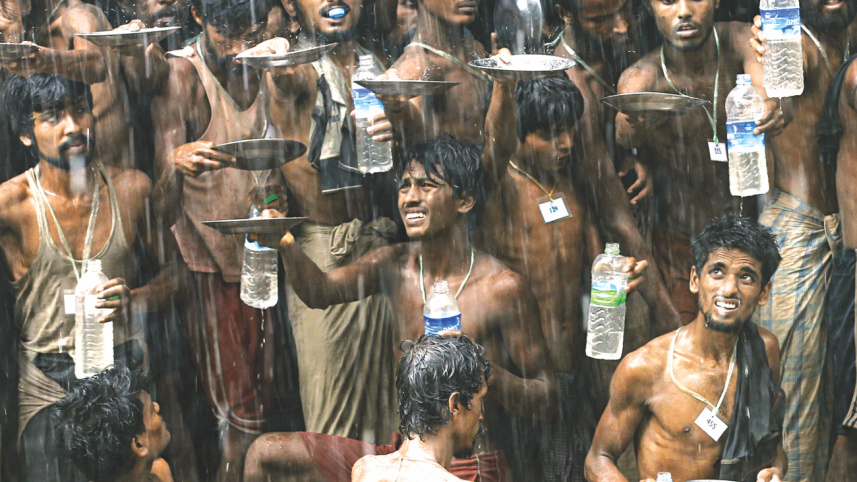
Migration experts, development workers, and families of trafficking victims and survivors yesterday demanded that the government identify the human trafficking gangs immediately and ensure harsh punishment for them through trial to stop the heinous crime.
The law enforcement agencies concerned must be sincere in arresting traffickers overcoming all barriers and bringing them to justice; otherwise the criminals will remain unscathed, they said.

"There are many good laws in Bangladesh to protect the victims of trafficking in the country. Unfortunately, there is no coordination among our government and civil society, politicians and law enforcers to deal with the issues," said Mohammad Harun Al Rashid, regional coordinator of CARAM Asia, a regional network working on migration and health issues.
It is urgent to raise a voice concurrently to stop trafficking, he told a national consultation, "Irregular Migration to Malaysia", organised by the National Alliance for Migrants' Rights, Bangladesh (NAMR,B) at the capital's Brac Centre. "There are allegations that brokers have close connections with politicians and law enforcers," he said.
Referring to Prime Minister Sheikh Hasina's recent remarks on trafficking victims as "unfortunate", Harun said she should clarify her speech; otherwise the victims or their families would feel unsafe in seeking assistance of law enforcement agencies.
At a meeting with labour and employment ministry officials on May 24, the prime minister described those who go abroad illegally to find work "mentally sick" and said these people were tarnishing the country's image, reported state-run BSS news agency.
Harun, a migration expert, said the government should take practical steps to stop trafficking, which was occurring mainly due to a lack of rule of law, good governance and social justice.
Shaheen Anam, executive director of Manusher Jonno Foundation, said the crime could not be prevented until the traffickers and their agents got punished.
"Unfortunately, we don't see government's sincerity in continuing extensive awareness campaign against human trafficking," she said.
Terming remittance as the lifeline of the country's economy, she urged the government to bring back the rescued jobseekers and take steps to check illegal migration by sea.
Mentioning that at least 88,000 migrants from Myanmar and Bangladesh embarked on sea voyages between 2014 and March 2015, Stina Ljungdell, country director of UN refugee agency UNHCR in Dhaka, said the illegal journey across the sea had increased recently.
"It is urgent to make a regional agreement so that people don't cross the sea illegally. To address the root causes of this problem, it is essential to attack criminal gangs in a comprehensive manner," she said, adding that a regional taskforce needed to be created to check the crime.
The UNHCR representative also mentioned that it was crystal clear that people from Malaysia were also involved in the crime as they hired illegal workers for cheap labour.
Two trafficking survivors -- Md Siraj from Cox's Bazar and Rezaul Karim from Sirajganj -- and family members of some other victims shared their stories.
Mokabbir Hossain, director (finance and admin) of the Bureau of Manpower, Employment and Training (BMET); Asif Saleh, a senior director of Brac; and Syed Saiful Haque, chairman of WARBE Development Foundation, also spoke.
 For all latest news, follow The Daily Star's Google News channel.
Comments