


Young Bangladeshis abroad reflect on postal balloting

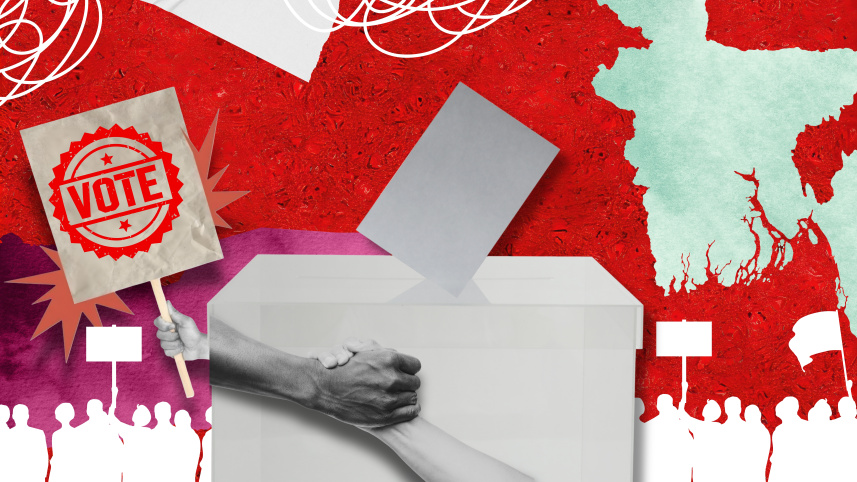
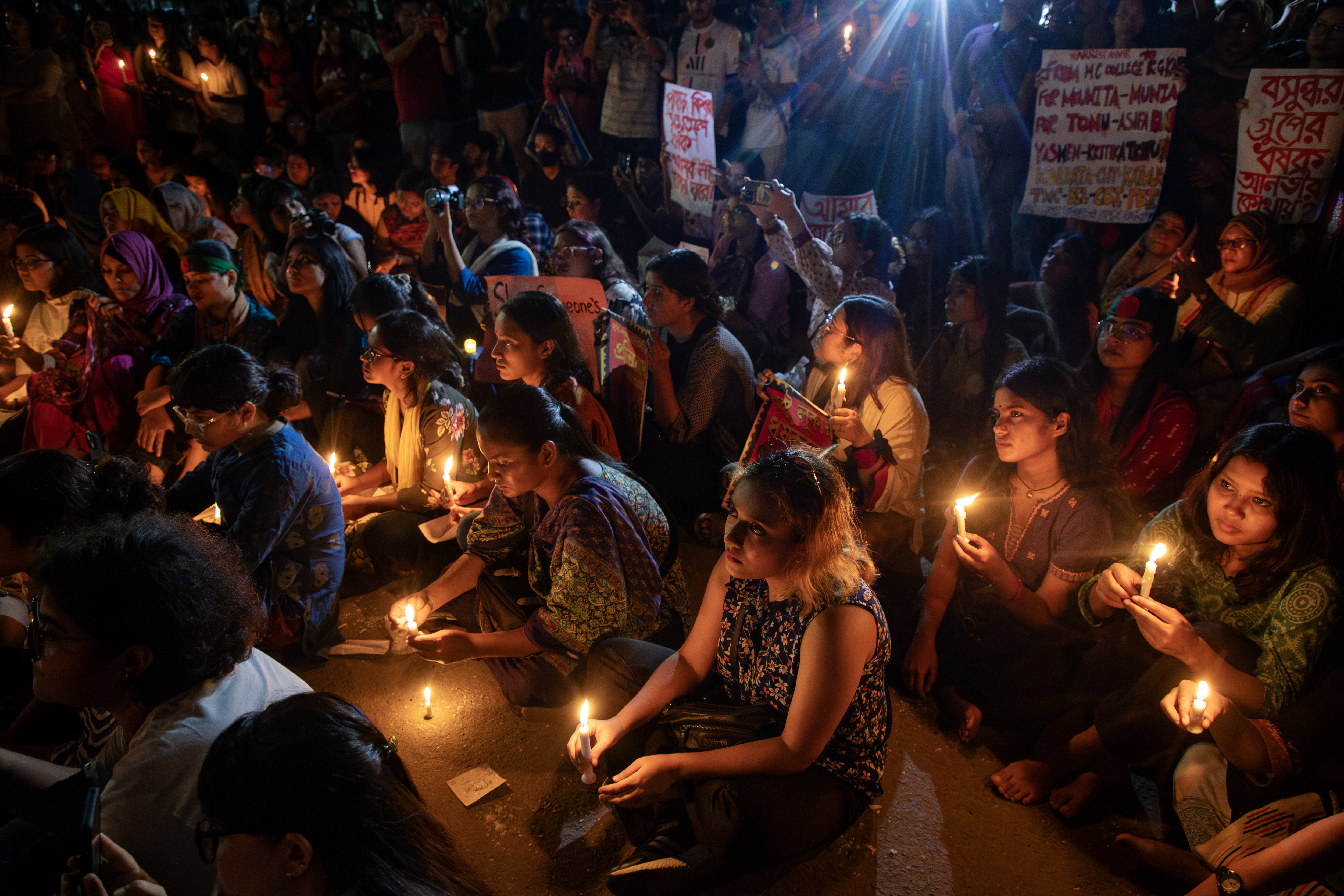
The tension that had gripped the nation during the July Uprising was palpable. A nationwide internet outage caused the anxiety to transcend borders, effectively keeping those abroad in the dark and unaware of the bloodshed unravelling. In the face of uncertainty, however, there were some who proactively took steps to not only inform themselves but also spread the word about the events unfolding in their homeland. Some even took to the streets, protesting from whichever corner of the world they were in. Additionally, many of those who participated in the protest themselves have since left the country, becoming a part of the global network of Bangladeshis. Whether it be through their jobs, the remittances that they send in, or just by virtue of carrying the green passport, this was and continues to be a demographic that supports and represents Bangladesh. The imperative of having this community involved in the upcoming election, thus, cannot be understated.

As such, for the first time in Bangladesh’s history, voters residing outside of the country were able to cast their votes for both the national election and the referendum through postal ballots. At the time of writing this article, it has been reported that 144,860 postal ballots cast by Bangladeshi expatriates have already reached the country.
Campus reached out to a few to gauge what their experience was like and what pushed them to vote despite not being in the country.
Most of those who were interviewed affirmed that the voting experience was fairly simple and went quite smoothly. Anila Nawar, who is currently residing in Estonia and a law student at Tallinn University, emphasised that “everything was laid out step by step”.
Mostafa Rafi, who lives in the United States and is a senior compliance analyst at Imperial Fund Asset Management, put into perspective the sentimental weight of participating as a voter in the upcoming election. He said that this was the first time in 17 years that he cast his vote. “It felt heavy, emotional, and quietly powerful. After so long without a voice, this small act felt like taking something back,” he asserted.
Akif Labib, a learning delivery co-op at Insurance Corporation of British Columbia (ICBC) in Canada, described the experience as being “easy and very efficient”.
Although most of the voters confirmed that the voting experience itself was not complicated, some of them had reservations about the app and its functionality. Both Anila Nawar and Anisur Rahman Tanzil, a Production Consultant living in Sweden, claimed that the “Postal Vote BD” app can be improved. The former described it as being “glitchy”.
Zunayed Ahmed, a Software Engineering student at Seneca Polytechnic in Canada, outlined his experience: “Initially, I had trouble verifying my identity through the mobile app, but after updating it, all the steps went ahead smoothly.”
Zunayed did, however, state that having the voting app available on his phone made the entire process feel very convenient, from registering to voting to confirming that he had sent his ballot in the mail. “Any questions that I initially had, like which documents to put in which of the two envelopes, were clearly answered by the videos that I had to watch in the app. Overall, I would say the guide made the voting experience straightforward,” he added.
The 13th National Election is significant in more ways than one. It would not be wrong to claim that the polls will be Bangladesh’s first step towards rebuilding democracy after a tumultuous period of autocratic rule. How the nation will restore democracy hinges on how the election will pan out. While the stakes may be high, it grants constituents the opportunity to practise their democratic rights, which they were virtually stripped of during the previous regime, further galvanising the significance of the election.
Even though individuals residing outside of the country might not directly get to experience the political realities of Bangladesh, they undoubtedly have a stake in whatever happens. After all, most of them have friends, family members, and close acquaintances who live in the country. Beyond the personal dimension, the possibility of returning to their homeland always remains, especially for international students. Although living away from home is difficult in and of itself, what could possibly make it easier is knowing that the country is safe.
When the interviewees were asked why they chose to vote despite not living in the country, each one had a different answer. But what was worth noting is that their responses were connected by a common thread: the desire to see the country flourish.
Sharmin Tabassum, a medical assistant at JFK Paediatrics in the US, stated that it was her love for the country as well as its people that encouraged her to vote. In a similar vein, Anisur Rahman said that it was his right and responsibility as a citizen to vote. Mostafa Rafi emphasised that it was his wish to see positive change. Akif Labib iterated that he wished to choose the right leader for his constituency.
Elsewhere, Anila stated, “This is the first-ever election that I’ve seen in my lifetime where the outcome is not pre-determined.”
“This was my first time participating in an election,” said Zunayed. “As I grow older, I have learned to value politics and elections as entities that affect the lives of every single person living in a country. Although I live abroad, I have very strong ties to Bangladesh. I would like to see the country prosper. The first step towards achieving that objective is a free and fair election where every single citizen participates.”
As the date of the election inches forward, many, justifiably, are speculating that Bangladesh is on the precipice of history. After 15-and-a-half years of tyranny, corruption, and suppression plaguing the nation, the election stands as an opportunity for the citizens to take back what is rightfully theirs. This is precisely why the upcoming election will live long in the memory as a landmark in Bangladesh’s politics. And to honour the sacrifice that allowed this election to transpire in the first place, it is the spirit of solidarity that must dictate how it unfolds. The postal ballot has succeeded in that regard. It has given those living hundreds and thousands of kilometres away the rightful opportunity to elect their next representative and determine how the political reality takes shape.
Abir Hossain is a sub-editor at Campus, Rising Stars, and Star Youth.
 For all latest news, follow The Daily Star's Google News channel.
The postal voting process: Understanding how expatriates are voting from abroad
For Bangladeshi expatriates, the postal voting process involves the use of the “Postal Vote BD” app, which can be downloaded from Google Play or Apple’s App Store. The Chief Election Commissioner launched the Postal Vote BD app on November 18, 2025, and registration was open for voting via postal ballot from November 18, 2025 to January 5, 2026.
The Postal Vote BD app allowed expatriates to register using their National IDs (NIDs), passports, and the phone numbers they were using in their respective countries. For security measures, the app also required voters to do a “liveliness check”. This check is a security process that ensures that you are a real, living person present at the moment of verification. The check is initially conducted at the time of registration as well as when the user is set to cast their vote.
At the time of writing this article, the registration process has ended, this article will not go into the details of the registration. We will, instead, focus on what expatriates have done or have to do once their registration is completed and they have received their ballot envelope to cast the vote.
Receiving the ballots
If your registration was successful, a white postal ballot packet/envelope will be delivered to your address from the Bangladesh Election Commission. Inside the envelope, you will find a yellow return envelope with the address of the respective returning officer, a small white envelope for the ballot papers, the main ballot paper containing only the electoral symbols, a ballot paper for the referendum vote, and another paper containing a set of instructions on one side and a declaration form on the other. Note that the main ballot paper will not contain any photos of the candidates.
Casting the vote
First, log in to the Postal Vote BD app. You’ll have to do a liveliness check when logging in to verify your identity. After verifying your identity, use the app to scan the QR code of the return envelope (the yellow-coloured one). Once the scan is complete, the app will show you the list of candidates in your constituency and their respective symbols.
Then, take the main ballot paper, find the symbol that you want to vote for in your constituency, and cast your vote by giving a ‘tick’ or a ‘cross’ in the checkbox beside the symbol. For the referendum vote, you will have to choose between two options: yes or no. The referendum ballot paper will outline the details of the referendum. Note that giving tick or cross marks on more than one symbol or checkbox will invalidate your vote. The same goes for the referendum vote; you can only choose one of the two options.
You should then fill out the declaration form accordingly by following the instructions provided.
Returning the ballot
Take the main ballot paper and the referendum one, fold them, and insert them into the small white envelope. Insert the small white envelope and the declaration form in the return yellow-coloured envelope. Submit the yellow envelope to your nearest post office or post box. For the postal vote, you do not have to pay any sort of fees.
You have now submitted your vote and can track your postal vote via the Postal Vote BD app.
Comments