Navigating a career in public health
Most of us enter medical school with a fairly uncomplicated idea of what comes next. You study, you graduate, you become a doctor, and somewhere along the way, you figure out which branch of medicine you want to call your own.
But healthcare is much larger than the hospital corridors. There are people who spend their careers asking why a disease spreads through one community and not another, why an intervention works in one population but fails in another, or what a country’s healthcare system needs before the next crisis arrives.

The variables surrounding these questions converge under the banner of public health. And for students trying to figure out what they want to do with their degrees, particularly those who know they want to work in healthcare but are not entirely sure that clinical practice is where they belong, public health is an option worth looking into. It is also a field that is often misunderstood.
Public health is not simply “community medicine”, nor is a Master of Public Health merely another degree to add to a CV. Instead, it brings together medicine, epidemiology, statistics, economics, sociology, policy, communication, and research to answer a deceptively simple question: how do we keep people healthy in the first place? For Bangladesh, that question is hardly theoretical.
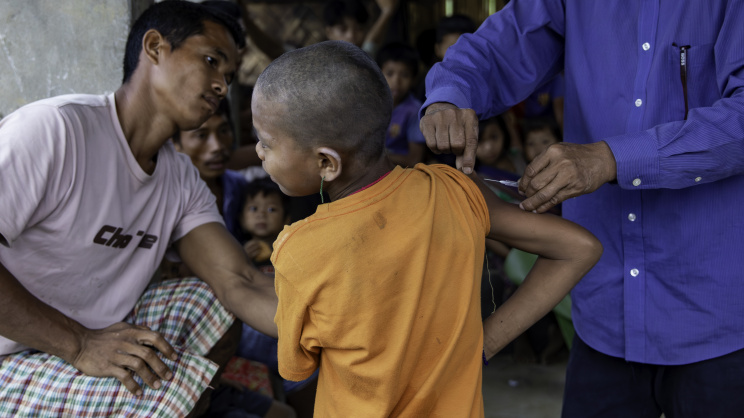
We have dealt with infectious disease outbreaks, antimicrobial resistance, maternal and child health challenges, and an increasing burden of non-communicable diseases, while climate change, urbanisation, and population growth continue to reshape the country’s health needs. Solving these problems require people who understand more than how a disease progresses. It requires people who can understand the numbers behind it, the communities living with it, and the systems responding to it.
The most obvious route into public health is a Master of Public Health (MPH). Unlike many clinical postgraduate degrees, an MPH is open to graduates from a range of academic backgrounds, depending on the institution and programme. Medicine is one of many routes to pursue public health. Students from dentistry, nursing, biological sciences, psychology, and social sciences can also find their way into different areas of the discipline.
The National Institute of Preventive and Social Medicine (NIPSOM), the apex public health institute of Bangladesh, offers nine MPH programmes, including epidemiology, community medicine, community nutrition, health promotion and health education, hospital management, health service management and policy, non-communicable disease, occupational and environmental health, and reproductive and child health. The programmes are two-year-long, with seats divided between government and private candidates.
The Bangladesh Medical University (BMU) also currently lists MPH disciplines ranging from epidemiology and community nutrition to hospital management, health service management and policy, occupational and environmental health, and reproductive and child health.
And public health is broader than what the MPH titles might initially suggest. NIPSOM’s departments include Biostatistics, Epidemiology, Public Health Informatics, Public Health Economics and Health Care Financing, Public Health Emergency, Social Medicine and Public Health, and Hospital Administration, among others. Its training activities include research methodology, data analysis, leadership, and behavioural change communication alongside epidemiology and biostatistics.
For students interested in the more research-heavy side of healthcare, epidemiology and biostatistics are particularly interesting. Epidemiology looks at disease patterns and their determinants across populations; biostatistics gives researchers the tools to make sense of the numbers. The two often sit quietly behind the evidence we take for granted in medicine.
Dr Meerjady Sabrina Flora, former Additional Director General of the Directorate General of Health Services and former Director of the Institute of Epidemiology, Disease Control and Research (IEDCR), did not begin her career with a fixed plan to become an epidemiologist. Rather, an early interest in public health grew through her training and eventually took her towards epidemiology and research. A training experience helped her realise that this was the area she wanted to pursue. Her later decision to undertake a PhD at Cambridge was influenced by that growing interest and by mentors who had themselves returned from overseas training.
That is perhaps one of the more reassuring things about a career that can initially seem so niche: at 20, you do not necessarily have to know that epidemiology is what you want to do for the rest of your life. Sometimes, the direction becomes clear only after you encounter the right problem.
Dr Flora’s own advice to young medical students reflects that openness. “You cannot just depend on books. You have to learn from life. Medical education alone is not enough,” she said.
For someone trying to decide what comes after medical school, it is a useful reminder that career paths are often shaped as much by exposure, curiosity, and people as they are by plans made at 20.
Dr Mohammod Jobayer Chisti, Senior Scientist and Head of Clinical Research at the International Centre for Diarrhoeal Disease Research, Bangladesh (icddr,b), found his way into research through a much less deliberate route.
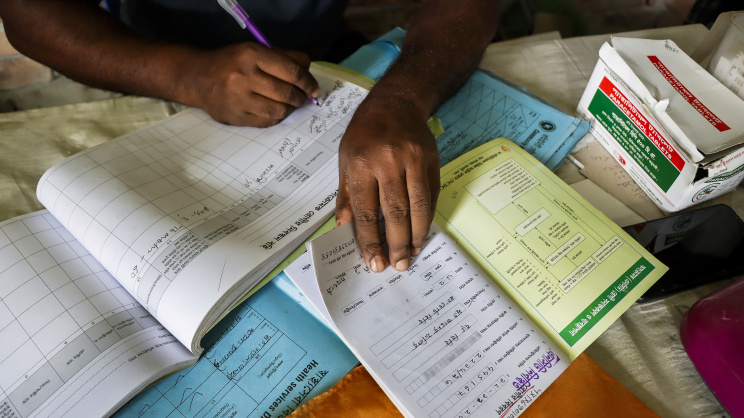
He began as a clinician. During his paediatric training, he encountered critically ill children who did not survive despite the medical team’s best effort. Those experiences left him with an uncomfortable question: perhaps knowing how to treat a patient was not always enough.
That realisation gradually pushed him towards research.
What followed was not an overnight transformation into a scientist. Dr Chisti spoke about mentors who sat with him through data analysis and the painstaking process of writing his first paper. His own journey moved through clinical medicine, epidemiology, biostatistics, research, and eventually international work in child health.
 For all latest news, follow The Daily Star's Google News channel.
 His story also makes a useful distinction for medical students. Research does not have to mean abandoning medicine. In fact, the combination of clinical experience and research can be unusually powerful. A clinician sees the patient in front of them. A researcher can ask why hundreds or thousands of similar patients are experiencing the same problem.
This is also why the idea of the physician-scientist remains important. Dr Chisti argues that young doctors need opportunities to experience research early rather than discovering it years into their careers. Undergraduate research culture, mentorship, and access to training can help students understand whether research is actually for them before they make major career decisions. As he put it, the point of research should not simply be to make a CV heavier. It should ultimately become “a tool for changing the healthcare system”. And this is where public health begins to look less like a degree and more like a way of thinking.
Working in the public health sector often means fieldwork, with many projects carried out in remote areas. Though demanding, this exposure to ground-level realities offers something valuable: a clearer view of how vast and interconnected the public health field truly is, beyond what any office role could reveal.
“Early in my career, I joined Gonoshasthaya Kendra, where Dr Zafrullah Chowdhury assigned me to a two-year posting in Daulatdia to promote sexual and reproductive health among brothel-based sex workers and their clients. The work was challenging in two respects: simply telling people that I worked with sex workers, and, more fundamentally, overcoming the communication barriers that lie at the heart of any health-promotion effort,” says Dr Md Rizwanul Karim, Associate Professor and Head, Department of Community Medicine and Public Health, Sirajganj Medical College.
“What I learned there has stayed with me ever since, which is that people rarely want an isolated health message. The women I worked with had no interest in hearing about HIV and sexually transmitted infections in isolation. They wanted care for anaemia, diabetes, hypertension, jaundice, skin disease, and the same everyday illnesses that affect any community. What struck me most was how eager they were to talk about mental health. Many carried deep psychological distress, social stigma, and trauma, and worried constantly about their identity and their children's futures. That posting opened my eyes to what service delivery truly demands when working with a stigmatised, traumatised, and high-risk population of women and children,” Dr Karim adds.
There is, however, a less glamorous part of the conversation that aspirants should know before enrolling or pursuing a career in public health. An MPH does not automatically translate into a job. A Bangladesh Health Watch study on professional public health education found that around 57 percent of public health graduates face significant challenges securing employment in relevant fields. The study pointed to limited job and research opportunities, curricula that do not always develop job-ready skills, and a shortage of qualified educators. It also found that non-medical graduates and graduates from public universities faced greater difficulties. While these issues are not reason enough for one to completely abandon their aspirations in the field of public health, they do warrant greater deliberation.
The public health job market is relatively specialised. Graduates can work in government institutions such as IEDCR and across the broader health system; in research organisations, universities, NGOs and development agencies; in international organisations; in hospitals and healthcare management; or in monitoring, evaluation, policy, and programme implementation.
The work itself can vary depending on one’s training. One graduate may spend the day cleaning and analysing a dataset. Another may be coordinating a field study. Someone else might evaluate whether a maternal health programme is actually reaching the women it was designed for. Others may work in health communication, policy, hospital administration, or research.
The problem is that the degree alone rarely provides all the skills these jobs require.
The field rewards people who build around their degree. This is something both Dr Flora and Dr Chisti reaffirmed.
Dr Flora’s experience during the Covid-19 pandemic offered perhaps the clearest demonstration of why public health cannot be reduced to one profession. She recalled a period when nobody really knew what the virus would do next. Testing capacity had to be expanded, hospitals struggled with resources, and healthcare workers were working under extraordinary pressure. She emphasised that protecting healthcare workers was a responsibility that extended beyond doctors to the entire health workforce.
What the pandemic taught her was not simply how to manage a crisis. It was how little any one discipline can accomplish in isolation. And perhaps that is one of public health’s greatest strengths. The work is interdisciplinary. The problems are too.
A good public health professional might have to understand a little medicine, a little bit of statistics, a little sociology, and a great deal of how people actually behave.
During the pandemic, Dr Flora also witnessed how quickly information could change. New evidence appeared almost every day, sometimes contradicting what had been believed only days earlier. That experience reinforced another lesson she shared: scientific knowledge matters, but so do communication, adaptability, and the ability to work with people under pressure.
For her, that human element is not something technology can simply replace. Even as data, technology, and artificial intelligence become increasingly important to healthcare, she stressed the continuing importance of empathy, communication, and the ability to remain connected to people.
Dr Chisti makes a similar argument from the research side. He cautions against treating research and publishing papers as mere professional milestones. Research, he argues, should ultimately change how healthcare is understood and delivered.
Even something as practical as Bubble CPAP – a respiratory support technology used in neonatal and paediatric care – can become a research question when a clinician notices a problem in everyday practice and asks whether it can be improved. Dr Chisti’s own experience with Bubble CPAP illustrates the movement from bedside observation to research question to evidence. What started as a clinical problem became a research question because someone was willing to ask whether the way things were being done could be made better.
That is perhaps the kind of research culture medical education needs more of.
It is also why Chisti believes undergraduate medical education should make room for research much earlier. Students should not have to wait until postgraduate training to learn how to formulate a question, analyse data, or write scientifically. Mentorship and institutional opportunities, he argues, can determine whether that curiosity ever becomes a research career.
So, should you consider public health? There is no particularly romantic answer. Public health in Bangladesh has genuine opportunities, but it also has an uneven job market, institutional limitations, gaps in training, and financial uncertainty, particularly in research careers that depend heavily on project funding. Dr Chisti spoke candidly about the difficulty of choosing research when clinical and private practice may appear to offer a more predictable financial future.
For someone who enjoys medicine but finds themselves more interested in why diseases happen than simply treating them, public health can offer a very different kind of career. For someone who enjoys statistics, research, or social science, it can provide a way into healthcare without becoming a clinician. For doctors, it can be a route towards research, policy, epidemiology, or health systems rather than conventional clinical practice. And perhaps most importantly, it offers a chance to think at a different scale.
For students standing at the increasingly familiar crossroads asking themselves, “What do I actually want to do with my degree?”, public health is worth considering not because it is a fashionable niche, nor because an MPH sounds impressive on paper. It is worth considering because Bangladesh has health problems that cannot be solved from a consultation room alone.
Purna is a fourth-year medical student at Sirajganj Medical College. You can reach her at ahnafpurna@gmail.com

Opinion / Why Bangladeshi unis should consider offering online degrees
Opinion / Why Ducsu’s faculty evaluation move matters

TV Series / After five seasons of panic attacks, The Bear ends

3 blasts reported on Dhaka University campus
CU Alaol Hall students lock provost’s office demanding resignation

‘28 days left of Cucsu, then I’ll beat you’: CU hall union VP says JCD leader threatened him
Press Release / IUB-MCCI roundtable discusses on graduate employability
Press Release / NSU Department of Law honours newly enrolled Bar Council and High Court advocates