


Eid away from home: A silent CU campus, a few lit rooms
Educational institutions across the country announced extended holidays for Eid, prompting most students to return home.
Yet, beyond this familiar picture lies a quieter, less visible reality.

Spread across nearly 2,300 acres of greenery, Chittagong University takes on a markedly different character during the holidays. Roads and walkways, usually thronged with students, fall still, and most residential halls stand empty.
But in a few rooms, a different scene persists. Among the university’s 16 residential halls -- 11 for male students and five for females -- a small number of students stay back.
Abdur Rab Hall and Shah Amanat Hall, in particular, have relatively higher occupancy this time.
For many, the reasons for staying back are complex. Financial hardship, long travel distances, academic pressure, career uncertainty and social constraints all play a role.
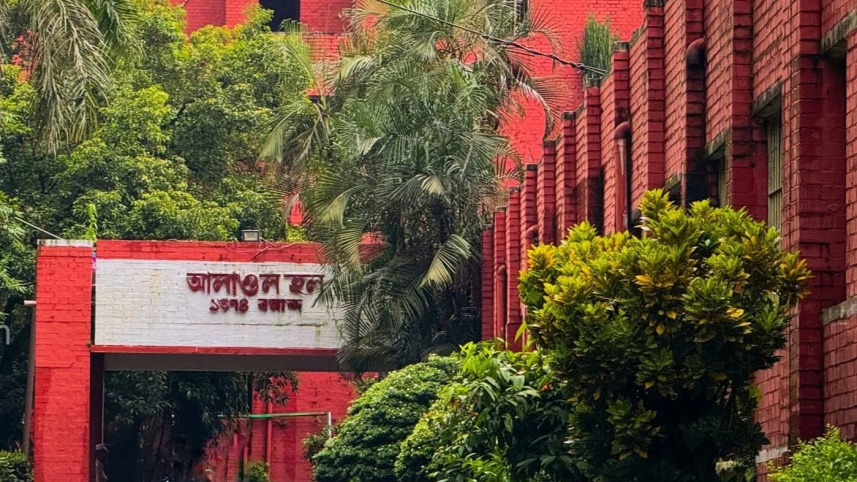
Nurul Azim, a resident of Alaol Hall from the 2019–20 session of the Department of Political Science, reflects this reality. From northern Bangladesh, he says travelling home during Eid would cost several thousand taka, an expense he cannot afford this year.
“Not being able to celebrate Eid with my family is painful. But I have to accept the financial reality and stay in the hall,” he said.
Academic commitments also weigh heavily.
With final examinations scheduled soon after the holidays and thesis submissions due, many students chose not to lose valuable preparation time.
Mohammad Nuruzzamal, a fourth-year student of the Department of Arabic, said he had hoped to celebrate Eid at home.
“But with my year-final exams right after Eid, I have to stay back and prepare,” he said.
For others, the burden is less immediate but equally pressing.
University life is often tied to the aspiration of securing a stable career, yet the job market remains highly competitive. Even after completing undergraduate and postgraduate degrees, uncertainty persists.
One student, requesting anonymity, described his frustration. “I completed both my honours and master’s, hoping to quickly find a job and support my family. But now, getting a job feels like chasing something unattainable. This disappointment, along with social pressure, keeps me from going home,” he said.
Preparation for competitive examinations, including the Bangladesh Civil Service, further intensifies the strain. For many, long-term career prospects take precedence over a single festival.
Professor Ariful Haque Siddiquee, provost of Abdur Rab Hall, said that, as in previous years, there are plans to arrange Eid celebrations for those staying back. The new administration has been informed and has given assurances, with a meeting scheduled to discuss the matter.
“If the central administration does not take any initiative, we will organise something at the hall level,” he said, adding that around 15 students are currently staying in the hall. While budget is not a major concern, a shortage of staff and house tutors poses a coordination challenge.
For female students, the decision to stay often carries an additional dimension. Family expectations regarding marriage can make returning home during Eid uncomfortable, with some anticipating pressure on that front. As a result, they remain in halls despite wishing to be with their families.
Those who remain attempt to carve out moments of celebration. Some offer Eid prayers together, others cook and share meals, while many spend hours speaking to their families over the phone.
 For all latest news, follow The Daily Star's Google News channel.
Comments