


Dr Hamidul Huq on sustainable development and eight years of ICSD
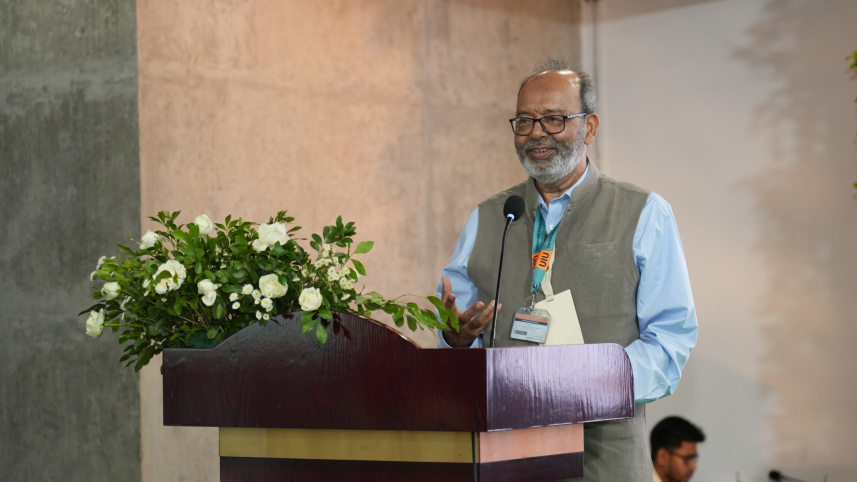
United International University (UIU) is marking a significant milestone with the 8th International Conference on Sustainable Development (ICSD). Behind this achievement lies a vision to transform how universities approach education and research.
Campus sat down with Prof. Dr Hamidul Huq, Director of the Institute of Development Studies and Sustainability (IDSS), UIU, and conference convener, to talk about sustainable development and how UIU is putting it into practice through research, education, and this ambitious academic conference.

Prof. Huq traces the ICSD initiative's roots to the UN's pivotal 1987 report, Our Common Future, saying, “The report argued for the redefinition of development into ‘sustainable development’, an approach that is friendly to both the natural and social environment while also boosting economic development.”
The 2015 UN resolution on sustainable development created new educational imperatives, prompting UIU to integrate sustainability principles into its curriculum and assess their effectiveness through this conference.
The IDSS at UIU operates on a philosophy of knowledge-driven action. “The purpose of IDSS is to initiate empirical research and bring it into the classroom,” Prof. Huq states. “If initiatives are based on empirical knowledge, they lead to responsible consumption. IDSS’s mission is to make society responsible and knowledge-based.”
The conference thrives on cross-sector collaboration, drawing participants from universities, NGOs, and consultancy organisations across South Asia and beyond. International experts bring comparative perspectives, while local policymakers, parliament members, ministers, and engineers from water development boards engage with research findings.
“Foreign experts who may not have much knowledge about Bangladesh, but may have seen similar problems elsewhere, come to our conference to learn and think critically about our challenges,” says Prof. Huq.
This global-local exchange enriches discussions and strengthens solutions. The collaboration extends to students, who participate in research projects and fieldwork each semester. Faculty members from various universities contribute as session chairs and presenters, while graduate students deliver their own research findings.
Perhaps most significantly, the ICSD bridges academia and policy. A dedicated plenary session examines Bangladesh’s ambitious “Bangladesh Delta Plan 2100”, the country’s century-long sustainable development roadmap. “We present critical analyses of both long-term and short-term plans, raise questions, and offer specific recommendations and suggestions,” Prof. Huq explains. “In subsequent forums with the government, they sometimes adopt our recommendations, which translates into fruitful action.”
Prof. Huq highlights an extraordinary response that has set the 8th ICSD apart. The conference witnessed four to five times higher abstract submissions compared to previous years. “The level of interest has been remarkable,” he noted. “People are not only eager to participate, but they genuinely want to be part of sustainable development efforts.”
This overwhelming response is also reflected in the enormous participation and widespread appreciation the conference has received. Researchers, students, policymakers, and development professionals have shown a strong desire to engage, collaborate, and share knowledge, signalling a growing collective commitment to sustainability. This year’s edition received around 600 paper submissions, further demonstrating the scale, credibility, and growing global recognition of the conference.
The 8th UIU-ICSD has thus evolved into more than just a conference; it has become a vibrant platform for those who aspire to make a real impact on society.
 For all latest news, follow The Daily Star's Google News channel.
Comments