


Venezuela opens up oil sector: what now?
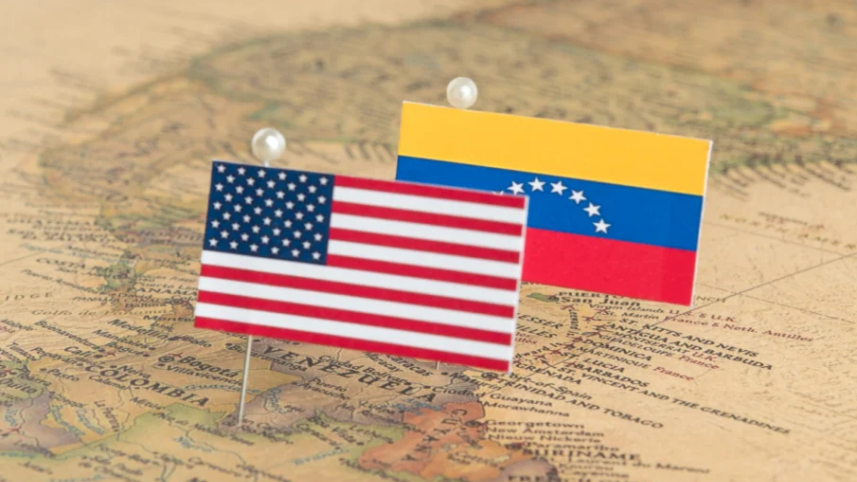
In one fell swoop, decades of oil sector nationalization ended in Venezuela this week, as the global leader in known reserves opened up to private firms while seeking Washington's benediction.
Parliament on Thursday approved a reform of Venezuela's Hydrocarbons Law, tightened under socialist ex-leader Hugo Chavez in 2006 to entrench state control over a resource Venezuela has more of than any other country on Earth.

The move was immediately reciprocated by the US Treasury loosening an embargo in place since 2019 on Venezuelan crude.
How things stand:
- Lower taxes, royalties -
Interim leader Delcy Rodriguez, trying to stay in US President Donald Trump's good graces after he ousted her predecessor, Nicolas Maduro, has agreed to grant access to Venezuelan oil.
A Maduro ally who served as his vice president, she has retained the hydrocarbons portfolio she has held for years.
Venezuela's oil sector grew by 16 percent under Rodriguez's direction in 2025, and private sector projections point to growth of 30 percent this year.
The reform approved Thursday offers greater guarantees to private players, relinquishes state control of exploration, and lowers taxes.
It authorizes private firms to exploit, distribute, and market oil without state participation, and to transfer assets to other private entities.
The state can reduce royalties for bigger projects and cut taxes at its discretion.
"This obviously completely dismantles Hugo Chavez’s oil model," said Francisco Monaldi, an energy policy expert at Rice University in Texas, while pointing out the state will retain some discretion over the issuing of contracts to private players.
The reform also seeks to boost investor confidence by allowing for international arbitration in disputes.
- Conditions -
The United States on Thursday issued General License 46, easing sanctions and authorizing American companies to export, sell, store, market, transport, and refine Venezuelan crude.
It stipulates that contracts with the Venezuelan government, state oil company PDVSA, or subsidiaries must be governed by US law.
It sets a number of conditions: payments via debt swaps, in gold, or in digital assets such as cryptocurrencies issued by Venezuela are not permitted.
Transactions with persons or entities linked to Russia, Iran, North Korea, Cuba, and China are also banned.
- Wait and see -
US firms ExxonMobil and Chevron yesterday saidthat they were awaiting signs of greater fiscal and legal stability in Venezuela before making any big decisions.
ExxonMobil has not operated in Venezuela since its assets were expropriated in 2007, while Chevron has remained in the country under a special license.
 For all latest news, follow The Daily Star's Google News channel.
 If all conditions are met, Chevron CEO Mike Wirth yesterday said Venezuela "has the opportunity to become a more sizable part of our portfolio in the future."
Chevron estimates its production will rise from 50,000 to 250,000 barrels per day in two years.
ExxonMobil CEO Darren Woods, for his part, said institutional and economic stability were "significant challenges that must be addressed" and the company would watch for a transition "to a representative government."
Oil expert Oswaldo Felizzola said it was "unclear" whether other oil companies, such as Spain’s Repsol or Italy’s ENI, could operate under General License 46.
- Chevron model -
Analysts expect the US to loosen sanctions even further, allowing companies to operate under the so-called Chevron model -- acting as a minority shareholder in ventures with PDVSA.
"It’s the only way to obtain significant investment for the country", Venezuela's former oil deputy minister, Dolores Dobarro, said.
"This license is good...because it has no expiration term, and that gives companies a great deal of security."
- Cash flow boost -
Analysts take it for granted that there will be a rise in oil exports and revenues for Venezuela, which, under sanctions, was obliged to sell its crude on the black market below market value, transported under the radar on so-called "ghost" ships.
The government expects an 18 percent increase this year in oil production, which closed 2025 at 1.1 million barrels per day (bpd).
Felizzola forecast a rise of 34 percent to 1.5 million bpd, while Monaldi projected 1.4 million bpd over a longer period, given the large investment required in infrastructure.
The change will have "a direct impact on the sector’s cash flow by reducing the discounts applied to crude, as well as operating and transportation costs," said Caracas-based economist Asdrubal Oliveros.
It was too early to tell, he added, whether this would result in a better quality of life in a petro state rife with economic problems.
Comments