


The age of shortage: Why your supply chain can no longer afford to be lazy
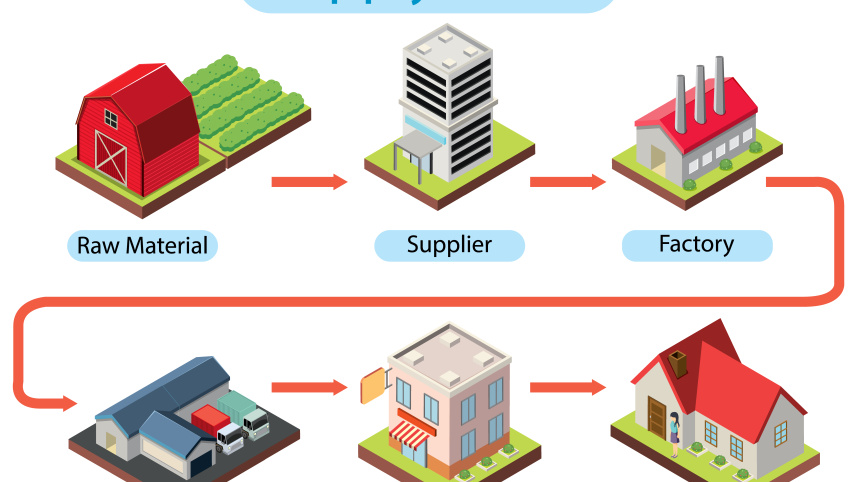
There was a time when supply chains ran on abundance. If demand spiked, you produced more. If a ship was late, you pulled from the warehouse. If the forecast was wrong, you wrote it off and moved on.
That luxury is gone. Welcome to the age of shortage.

The world has changed. Have we?
Six forces are squeezing global commerce today, and they are not going away.
War is now logistics. The Russia-Ukraine war. The Middle East crisis. And right now, the world is watching the Strait of Hormuz. One in every five barrels of oil and one in every four shipments of LNG pass through that narrow waterway. When tensions rise, insurance rates triple overnight. In mid-2024, a single drone incident pushed Gulf tanker premiums up 300 percent in 48 hours. Freight costs spike. Factories from Dhaka to Detroit feel it within weeks.
Climate is breaking the map. The Panama Canal cut traffic by 40 percent due to drought, adding $200,000 per ship in detour costs. The year 2023 was the hottest on record. Heatwaves shut plants. Floods delay ports. Weather is no longer an "excuse" — it is a line item in your budget.
Politics is rewriting trade. From US-China decoupling to the EU's Carbon Border Tax starting in 2026, compliance is now a supply chain cost. Carbon will be priced at the border, not just in the factory.
Talent is scarce. By 2030, the world will be short of 85 million skilled workers. In logistics alone, the turnover rate exceeds 50 percent in some markets. The hardest role to fill? People who can read data, understand risk, and make decisions fast.
Add volatile demand and energy shocks to the mix. Global supply chain costs have risen to 8.7 percent of GDP, up from 6.8 percent pre-pandemic. One conclusion: the old way of planning is obsolete.
The four silent leaks bleeding your business
In the age of abundance, we ignored waste. Now it is costing us margin.
Bad forecasts: In most companies, the monthly planning meeting does not improve the forecast. It makes it worse. Human bias piles on top of data. A 5 percent error at the store becomes 30 percent at the supplier.
The bullwhip effect: A small change in consumer demand creates a giant swing in factory orders. Why? Because signals travel too slowly. By the time procurement hears, it is already too late.
Blind inventory: We track "how much" we have. But less than one in 10 companies track "how healthy" it is. The result: $1.9 trillion of excess stock globally, and yet shelves are empty. In retail, 16 percent of inventory is typically dead or slow-moving.
Distracted people: We buy new software but keep old habits. We reward departments for hitting their own targets, while the overall chain falls apart.
So what now? Five rules for the new era
This is not about buying another AI tool. This is about changing how we think.
Count the waste. Put a dollar number on forecast error, expedites, and stockouts. If you cannot see the leak, you cannot fix it. A simple simulation will do.
Plan from the outside-in. Stop looking only at your own orders. Bring in real-time data: retail sales, port congestion, commodity prices, and yes, geopolitical risk. Ask: "Which of my products depend on oil through Hormuz?" If you do not know, you are planning blind.
Use AI to govern, not to fire. Agentic AI should not be used to cut planner headcount. It should be used to enforce better decisions. Teach it the language of your business. Let it run allocation rules fairly. Give business leaders self-service "what-if" dashboards. Do not make AI stupid by automating bad processes faster.
 For all latest news, follow The Daily Star's Google News channel.
 Automate the tough trade-offs. Who gets stock when supply is short? Sales? Your biggest customer? The most profitable SKU? Encode the rules. Let the system decide. It will be uncomfortable. It will also be fair.
Build a new kind of planner. The planner of 2030 is part analyst, part risk officer, part diplomat. Train them to run war games: "What if Hormuz closes for a month? What if energy hits $120?"
The bottom line
We are not facing a downturn. We are facing a regime change. From abundance to shortage. From forecasts to real-time signals. From efficiency to resilience.
Companies that act in the next 12–18 months will take market share for the next decade. The rest will spend the decade reacting.
The question for every boardroom in Dhaka, Dubai, and Detroit is the same: Are we measuring our waste? Are we listening to outside signals? Are we ready to make hard choices?
Because in a world of shortage, the lazy will be the first to run out.
The author is a fellow of the Chartered Institute of Logistics and Transport (CILT), UK, and former president of FICCI and AmCham Bangladesh.
Comments