


Local drugmakers call for easing Indian visa
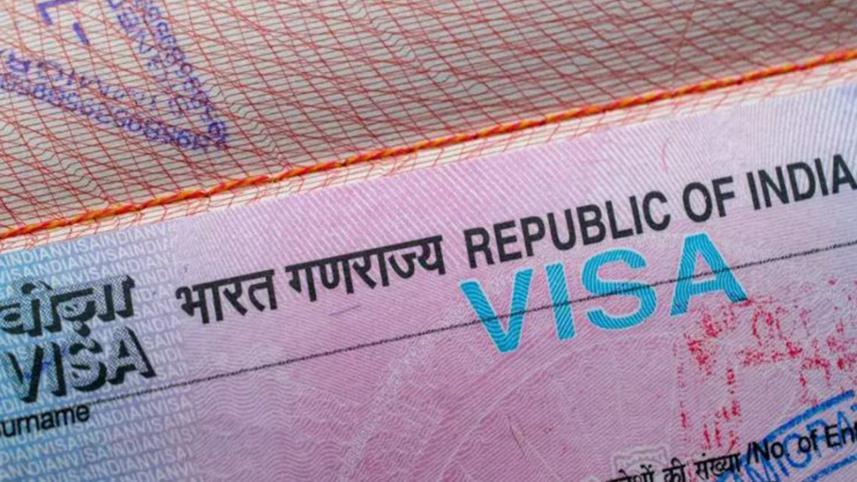
Bangladeshi drugmakers said visa complications and regulatory delays in India are increasingly hindering business growth, restricting access to technology and high-value partnerships just as the local pharmaceutical sector pushes to expand globally.
The concerns were voiced at PharmaConnect, a networking and knowledge-sharing event hosted by the High Commission of India in Dhaka on Tuesday evening.

The event was held ahead of Bangladeshi firms' participation at CPHI-PMEC India 2025, one of the largest pharmaceutical exhibitions, scheduled for November 25-27 in Delhi.
"Many of our executives, scientists and experts face significant hurdles in obtaining Indian business visas, especially for technical visits vital for plant assessment and regulatory compliance," said Abdul Muktadir, president of the Bangladesh Association of Pharmaceutical Industries (Bapi).
He said Bangladesh's pharmaceutical sector remains heavily reliant on India for critical machinery, specialised chemicals, research collaboration and product development.
Muktadir said visa delays and regulatory bottlenecks have resulted in cancellation or postponement of technical visits, including factory acceptance tests for high-value machinery, slowing industrial commissioning.
Bapi president welcomed assurances that visas would be prioritised for scientists, engineers and managers travelling to CPHI-PMEC 2025, noting that 83 professionals have already applied.
"Our people must not be deprived of this important platform," he said.
He added that most ongoing pharmaceutical development projects involve Indian research organisations, covering formulation science, bioequivalence studies and toxicology research.
He urged the High Commission of India in Bangladesh to facilitate smoother cross-border cooperation, faster technical clearances and greater use of land ports.
Pranay Verma, high commissioner of India to Bangladesh, described India as "a trusted and reliable partner for Bangladesh's pharmaceuticals industry", highlighting collaboration in API sourcing, innovation and manufacturing technologies.
However, he acknowledged the strain caused by recent visa delays, attributing them to downsized operations rather than deliberate obstruction.
"When there is a genuine requirement, you will not find us missing," he said, adding that longer-term business visas would be facilitated, especially when endorsed by credible bodies such as Bapi.
The high commissioner said limited operational capacity and the temporary closure of several visa centres due to law-and-order concerns had slowed processing. "Despite constraints, we are issuing a large number of visas every day and have resumed business visa services. With limited capacity, we are prioritising urgent and essential cases."
He encouraged pharmaceutical executives to communicate directly with the High Commission in urgent cases, noting that visas are often prioritised for medical emergencies because of limited daily quotas.
Verma also said the High Commission would explore additional cargo flights and land-route options for critical pharmaceutical shipments, while supporting efforts to harmonise standards and ease customs barriers.
"We will not let you down," he said, calling for a "future-oriented, innovation-led partnership".
Syed S Kaiser Kabir, CEO and managing director of Renata PLC, praised India's emergence as a global pharmaceutical leader.
"We are grateful for the recognition and the opportunity to deepen business ties," he said.
Md Zakir Hossain, managing director of Delta Pharma Limited, said long-standing professional and cultural ties between the industries are now under pressure due to visa restrictions.
 For all latest news, follow The Daily Star's Google News channel.
 He noted that while 500-700 Bangladeshi delegates attended CPHI annually in the past, only 83 applications have been submitted this year.
He called for reinstating a system where visa applications endorsed by Bapi are prioritised, saying, "Politics is separate, business is business. We are mutually dependent."
The event was attended by Square Pharmaceuticals Managing Director Tapan Chowdhury, Indian Deputy High Commissioner in Dhaka Pawan Badhe, Gourab Kumar Agarwal, second secretary (economic and commerce) at the Indian High Commission in Dhaka, and senior executives from leading pharmaceutical companies.
Comments