


Gas shortage halts production at Narsingdi textile factories

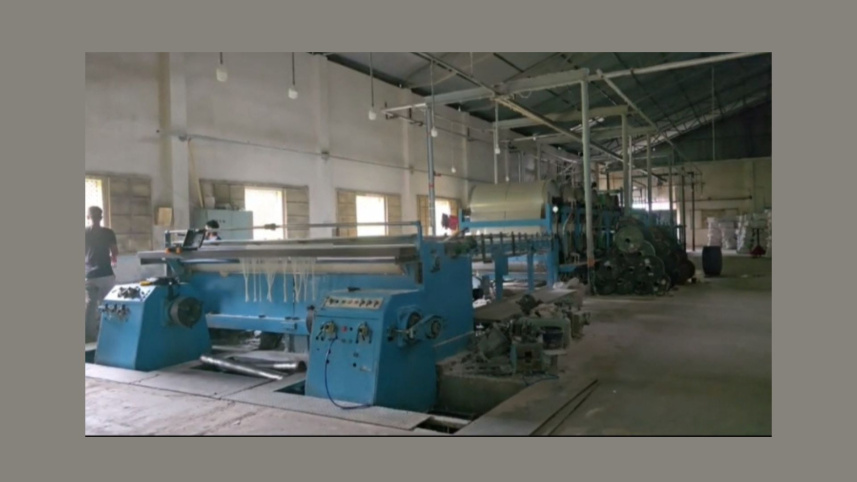
An acute gas shortage has halted or severely disrupted production at more than 100 small and large textile factories in Narsingdi, leaving thousands of workers idle and piling financial pressure on mill owners as gas pressure falls to near zero.
During a visit to Abed Textile in the Ghordia area of Narsingdi Sadar upazila today, this correspondent found guards standing at the main gate while production remained suspended.

"We have had no production for the last 20 days. We tried to resume operations for 30 minutes in the morning, but had to shut down again," said Abdullah Al Mamun, managing director of Abed Textile Mills and spokesperson for the Bangladesh Textile Mills Association.
Mamun said the management currently assigns maintenance and cleaning tasks to idle workers to prevent frustration.
He warned that continued disruptions would leave factory owners unable to pay wages, bank interest and utility bills.
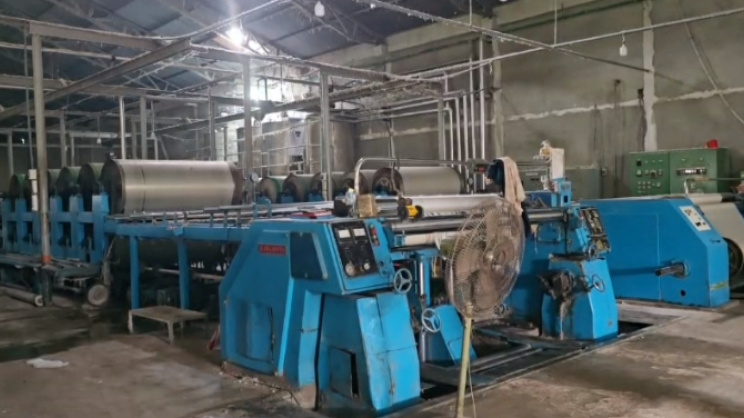
A similar scenario unfolded at Bhai Bhai Textile in the Chowala area, where production remained suspended while workers arranged materials.
Jahangir Alam, owner of the mill, said he halted production indefinitely yesterday after failing to receive a satisfactory response from Titas Gas authorities despite repeated contacts. The mill has since sent its workers on leave.
Factory owners said gas pressure had declined gradually before the current crisis, forcing them to operate in shifts.
However, pressure fell to its lowest level over the past week, from the normal 15 psi to 2–4 psi, before falling to near zero over the past few days.
Although factories maintained around 10 percent of normal production through limited gas supplies and alternative arrangements over the past month, more than 100 factories stopped production completely over the past two days.
Owners of eight affected factories expressed uncertainty over when operations would return to normal, noting that the energy crisis struck while they were recovering from previous operational disruptions.
Nizam Uddin Bhuiyan, president of the Narsingdi Textile, Dyeing and Printing Association and owner of Madhabdi Dyeing Finishing Mills, highlighted that Narsingdi supplies nearly 70 percent of the country's cloth demand.
He warned that prolonged disruptions would leave owners unable to pay wages or gas bills.
Rashidul Hasan, president of the Narsingdi Chamber of Commerce and Industry, attributed the intensified crisis to the Ghorashal-Palash Urea Fertiliser Factory resuming full-scale production.
The government increased the plant's capacity from 50 percent to full operation to boost domestic fertiliser production and cut imports, diverting gas supplies away from local industrial units.
Anisur Rahman Bhuiyan, director of Bhuiyan Textile and Calendar Mills Ltd, urged immediate government intervention, demanding clear timelines and operational guidance for factory owners.
Maksud Rahman, manager of the Titas Gas regional marketing office in Narsingdi, said a technical problem at an LNG terminal caused a significant drop in gas pressure across Narsingdi and adjoining districts, affecting industries, households and the transport sector.
 For all latest news, follow The Daily Star's Google News channel.
Comments