


BB keeps policy rate unchanged as high inflation persists
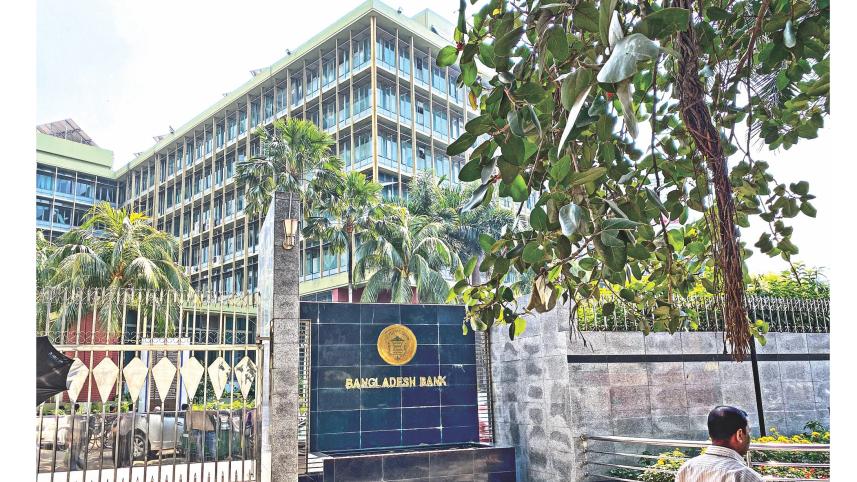
The Bangladesh Bank (BB) has kept its policy rate unchanged at 10 percent as inflation continues to hover well above the target set by the regulator.
The Monetary Policy Committee (MPC) of BB made the decision in its 10th meeting on Monday, reviewing current economic conditions, recent inflation data, and the near-term outlook, according to officials familiar with the matter.

Governor Ahsan H Mansur, who chairs the MPC, presided over the meeting attended by both internal and external members.
Along with keeping the policy rate unchanged, BB also left the Standing Deposit Facility (SDF) rate at 8 percent—which allows banks to earn interest on overnight deposits with the central bank—and the Standing Lending Facility (SLF) rate at 11.50 percent, which banks pay when borrowing overnight funds from BB.
"The policy rate will remain unchanged as inflation has not come down to our expected level," said Md Habibur Rahman, deputy governor of BB and an internal MPC member.
The central bank had initially aimed to bring inflation down to 7 percent by August and 5 percent by the end of 2025, but recent data show the economy is still some way off these goals. Governor Mansur has repeatedly stated that he would not lower the policy rate until the inflation rate comes down.
Bangladesh's inflation rose slightly to 8.36 percent in September from 8.29 percent in August, according to the latest data from the Bangladesh Bureau of Statistics (BBS).
The increase was driven mainly by non-food prices, which climbed to 8.98 percent from 8.90 percent, while food inflation moved up to 7.64 percent from 7.60 percent.
Inflation in Bangladesh had remained above the 9 percent mark for an extended period; however, it came down to 8.48 percent in June from 9.05 percent in May, data showed.
The MPC on Monday discussed the country's macroeconomic conditions, key challenges, and the medium-term outlook from both domestic and global perspectives.
The meeting also discussed inflation trends, reserve build-up, exchange rate stability, remittance, exports, imports, balance of payments, real sector activity, policy measures to streamline open market operations (OMOs), and recent financial market developments.
The country's foreign exchange reserve is now in a stable position due to a steady foreign exchange market and a market-based exchange rate.
As of October 30 this year, the foreign exchange reserve stood at $27.54 billion, up from $19.87 billion during the same period last year, data showed.
However, private sector credit growth fell to 6.29 percent in September, down from 6.35 percent in August, according to the latest data from Bangladesh Bank.
Private sector credit growth in September was the lowest in at least four years, as demand for loans fell due to various reasons including political uncertainty, slow investment, and high interest rates, according to industry insiders.
 For all latest news, follow The Daily Star's Google News channel.
Comments