


Bangladesh risks missing post-LDC EU trade gains: RAPID chairman
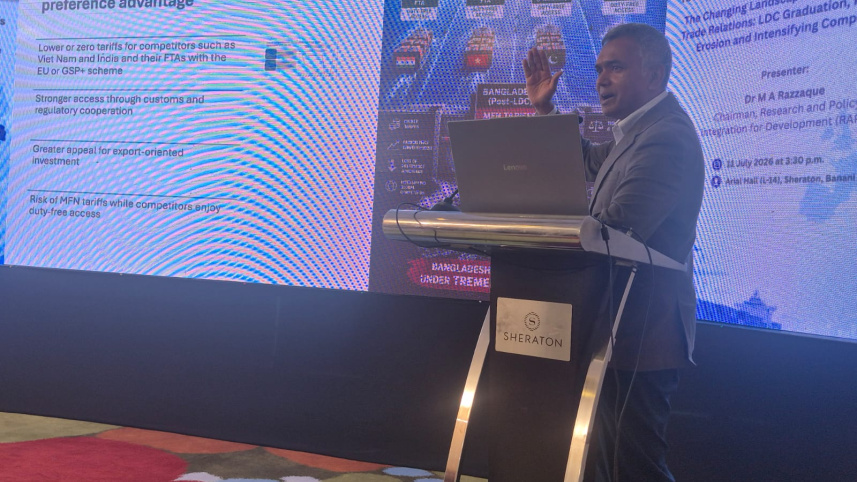
Bangladesh could see its trade with the European Union (EU) expand significantly over the next three to four years, but the country may not be fully prepared to capitalise on the opportunity, warned MA Razzaque, chairman of the Research and Policy Integration for Development (RAPID).
"Trade relations between Bangladesh and the EU are likely to deepen over the next three to four years in a way not seen over the past five decades. The question is whether Bangladesh has the capacity to absorb those opportunities," he said.

Razzaque was speaking at a seminar titled "The changing landscape of Bangladesh-EU trade relations: LDC graduation, preference erosion and intensifying competition", jointly organised by RAPID and the Friedrich-Ebert-Stiftung (FES) in Dhaka today.
He said Bangladesh has not been able to effectively present its own demands to the EU, even though the bloc has put forward extensive expectations on trade, governance and sustainability.
Referring to Bangladesh's graduation from the United Nations' least developed country (LDC) category, Razzaque said the Committee for Development Policy (CDP) had recommended a short deferment of the graduation process, which is currently scheduled for November this year.
"If the United Nations does not grant an extension, Bangladesh will graduate this year," he said.
Razzaque noted that Bangladesh currently exports around $22 billion worth of goods to the EU under duty-free access, making the bloc the country's largest export destination.
"Bangladesh definitely needs duty-free market access," he said, stressing that retaining preferential access to the EU market is crucial for sustaining the country's export competitiveness after LDC graduation.
He also highlighted the EU's broader economic contribution, saying around 30 percent of Bangladesh's foreign direct investment (FDI) originates from EU member states, while the bloc has provided about $3.4 billion in development assistance over the past five years.
Although Bangladesh does not enjoy duty-free access to the US market, Razzaque said the country still has scope to secure greater benefits from the EU market if it strengthens its competitiveness and preparedness.
"To remain competitive after LDC graduation, we will have to reduce our production costs," he said, adding that improving productivity and lowering business costs would be essential to maintaining Bangladesh's position in the EU market.
He added that the EU imports about 21 percent of its readymade garment products from Bangladesh under duty-free arrangements, while China's share of the EU apparel market has been declining, creating additional opportunities for Bangladeshi exporters.
 For all latest news, follow The Daily Star's Google News channel.
Comments