


Bangladesh economy to grow 4.4% in FY27: HSBC
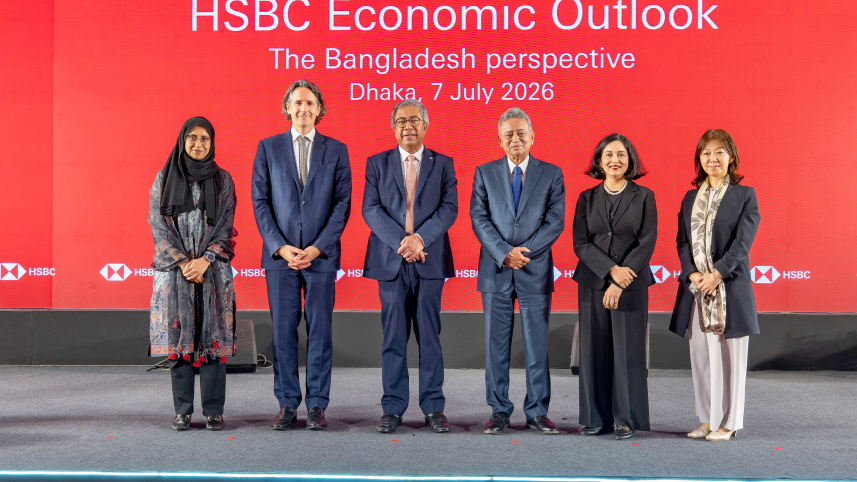
Bangladesh’s economy is expected to grow by 4.4 percent in the current fiscal year 2026-27, supported by easing global headwinds and domestic economic reforms, according to the Hongkong and Shanghai Banking Corporation (HSBC) Limited.
Lower oil prices, a stabilising outlook for US tariffs and resilient global growth should help revive Bangladesh’s export sector, the multinational lender forecast, while reforms undertaken at home are expected to strengthen private investment and consumption.

“Bangladesh’s economy continues to impress with its resilience,” Frederic Neumann, chief Asia economist and co-head of global investment research for Asia at HSBC, said at an economic outlook event held at Sheraton Dhaka in Banani on Tuesday.
With oil prices easing, the outlook for US tariffs stabilising, and global growth remaining robust, garment exports are expected to recover in the second half of the year, he said.
“Ongoing economic reforms are also gaining traction domestically, ultimately supporting private investment and consumption. Bangladesh is, therefore, on a steady path to recovery, with growth expected to accelerate to 4.4 percent over the coming fiscal year,” Neumann said.
The forecast comes as Bangladesh seeks to consolidate its macroeconomic recovery following two years of high inflation, pressure on foreign exchange reserves and weaker economic activity. The pace of reforms and the strength of external demand will remain key factors shaping the country’s growth outlook.
The country recorded 4.14 percent growth in its gross domestic product in FY26, up from 3.49 percent a year earlier, according to provisional data from the Bangladesh Bureau of Statistics (BBS).
The government has set a 6.5 percent GDP growth target for the current financial year.
At the event, Finance and Planning Minister Amir Khosru Mahmud Chowdhury acknowledged that restoring confidence while maintaining macroeconomic stability would be the government’s biggest challenge in implementing the national budget amid continued global uncertainty.
He said the government was working to strengthen institutions and reduce bureaucracy to improve the business environment and support investment.
The minister also stressed the need to diversify exports beyond the readymade garment sector.
He said improving competitiveness, removing regulatory barriers, expanding market access and creating opportunities for new industries through economic zones and private-sector investment would be crucial to broadening Bangladesh’s export base.
Priya Kini, managing director and head of banking for international markets in Asia at HSBC, said businesses needed timely economic insights to navigate an increasingly uncertain global and geopolitical environment.
Md Mahbub ur Rahman, chief executive officer of HSBC Bangladesh, said the country’s next phase of development would depend not only on higher growth but also on improving its quality and sustainability.
He said Bangladesh would need stronger risk governance, greater competitiveness and progress up the global value chain to build a more diversified and resilient economy.
 For all latest news, follow The Daily Star's Google News channel.
Comments