


Beyond politics, Kolkata businesses looking forward to return of Bangladeshi tourists
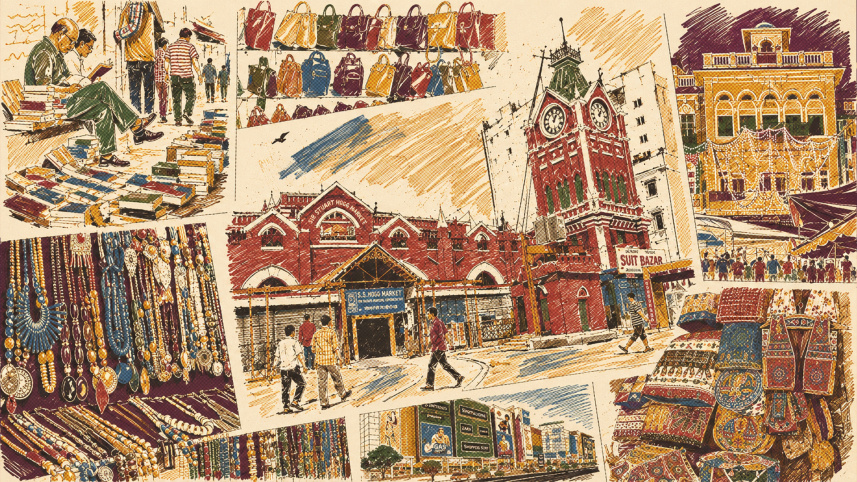
For nearly two years, the bustling shopping hubs of Kolkata’s New Market, Sudder Street, Mirza Ghalib Street and Marquis Street had lost much of the familiar energy generated by thousands of Bangladeshi visitors.
Travelling for medical treatment, shopping, education or leisure, Bangladeshis have long played a significant role in the economy of the West Bengal capital. But with tourist visas suspended, hotels saw occupancy rates fall, retailers struggled with declining sales, and cross-border transport operators reported a sharp drop in passenger traffic.

That prolonged lull is now beginning to ease. India’s decision to resume regular tourist visas for Bangladeshi citizens has sparked fresh optimism among businesses across Kolkata.
For local traders, the move is more than a consular decision. They see it as a recognition of the enduring importance of people-to-people ties that have long shaped India-Bangladesh relations through healthcare, education, commerce and a shared cultural heritage.
The development comes against the backdrop of a politically charged period in West Bengal, where illegal immigration emerged as one of the defining issues during the 2026 assembly election campaign. Ahead of the polls, the Special Intensive Revision (SIR) of electoral rolls, border security and undocumented migration dominated political discourse. The then opposition Bharatiya Janata Party (BJP) argued that illegal immigration had compromised the integrity of voter lists, while the then ruling Trinamool Congress alleged that many Bengali-speaking Indian citizens had been subjected to identity verification, administrative scrutiny and harassment. Several aspects of the controversy eventually reached the courts, with a number of legal proceedings remaining under judicial consideration.
The debate was not confined to West Bengal alone. During the same period, reports emerged from the Indian capital Delhi and several states, including Gujarat, Karnataka, Odisha and Telangana, where Bengali-speaking migrant workers were detained or questioned over their identity on suspicion of being undocumented Bangladeshi nationals. In some instances, administrative errors were later acknowledged.
Human rights advocates cautioned that while border security remains a legitimate state responsibility, mistaken identity and procedural lapses could undermine public confidence and create unnecessary anxiety among citizens. The central government, however, consistently maintained that all verification exercises were conducted strictly within the framework of Indian law.
Once the election was over, however, the demands of governance required a more balanced approach -- one that also acknowledged Bangladesh’s importance as one of India’s closest neighbours and a longstanding strategic partner.
Diplomatic observers in New Delhi argue that stronger border security and constructive bilateral engagement are not mutually exclusive. They say a more sustainable response to cross-border challenges lies in intelligence sharing, closer coordination between the two countries’ border forces, greater use of technology and sustained diplomatic dialogue.
As geopolitical competition intensifies across South Asia, particularly amid China’s growing regional engagement, stable relations with Bangladesh remain strategically important for India.
Monotosh Saha, president of a leading traders’ association representing New Market and adjoining commercial areas, says Bangladeshi visitors have no reason to feel apprehensive. “Kolkata has always welcomed people from Bangladesh. They arrive here as our guests, and they deserve to be treated with dignity and respect,” he says.
According to Saha, local business associations, in coordination with the Kolkata Police and the Kolkata Municipal Corporation, have installed around 35 CCTV cameras across key commercial zones to strengthen visitor safety. Hotel owners, money changers, transport operators and retailers have also held a series of coordination meetings to ensure that Bangladeshi tourists experience the same sense of comfort and security that has traditionally characterised their visits to the city.
Business leaders believe the return of Bangladeshi visitors will extend far beyond the commercial lanes of New Market. Medical facilities in Mukundapur, Salt Lake and New Town, along with hotels, restaurants, transport services and retail establishments across eastern India, are all expected to benefit from the revival of cross-border travel. Observers also note that with the same political alliance now governing both New Delhi and West Bengal, businesses are expressing greater confidence that administrative coordination and law enforcement will ensure a secure environment for visitors travelling with valid documentation.
Veteran journalist and diplomatic commentator Sunil Mukherjee cautions against confusing electoral rhetoric with the language of statecraft. “Political campaigns often amplify contentious issues,” he says. “But India-Bangladesh relations are rooted in shared language, culture, education, healthcare and deep people-to-people connections. Those bonds are far stronger than temporary political narratives.”
A similar sentiment is echoed by West Bengal Congress spokesperson Suman Roy Chowdhury, who says Bangladeshi citizens have always been welcome in Kolkata. “The relationship between the people of the two Bengals is rooted in history, culture and shared heritage. Political disagreements should never weaken these enduring human ties,” he says.
Local businesses say the suspension of tourist visas over the past two years dealt a significant blow to Kolkata’s tourism-dependent economy. With visas now being restored, many in the city see the development as more than a sign of economic recovery. They view it as an opportunity to rebuild public confidence and strengthen the social, cultural and commercial ties that continue to bind the two neighbouring countries.
For many in Kolkata, the return of tourist visas for Bangladeshis is therefore more than an administrative decision. It is a renewed affirmation that the city’s doors -- and its enduring relationship with Bangladesh -- remain open.
 For all latest news, follow The Daily Star's Google News channel.
Comments