


Why oil importers are learning to live with longer trade routes
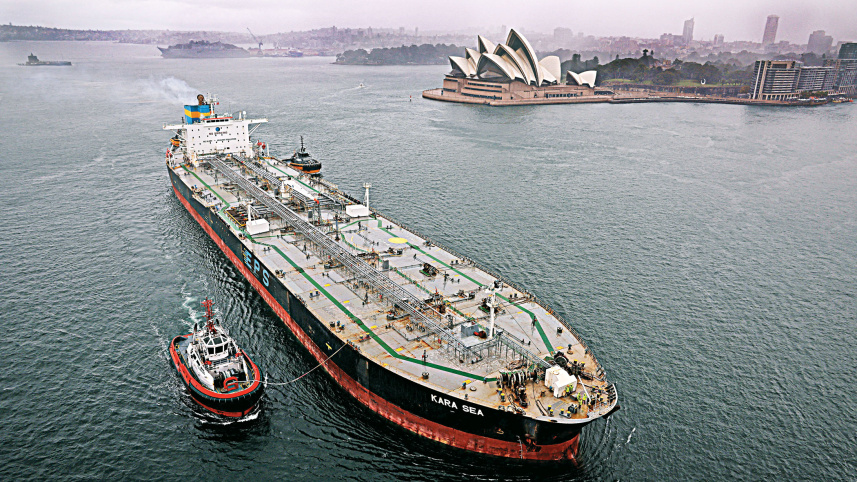
Energy trade routes that optimize distance and costs may no longer be suitable for the fractured and fractious modern world, especially for major importers.
Ongoing tensions involving Iran are pushing major oil importers to develop alternative supply routes, which increasingly bypass the supply hubs that previously dominated global energy trade.

The end result is a shift away from the concentrated energy corridors of recent decades to a more dispersed network of supply lines that cost more and take longer, but help reduce exposure to geopolitical shocks and boost energy security.
Japan’s evolving cocktail of crude oil purchases underscores the extent of the changes underway among top energy importers.
Until the US-Israeli war against Iran triggered a sharp drop in tanker traffic through the Strait of Hormuz, the world’s fifth-largest oil buyer sourced over 90 percent of its crude from Middle Eastern suppliers.
Major oil importer Japan previously relied on the Middle East for over 80 percent of oil supplies.
Trip time: 21 days
Countries such as Saudi Arabia, Iraq and Iran have historically had supplies that were available in large and reliable volumes and were deliverable to Japan’s main coastal refineries via a relatively straightforward 21-day voyage.
Since the conflict disrupted Gulf exports in late February, outbound crude flows from the Middle East have dropped drastically, with total volumes shipped from March through July 40 percent lower than a year earlier, according to Kpler.
That steep fall in Gulf oil supplies has forced Japan to secure more crude from alternative suppliers, most notably from North America.
Total Japanese crude oil imports from the US from March through June topped 4.5 million metric tons, compared with less than 1 million tons during the same period in 2025.
That more than 400 percent year-over-year jump in American supplies allowed Japanese importers to offset a 54 percent fall in shipments from the Middle East and limited the overall decline in Japan’s crude supplies over the same period.
Following the outbreak of the war with Iran, the US has emerged as Japan’s top oil supplier.
Trip time: 29 days
However, the switch to US crude comes at a cost, with the journey time nearly nine days longer, driving sharply higher shipping costs and requiring a different delivery schedule for refiners to manage.
South Korea and India — also among the world’s five largest oil importers — have revamped their crude origination patterns, dialling up flows from the Americas and Africa as Middle Eastern volumes dwindled.
China, the world’s top crude oil buyer, has so far relied heavily on strategic oil reserves to shield itself from the fallout from the Iran conflict.
However, following that lengthy spell of drawdowns, Chinese importers are expected to step up crude import interest again and will likely add to the emerging competition for supplies from the Americas and other regions later in 2026.
For crude oil exporters, the additional demand from global consumers is a boon they will happily ride for as long as it lasts.
Total US crude oil exports during the second quarter — when global buyers turned en masse to alternative suppliers as Middle Eastern flows dried up — scaled a record 61.6 million metric tons, according to Kpler.
 For all latest news, follow The Daily Star's Google News channel.
 That total was 43 percent higher year-on-year and was more than 10 million tons above any previous quarterly export tally.
But the US was not alone in registering record oil flows this year.
Brazil, Argentina, Guyana and Russia also posted record shipments so far in 2026, underscoring the widespread allure of filling the gap left by the Middle East.
Some of those nations are new suppliers to several major oil importers, or have never before consistently delivered such notable volumes to such a broad range of buyers.
For instance, Brazilian exporters have shipped three times more crude oil to India during the first half of 2026 than during the same period in 2025, locking in record volumes to Indian refiners.
And some of the journey times involved are much longer than buyers are used to.
The trip from major Middle East oil terminals such as Fujairah and Ras Tanura to India’s west coast is usually 3 to 5 days, while the journey from Brazil’s Acu crude oil terminal to the same Indian ports takes roughly 25 days.
But from an importer’s perspective, having a variety of vendors offers a new source of supply-chain resilience that may outweigh the higher shipping costs.
Following the outbreak of the Iran war, oil exporters that can avoid geopolitical hotspots are becoming attractive
Several American and African exporters can avoid key shipping chokepoints on their delivery routes, adding to their value in importers’ portfolios.
In addition to the Strait of Hormuz, the Suez Canal has seen reduced traffic due to geopolitical tensions this year, while severe drought has reduced water levels in the Panama Canal and forced carriers to reduce load volumes.
Now that major oil importers have grown used to making regular purchases from new suppliers, they are liable to maintain at least some of those transactions as a hedge against continued Middle East uncertainty.
Large Asian oil importers have had to slash imports from the Middle East, and replace some of those supplies from other regions
These purchase patterns have resulted in the emergence of a new energy trade map that is less concentrated, less efficient and more expensive than buyers are used to.
But in an era of widespread geopolitical uncertainty, redundancy can matter more than efficiency.
And redundancy tends to take the long way around.
Comments