


US, EU divided over LDC trade benefit extension

Two major economic powers of the world, the US and the European Union, are divided on continuation of trade facilities meant for the least-developed countries (LDCs) once they make the United Nations status graduation to become developing countries.
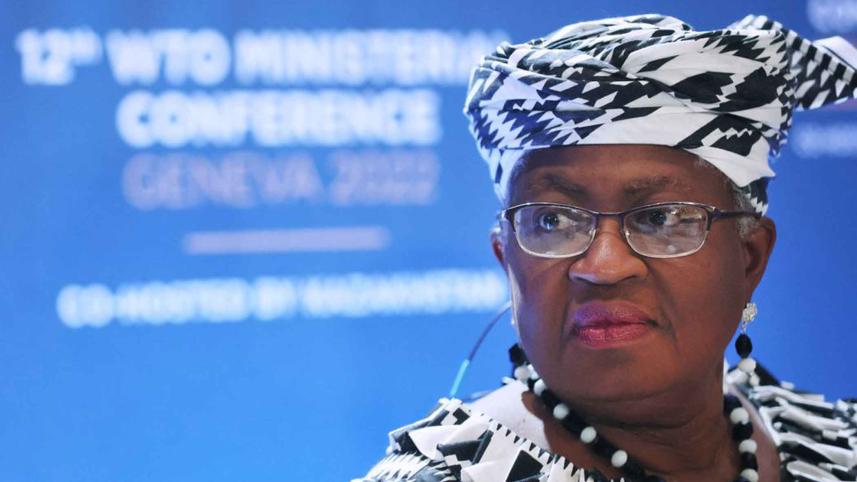
The matter surfaced at the ongoing 12th Ministerial Conference (MC12) of the World Trade Organisation (WTO) in Geneva of Switzerland.

Bangladesh, along with other LDCs, is negotiating with the WTO and developed and developing countries for the extension, initially seeking 12 years and later either nine or six years.
The LDCs headed by the Central African country Chad submitted a petition to the WTO in October 2020 demanding the extension. But owing to the US opposition, it will be difficult to reach a positive conclusion, said the negotiators.
Tapan Kanti Ghosh, senior secretary of the commerce ministry of Bangladesh, held a media briefing after the first day's meeting of the ministers and representatives from the LDCs.
He said the EU has taken a soft stance in favour of the extension but the US was opposing.
However, all the LDCs in their forum meeting demanded the extension by at least six to nine years, reasoning difficulties faced for the pandemic and the subsequent Russia-Ukraine war.
"We have just started our negotiation and I am hopeful that we will be able to reach a good conclusion over the issue of trade facilities extension," Ghosh said.
Commerce Minister of Bangladesh Tipu Munshi urged the global leaders and the WTO not to put any ban on the export of food items for any reason so that no country faced any food crisis.
"A food crisis, along with economic downturns, is imminent. Small and vulnerable economies are suffering the most," he said in a speech delivered at the conference.
"We urge members not to impose export restrictions on products that are essential for our survival, particularly relevant for our food security, public health and long-term development goals in the LDCs."
The commerce minister said the WTO could not deliver any result to date to respond to the pandemic.
"Some of us could not prioritise the human needs over the profit maximisation. I hope during the upcoming food crisis and economic recession, the WTO shall play its role to ensure certainty and predictability."
Ghosh also said Bangladesh has already demanded the continuation of fishery subsidies for the LDCs as a few million small families of the world make a living off fisheries.
He, however, said if any restriction were to come about, it may be on marine fisheries.
If such a restriction is imposed, Bangladesh might not be affected much as fisheries in Bangladesh were mainly based on land.
Hafizur Rahman, director-general of the WTO cell under the commerce ministry, said Bangladesh is negotiating for the extension of a Trade-Related Aspects of Intellectual Property Rights (TRIPs) up to January 2033.
Following the LDC graduation set for 2026, Bangladesh will be unable to continue enjoying the TRIPs facility and prices of medicine will go up in the domestic market because of the discontinuation of patent rights of generic medicine.
The food crisis and fuel price hike became major issues for negotiations at the conference as many countries have already restricted food export and fuel prices have soared primarily for the pandemic and the Russia-Ukraine war.
Ngozi Okonjo-Iweala, director-general of the WTO, at a press conference, said the food crisis had turned into another challenge for the world because of the Russia-Ukraine war.
 For all latest news, follow The Daily Star's Google News channel.
 On fishery subsidies, the DG hinted that they may reach a conclusion at the end of the four-day negotiation as member countries also want a ban on subsidies on marine fishing.
Regarding other burning issues, Ngozi Okonjo-Iweala strongly urged member countries to be more cohesive in reaching a consensus in giving trade benefits and extending the TRIPs benefits to graduating LDCs and refraining from imposing any sudden ban on food grain exports.
Timur M Suleimenov, first deputy chief of staff of the president of the Republic of Kazakhstan, chaired the conference.
The world needs less uncertainty, he said, regarding the current food crisis.
The MC12 is scheduled to come to an end on June 15.
Comments