


Dollar pulls back
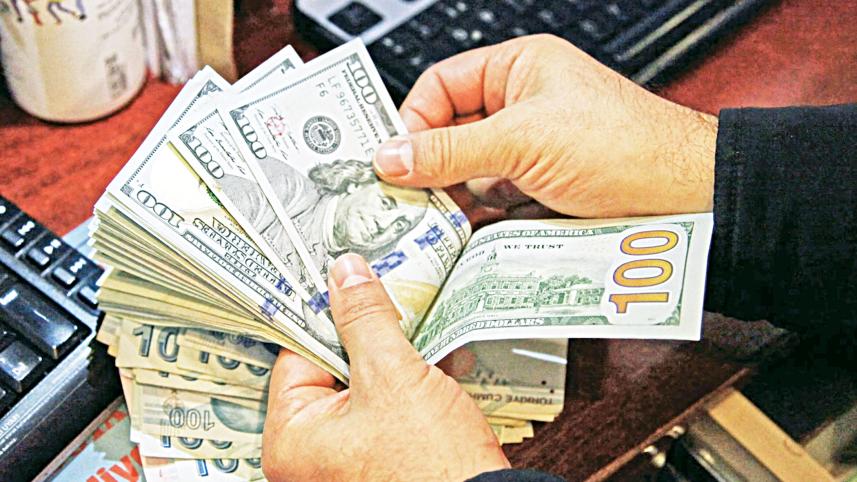
The dollar pulled back from 10-month peaks on Monday in a tentative start to a week that brings a slew of central bank meetings held under the shadow of the US-Israel war on Iran.
The US Federal Reserve, the European Central Bank, the Bank of England and the Bank of Japan are among those to hold their first policy meetings since the Middle East conflict began, offering investors a sense of how rate setters view the impact of soaring oil prices on inflation and growth.
 For all latest news, follow The Daily Star's Google News channel.
 As the European session got underway, the dollar index was a touch lower at 100.27 and holding below a 10-month high hit on Friday.
The dollar has benefited from a flight to safety since the US-Israeli strikes on Iran began at the end of February. Other major currencies such as the euro have been hurt by their economies’ dependence on oil imports.
Since the start of the conflict, investors have almost eliminated their bearish bets against the dollar, according to weekly data from the US markets regulator .
Still, the euro bounced from a 7-1/2-month low hit earlier in the session to trade 0.25 percent higher at $1.1442, while sterling was up 0.23 percent at $1.3252 - not far from the 3-1/2-month low it hit on Friday.
“The fact that we have central bank meetings this week means markets have an incentive to step back for now,” said ING currency strategist Francesco Pesole, noting that US President Donald Trump’s efforts to secure an alliance for the safe passage of ships through the Strait of Hormuz was likely contributing to the dollar pullback.
Trump called on allies over the weekend to help secure the strait and said his administration is talking to seven countries about it. The Wall Street Journal reported that Washington plans to announce as early as this week that multiple countries have agreed to escort ships through the waterway.
Still, oil prices continued to climb, with geopolitical tensions still running high and uncertainty over when the war, now in its third week, could end.




Comments