


Use green funds for leather sector compliance
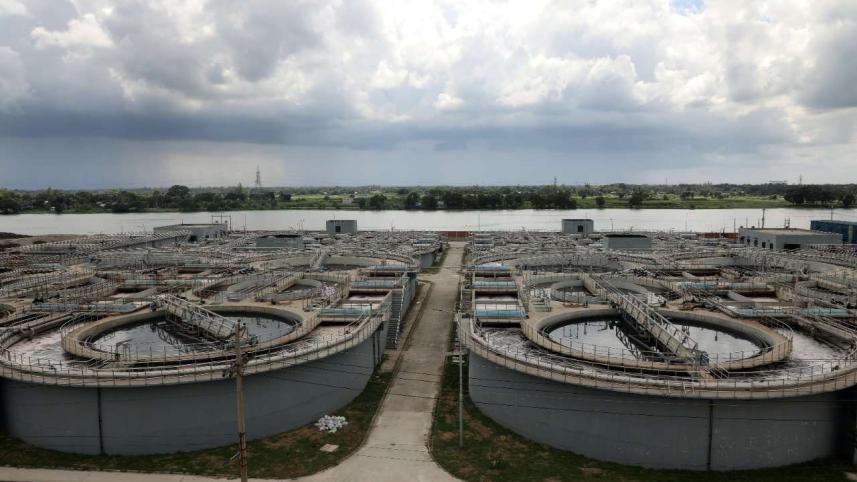
The Bangladesh Small and Cottage Industries Corporation (BSCIC) should form a fund with support from Green Climate Fund to enable leather goods manufacturing processes that do not affect the environment, suggested Tofazzel Hossain Miah, principal secretary to the prime minister.
By availing loans from the BSCIC fund, tanners can set up their own effluent treatment plants (ETPs) and ensure compliance to other regulations, he said during a visit to Savar Tannery Industrial Estate yesterday.

Green Climate Fund was established within the framework of the United Nations Framework Convention on Climate Change to assist developing countries adapt and mitigate practices to counter climate change.
Approvals of Leather Working Group, a global body for compliance and environmental certification in the leather and leather goods sector, bear a lot of significance in terms of taking the country forward, said Miah.
But many companies do not have their own ETPs, the most important compliance criteria for a certification of the group, he said.
The principal secretary said the export of leather goods has decreased over the past three years but currently it was on a positive trend.
Work is underway to find solutions for several challenges such as the pollution of land, water and air, he said.
By availing loans from the BSCIC fund, tanners can set up their own effluent treatment plants and ensure compliance to other regulations, an expert suggested
A lack of compliance is preventing Bangladesh's leather sector from tapping into its potentials and expanding its footprint in the international market despite the availability of raw materials locally, said experts.
As a result, exporters are getting 30 per cent to 40 per cent lower prices for their products in the global market compared to their competitors while fair price cannot be ensured in the local markets as well, they said.
The central effluent treatment plant (CETP) in the Savar estate needs to be further modernised to take this sector forward and the private sector can play a big role in this regard, Miah added.
Industries Secretary Zakia Sultana said they were working to solve the problems of the tannery estate.
"We have already visited the estate and the CETP and provided some recommendations. If the estate authorities implement these recommendations, it will be possible to overcome these issues," said Farhina Ahmed, secretary to the environment, forest and climate change ministry.
Most of the 154 tanneries in the estate are in production, said Shaheen Ahamed, chairman of Bangladesh Tanners Association and managing director of Anjuman Trading Corporation.
However, before completion of the construction of the CETP, there is a need for its rectification and upgradation as the common chromium recovery unit is not functional, said Ahamed.
The BSCIC under the industries ministry began implementing the estate in 2003 and completed it in June 2021.
 For all latest news, follow The Daily Star's Google News channel.
Comments