


Upskill labour force for post-LDC era: experts
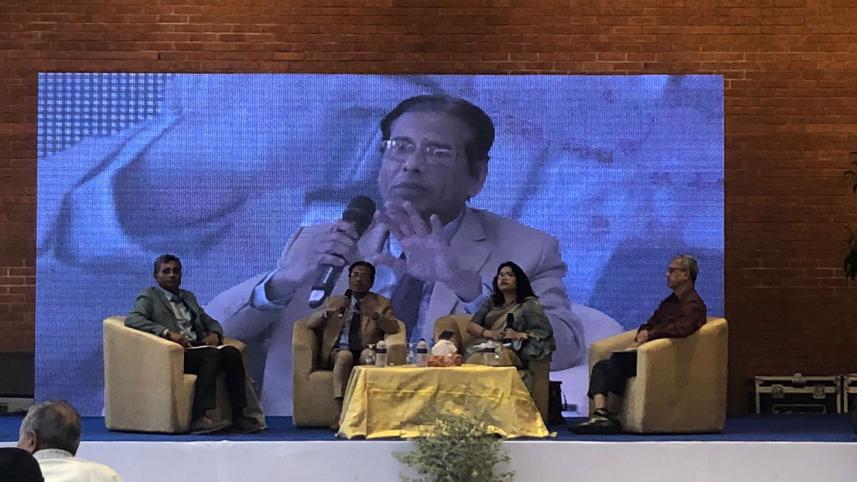
Bangladesh should focus on upskilling the existing labour force to face the challenges of the fourth industrial revolution and its upcoming graduation from the least developed country status, according to experts.
"To provide skills to the existing labour force is one of the key challenges in the LDC graduation for Bangladesh," said Sayema Haque Bidisha, a professor of economics at the University of Dhaka.

"The private sector has a major role to reskill and upskill existing workers who are middle-aged people," she said.
The government should provide incentives and policy support to the private sector so that they can be motivated to take steps in adopting labour friendly programmes, she said.
Bidisha made these comments at a panel discussion styled "On the Economy of Tomorrow" organised by non-profit German foundation Friedrich-Ebert-Stiftung at ALOKI Convention Centre in the capital's Tejgaon marking its 10th anniversary yesterday.
She also urged to take up strategies to focus on the young generation.
Citing that the labour market is very crucial for Bangladesh, she mentioned of other challenges like that from the pandemic, getting real wages and those related to macroeconomic issues such as the increase in inflationary pressure on people.
Many benefits will disappear after the LDC graduation, which may curtail the prosperity of small and medium enterprises (SME) in global competitiveness, said Mofizur Rahman, managing director of the Small and Medium Enterprise Foundation.
"If the SMEs particularly can not compete in the global market, they might have to be shut down or phased out of the market," said Rahman.
The SME sector is still suffering for a lack of skilled workers, technological advances and particularly a lack of export experiences, he added.
He also sought financial support for the SMEs and asked to change the mentality of commercial banks of shying away from lending to the SME entrepreneurs.
Moderating the event, Prof Mustafizur Rahman, a distinguished fellow of the Centre for Policy Dialogue, said the government was providing a lot of incentives through the Bangladesh Small and Cottage Industries Corporation.
"But we don't see the SMEs develop, which is so essential in employment generation for our economy to grow fast and remain competitive in the global market," he added.
Niloy Ranjan Biswas, an associate professor of the international relations department at the University of Dhaka, also spoke.
 For all latest news, follow The Daily Star's Google News channel.
Comments