


‘SMEs need enabling ecosystem’
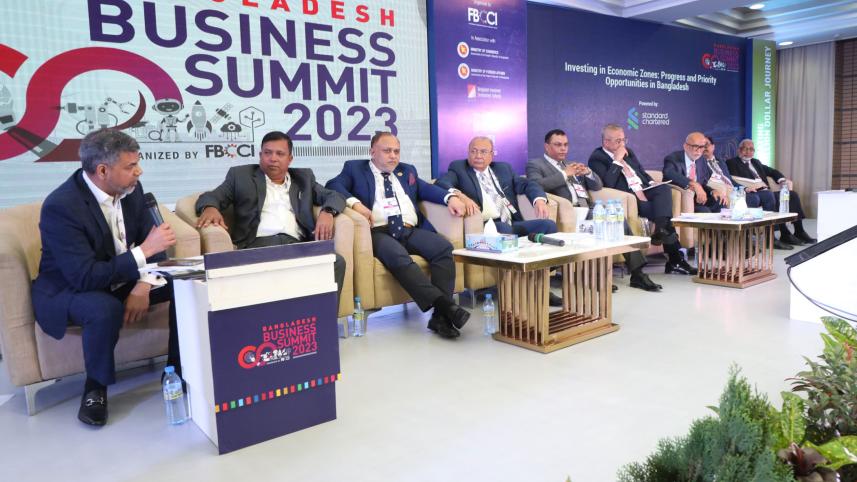
An enabling ecosystem is necessary where small and medium enterprises (SMEs) will get all the support required to avail better prices and grab a bigger market share, said the sector's entrepreneurs and analysts yesterday.
Their comments came at a plenary session titled "Investing in Economic Zones: Progress and Priority Opportunities in Bangladesh" on the closing day of a three-day Bangladesh Business Summit 2023 at Bangabandhu International Conference Centre in Dhaka.

The summit was organised by the Federation of Bangladesh Chambers of Commerce and Industry (FBCCI) in association with the government to showcase the country's progress and potentials to both global and local investors.
The discussants also focused on ensuring adequate technical skills, budgetary support, creating linkage with supply chains etc.
Focus should be on creating an environment enabling all the supports for the SMEs, be it new or those already running, said Mafizur Rahman, CEO and managing director of SME Foundation.
"Giving subsidy or cash incentive for SMEs is not a sustainable approach," he said.
There are 78 lakh SMEs, including cottage and micro ones, while 73 lakh persons are engaged in the sector, according to the foundation.
The SME sector is important for Bangladesh for offering jobs and empowering women, said Rahman, adding that they have a lot of scopes and opportunities to become backward linkage industries of the economic zones.
The SMEs have the potential to tap into the market in the Middle East and grab a share of the world's halal food market which is worth more than $1 trillion, he said.
Though SMEs have a common tendency to be informal and non-compliant, which denies them services from formal sources, it is also true that getting an SME up and running is yet not that easy, he said.
"Trade licence, tax, VAT and other regulatory issues are still issues and factors for SMEs," said Rahman.
Access to formal finance is still challenging for the SMEs. New and small ones and those run by women and entrepreneurs at the marginal level face difficulties in accessing bank credit, he said.
However, alternative sources of financing have not yet gained momentum and access to markets is another hurdle for the SMEs which limits them from growing and becoming sustainable due to a lack of market competitiveness, Rahman cited.
Shamsul Alam, state minister for planning, was the chief guest of the session.
Masudur Rahman, chairperson of SME Foundation, Mahbubul Alam, president of the Chittagong Chamber of Commerce and Industry, Sameer Sattar, president of the Dhaka Chamber of Commerce & Industry, and Haznah Md Hashim, Malaysian high commissioner to Bangladesh, also spoke.
 For all latest news, follow The Daily Star's Google News channel.
Comments