


‘Reduction of effective tax rate is key’
Over the last few years, the National Board of Revenue has carried out some commendable reforms. One of them is the mandatory requirement of tax return submission to avail around 40 services.
However, the NBR needs to take the step to provide confirmation on a real-time basis through its portal or app and this should also be included as an eligible mode of proof of submissions under the Finance Act, said a chamber leader.

And many more reforms need to be carried out.
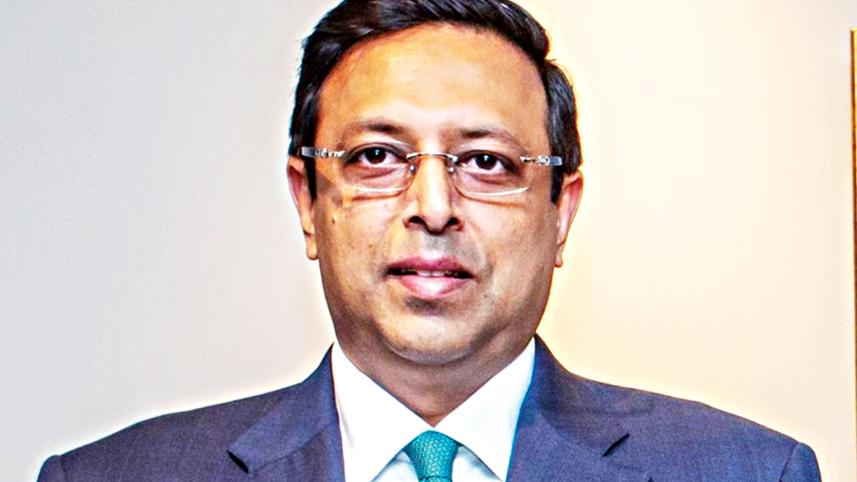
Naser Ezaz Bijoy, president of the Foreign Investors' Chamber of Commerce & Industry (FICCI), shared the views during an interview with The Daily Star yesterday.
He said the NBR's move to discourage cash as a mode of expense is a bold step in the right direction.
The measure is aimed at reducing opportunities for tax evasion.
"However, given that the payments ecosystem is not entirely ready throughout the country, a cap of Tk 36 lakh allowable cash expenses does not seem plausible for the companies that generate tens of billions in turnover," he said.
"Therefore, we recommended the NBR provide a roadmap for three to five years to reduce the percentage of allowable cash expenses on a progressive basis, in order to make the country's journey towards a cashless economy effective."
Naser said the government needs to do more to attract domestic and foreign investments.
The NBR is reducing the rates of nominal corporate taxes but the tax authority should take measures to cut the effective tax rates to enable the companies with higher earnings to reinvest for expansion, said the FICCI chief.
The corporate income tax rate has been reduced by 2.5 percentage points in each of the last three years. But companies could not reap the benefit because of the increased disallowance of expenses that have acted as an impediment to reducing the effective tax rate.
"In some cases, the effective tax rate may also go up. Hence, the NBR needs to ensure a reduction of the effective tax rate. That is what is relevant. So, reforms of the existing provisions will enhance motivation, improve tax collection and bring about transparency," said Naser.
Also the chief executive officer of Standard Chartered Bangladesh, Naser said electronic invoices should be introduced to automate the submission of tax returns.
The tax authority should also provide incentives for filing personal and corporate income tax returns online and integrate customs, value-added tax and income tax systems to realise the benefit of end-to-end digitalisation, he added.
"What we need is digitalisation, simplification, and the reduction of discretion of field officials of the NBR. The higher the manual intervention, the higher the risk of a lack of transparency."
According to Naser, the rate of tax deduction at source (TDS) for services availed from overseas providers should be rationalised to discourage payments through unofficial channels by non-compliant taxpayers.
In order to reduce the creation of undeclared wealth and tax evasion, the FICCI president urged the government to reflect the actual market value of properties during the registration of real estate.
At present, the prices of real estate used to calculate tax and stamp duties during the registration at the land offices are much lower than the market rates. This discrepancy provides room for registering properties below the actual value of the transfer and offers the opportunity to create untaxed income.
The stamp duty, tax and registration costs should be reduced to ensure compliant taxpayers are not penalised, Naser said.
Regarding VAT, he said getting input tax rebates is complicated and time-consuming. "It should be addressed."
 For all latest news, follow The Daily Star's Google News channel.
 There is another problem in the valuation of imported items, according to the FICCI president.
He said when prices begin to fall, the customs department often assesses and determines import duties of goods based on the prices of the past three months. In the case of a price hike, the customs, at times, consider the current prices to assess duties.
"This should not be the case. Rather, there should be a single formula for customs valuation."
He suggested the NBR extend bonded warehouse facility to the exporters from all sectors, not just garments and leather, with a view to facilitating the diversification of exports.
Naser also talked about the multiple economic challenges Bangladesh is facing.
"High inflation is a big concern," he said.
"Against the backdrop, the government should take steps to make procedures simple, enhance digitalisation and reduce leakages so that local firms can become more competitive in the global market."
Comments