


Public health awareness to improve garment workers’ wellness
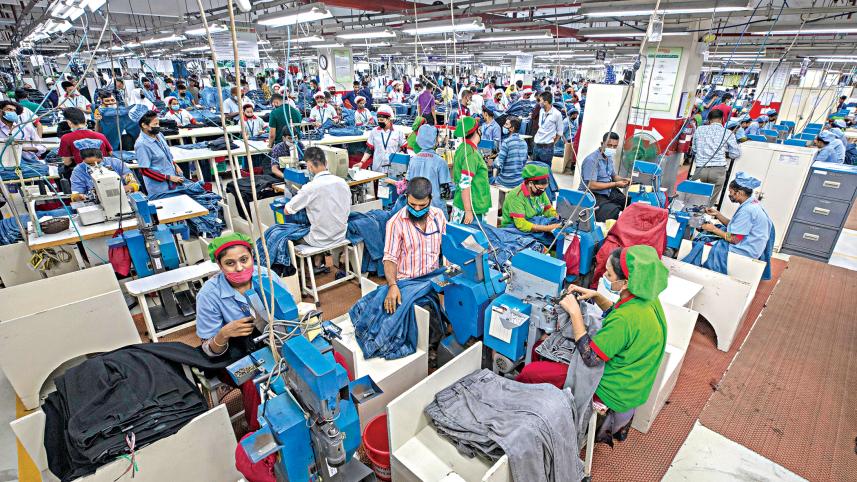
Garment factories must raise awareness about public health and hygiene issues and adopt preventive measures and best practices to improve wellness of the workforce, said speakers at a discussion recently.
This will also ensure workers' health and safety, improve productivity, maintain sustainable growth of the industry, and prepare for any unforeseen health disaster or pandemic, they said.

The pandemic had a devasting effect on garment factories and workers for a lack of basic understanding and knowledge of hygiene and practices, said a recent survey by social enterprise AYAT Education and public health service provider Integral Global (IG).
Conducted in eight small and large factories in Dhaka, the survey showed that despite a successful vaccination drive, many workers and their families remain vulnerable to major respiratory illnesses and other communicable diseases.
This is concerning as, according to the Bangladesh Garment Manufacturers and Exporters Association (BGMEA), approximately 4 million workers, some 65 per cent of whom were women, are employed in more than 2,200 factories around the country.
Moreover, the industry plays a pivotal role in developing Bangladesh's economy, with almost 80 per cent of the country's total export earnings coming from this sector.
The discussion emphasised strengthening wellness and productivity relations among garment workers while controlling the spread of respiratory illness and Covid-19 across factories and communities.
AYAT Education, the IG and the BGMEA organised the roundtable on the "Impact of Wellness on Workforce Productivity" at The Westin Dhaka last week.
The discussants included Lokman Hossain Miah, executive chairman of Bangladesh Investment Development Authority, Winnie Estrup Petersen, ambassador of Denmark to Bangladesh, Faruque Hassan, president of the BGMEA, Nabil Ahmed, founder and director of the IG, and Nusrat Aman, CEO of AYAT Education.
 For all latest news, follow The Daily Star's Google News channel.
Comments