


Proper use of credit guarantee scheme vital for CMSME revival
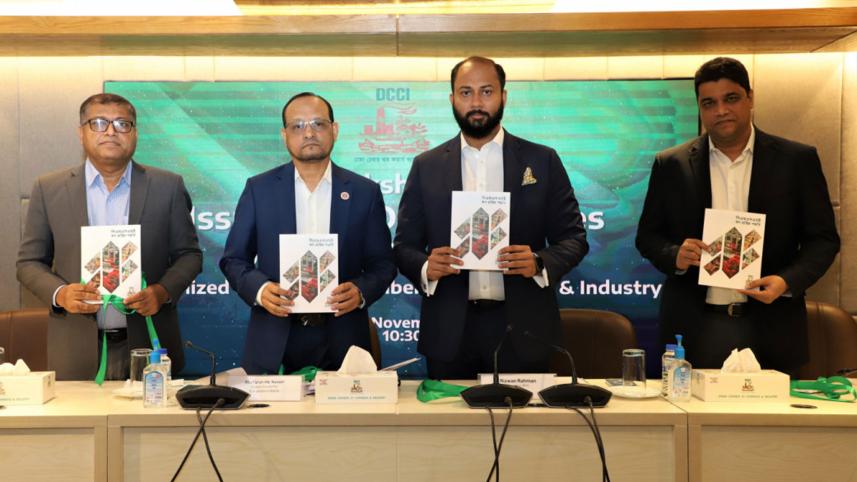
Proper utilisation of the credit guarantee scheme is needed for the revival of cottage, micro, small and medium enterprises (CMSMEs), said Bangladesh Bank Deputy Governor Abu Farah Md Nasser yesterday.
He made the comments at a workshop titled "Issues and Opportunities of CMSME Lending" organised by the Dhaka Chamber of Commerce & Industry (DCCI), according to a press release.

The BB has created a fund of Tk 2,000 crore as a credit guarantee scheme with a view to giving collateral-free loans, especially to CMSMEs. But of the sum, only Tk 192 crore has been disbursed as of yesterday.
"This is disappointing," said Nasser.
According to the deputy governor, in order to reach out CMSMEs, banks should think of establishing more sub-branches rather than agent banking outlets. "This is because setting up sub-branches help cut extra administrative costs."
The deputy governor said the manufacturing and service sectors should get priority in getting loans to control inflation, considering the global scenario.
He urged experts to think about developing an online marketplace and using blockchain to develop an alternative to the traditional loan system.
The central bank identified 19 clusters and Nasser urged banks to give CMSME loans under the clusters.
DCCI President Rizwan Rahman said the CMSME sector plays an important role in helping the economy grow but due to a lack of policy and financial support, "we can't fully utilise this sector."
"Commercial banks and financial institutions sometimes feel reluctant in giving out loans to CMSMEs."
As of 2022, some 73.77 per cent of the stimulus package of Tk 14,746 crore has been disbursed but most of the sum went to medium enterprises.
"Regulators should give CMSMEs more access to information and communication technology and financial assistance so that they can have the ability to manufacture a lot and competitiveness in the supply chain," said Rahman.
In Bangladesh, there are more than 7.8 million CMSMEs.
Their contribution to the gross domestic product is 25 per cent now, and in 2024, it will be around 32 per cent and will reach 40 per cent by 2027, according to Md Jaker Hossain, director of the SME and Special Programmes Department of the BB, while presenting a paper.
"So, there is no scope of growth without CMSMEs."
If an entrepreneur seeks a loan under the stipulated threshold with proper papers, banks have no choice but to sanction the loan, he said, adding that the central bank plans to disburse 50 per cent of the total loan to cottage, micro and small industries and at least 15 per cent to women-run CMSMEs.
"Only banks are not sufficient to ensure loans for CMSMEs. We may utilise the alternative capacity of microfinance institutions, the NGO Foundation, Karmasangsthan Bank, the BSCIC, and the SME Foundation," said Md Nazeem Satter, general manager of the SME Foundation, while making a presentation.
"Both banks and clients have to be responsible for a successful loan agreement. Banks should be proactive and clients should be ready with all necessary documents."
He said there are more than 10,000 branches of banks and if the country can utilise them, there will be no need for a specialised bank for SMEs.
"We need to go for target financing to create an ecosystem."
 For all latest news, follow The Daily Star's Google News channel.
Comments