


Proactive action plan needed to cure labour market woes: expert
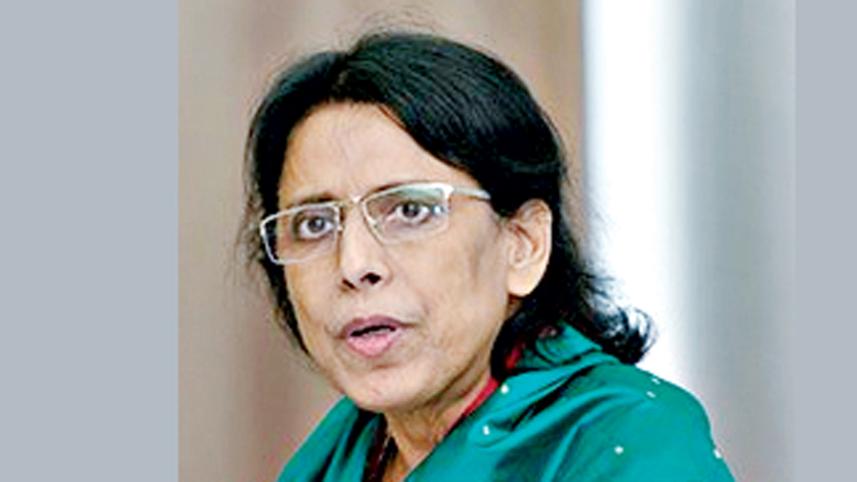
A proactive action plan, incorporating demand-driven training, apprenticeships for youth, and strategies to foster entrepreneurship, must be adopted to address the severity of unemployment, wage disparity, and gender inequality, said a top expert on labour markets and employment.
Labour-intensive sectors must be expanded through macroeconomic strategies, integrating modern agricultural technology to introduce high-value products, and structured training programmes to foster youth entrepreneurship and employment, said Rushidan Islam Rahman, a former research director at the Bangladesh Institute of Development Studies (BIDS).

She said job creation should prioritise high productivity and earnings. Otherwise, the pace of rising inequality cannot be curbed, she added.
Rushidan was speaking on the topic of unemployment and inequality in Bangladesh's labour market and the prospects of a transformation during the "Economics and Social Thought Lecture Series - 4".
The event was organised by the Bangladesh Institute of Labour Studies (BILS) and Banglar Pathshala Foundation at Dhaka University's RC Majumdar Auditorium yesterday.
To ensure labour rights across both regulated and unregulated sectors, oversight must be strengthened and government agencies must be equipped with the necessary capacity.
Now is the time to assess the demand for skilled labour in migrant employment and align training programmes accordingly, said Rushidan
She said these strategies have been discussed before, but turning them into reality requires swift, sincere, and corruption-free action.
"What we need now is a renewed national awakening -- an awareness that productive employment and proper preparation are essential for nation-building," she said.
She added that this movement must engage all stakeholders, including the workforce, unemployed youth, the government, NGOs, private entrepreneurs, educators, and business leaders.
Despite a declining unemployment rate, the number of jobless young men (15–29) in Bangladesh, neither in education nor training, doubled from 8 percent in 2017 to 16 percent in 2022, posing a crisis, she stressed.
With 28 unemployed young men and 25 women per village, inadequate employment could lead to despair and instability.
Rushidan said sectoral employment distribution shows a decline in men's participation in agriculture, as expected, but a rise among women. This surge has led to an 8 percent drop in per-worker agricultural productivity from 2016–17 to 2022.
Meanwhile, women's participation in industry has declined, despite rising productivity, signalling a sharp deterioration in job quality for women.
AHM Shafiquzzaman, secretary to labour and employment, Mahfuzul Haque, a member of the interim government's Labour Reform Commission, SM Zulfiqar Ali, research director at BIDS, Aziza Rahman, deputy director of the Bangladesh Bureau of Statistics, Syed Sultan Uddin Ahmed, executive director of BILS and head of the Labour Reform Commission, also spoke.
Ahmed Javed Chowdhury, an assistant professor at City University, moderated the event.
 For all latest news, follow The Daily Star's Google News channel.


Comments