

The unfinished promise of July in the Chittagong Hill Tracts

Following the August 2024 uprising, every peace-loving citizen of the country hoped for radical change at all levels of state governance. There was an expectation that corruption, nepotism, partisan bias, and red-tape within the administration would be reduced; that party-backed musclemen would be stopped from capturing large domestic and foreign project contracts; and that national development sectors would see fair and balanced distribution. Law and order were expected to improve, with extortion, snatching, robbery, and the menace of local thugs curtailed.
Yet, even after the political change in August, over the past year we have observed quite the opposite: corruption, snatching, extortion, muscle power, mob violence, and fundamentalism have surged alarmingly. Incidents of rape, abuse, harassment, and attacks on women are occurring regularly. Anyone expressing a dissenting opinion is indiscriminately branded a ‘collaborator of fascism’ and attacked—sometimes even through the creation of violent mobs leading to killings. Attacks on marginalised communities and religious minorities continue in the same fascistic manner as before.
At a time when the world is emphasising environmental protection to combat climate change, we are witnessing politically connected local strongmen, operating right under the nose of the administration, indiscriminately extracting stones at night from natural sites such as Bholaganj in Sylhet, leaving rivers stripped bare of stones. This is happening despite the fact that the Adviser to the Ministry of Environment, Forest and Climate Change in the current interim government, Syeda Rizwana Hasan, is internationally recognised for her long-standing environmental activism. Even while holding one of the highest responsible positions in government, she has been unable to take exemplary action against these forest-destroying, stone-extracting criminals. This inevitably raises the question: is this the return for which so much blood was shed and so many lives were sacrificed during the 2024 uprising? Has the spirit of 2024 faded so quickly, within a year? Those of us who carried the ideals of the 2024 movement—who took to the streets to free the country from a decaying system of governance, or who supported the movement morally—now see our dreams, hopes, and aspirations slipping away. We did not want a society ruled by mob terror in exchange for so much blood and so many lives.
The very purpose of the July 2024 uprising was to free the country and its people from the grip of authoritarianism. It was a movement to restore democracy; to reclaim press freedom and the people’s right to free speech and expression; to regain the right to hold peaceful assemblies to realise legitimate demands; to ensure that no one would be forced to show identity papers arbitrarily or face harassment while moving freely. It envisioned equitable distribution of opportunities and resources based on equality rather than discrimination, and the building of an inclusive state where all communities—regardless of ethnicity, religion, or race—would be partners in national development.
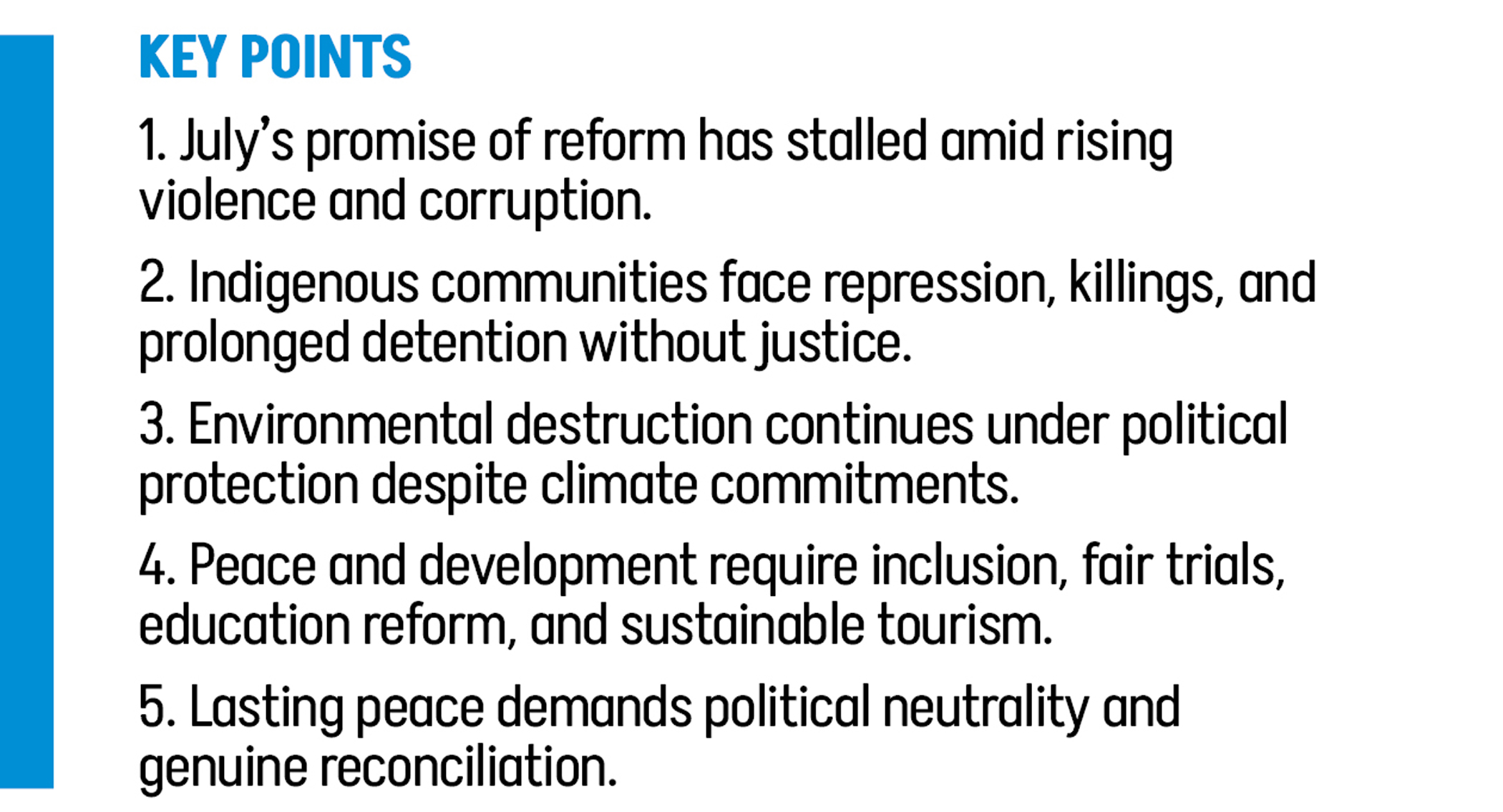
Regrettably, as days pass, the discrimination-free spirit of July is being steadily undermined. The first major blow to this drifting spirit came with the consecutive communal attacks in Khagrachhari and Rangamati in September 2024. These incidents left five people dead and caused extensive damage to homes, shops, business establishments, and the offices of the Chittagong Hill Tracts Regional Council through arson and attacks. Exactly one year later, in September 2025, violence erupted again in Guimara, Khagrachhari, where three Indigenous people were killed. This violence occurred during a road blockade protesting the gang rape of an Indigenous schoolgirl.
In recent times, attacks and arson at the offices of Prothom Alo and The Daily Star, as well as vandalism and attacks on Chhayanaut—one of the foremost institutions of Bengali culture—clearly demonstrate that the spirit of July has reached its lowest point.
Many of us are also aware, to varying degrees, of the repression faced by the Bawm community in Bandarban. Following the bank robbery organised by the Kuki-Chin National Front (KNF) in Ruma and Thanchi in April 2024, widespread repressive state actions were launched against the Bawm people. Even after the July uprising, the Bawm community has not been spared from this repression. In the name of counter-terrorism and on allegations linked to the bank robbery, innocent villagers—including women and children—have been detained and kept in prison without trial for nearly twenty months. During this period, two detainees have died in custody due to a lack of proper medical treatment, while another died on the way home to Bandarban from Chattogram Medical College Hospital after being granted bail in critical condition.
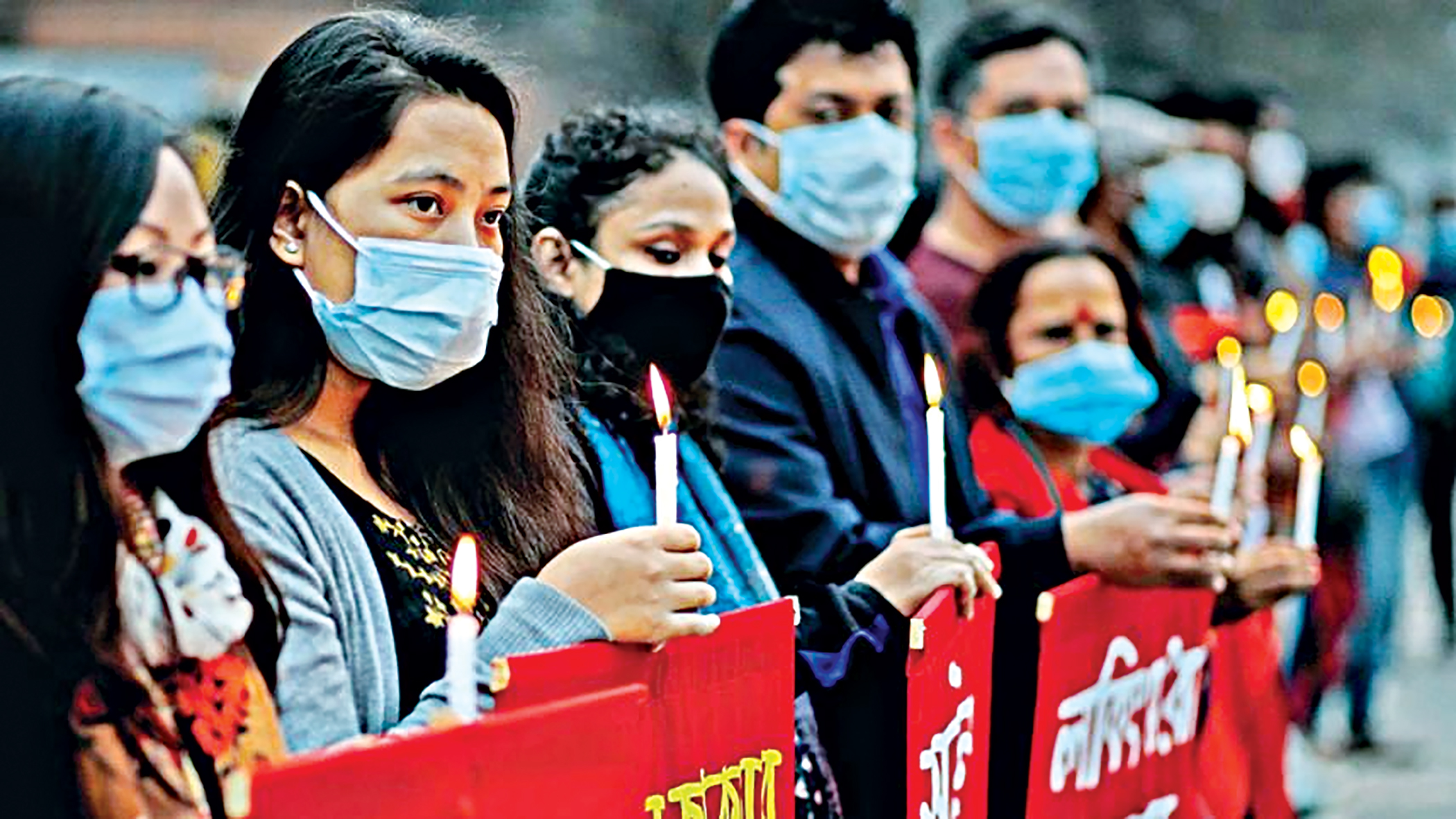
Despite repeated appeals by human rights activists and organisations to senior figures in the current interim government regarding these inhumane actions against the Bawm community, no meaningful response or initiative has been taken—apparently for some inexplicable reason. The only progress so far has been the release on bail of two Bawm women, one of whom is a minor. We, too, want those genuinely involved in the bank robbery to be brought under the law and punished. However, collective punishment of an entire community in connection with this incident must end immediately, and the right to a fair trial for innocent Bawm villagers detained in prison must be ensured. If the right to justice continues to be denied as it has in the past, who can guarantee that the entrenched culture of impunity in the Chittagong Hill Tracts will not one day engulf the entire country? We firmly believe that no development can be sustainable without representation and participation of all ethnic communities in the country’s overall progress. Mere cosmetic gloss can never produce lasting sustainability.
The tourism industry can create immense opportunities for the Chittagong Hill Tracts. However, for tourism to develop and expand in the region, special attention must also be paid to protecting its environment and ecology. In the name of tourism and driven purely by the lure of profit, the indiscriminate cutting of hills, destruction of forests, and construction of resorts must be stopped immediately. The growth of tourism must take place in a manner that respects ecological balance as well as the customs, values, and culture of the local communities.
If the hills are to be truly enlightened, the educational environment in the region must be made more creative and vibrant. Policy formulation alone is not enough. Taking into account the socio-economic and geographical realities of the hills, the education system of the three hill districts must be comprehensively restructured. The quality of teaching must be improved, and incentives, allowances, and facilities aligned with the demands of the present time must be expanded for teachers.
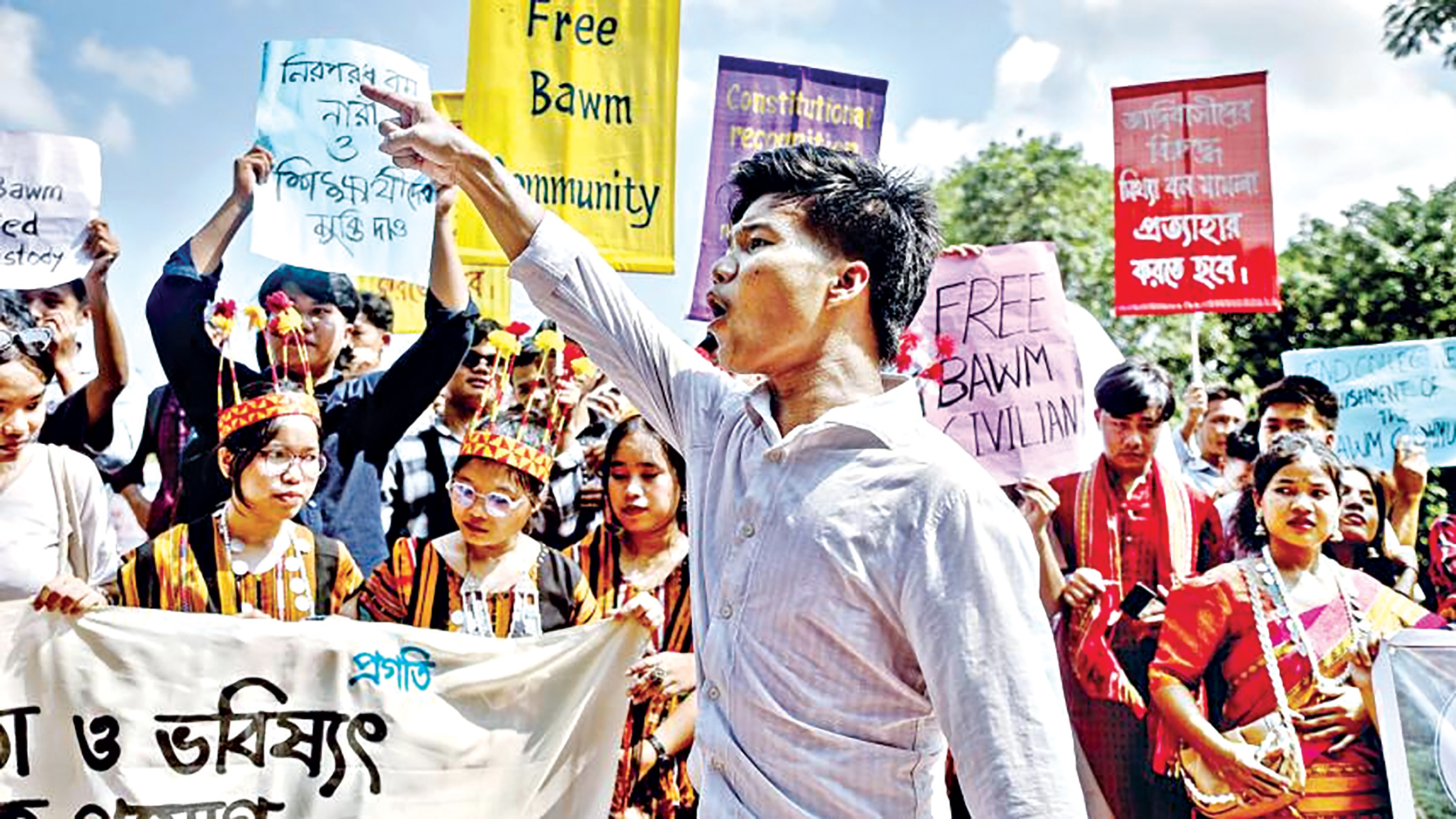
The thirteenth national parliamentary election is drawing near. While there is no shortage of enthusiasm, excitement, and curiosity among the general public surrounding the election, there is also a deep sense of apprehension and anxiety. Across the three hill districts, there are many remote and inaccessible areas with no motorable roads, no civic amenities, and no access to proper healthcare or education—yet people have lived in these areas for generations. Many residents of these regions are registered voters but are deprived of their right to vote due to communication constraints. Others remain poorly informed about who the electoral contenders are, simply because of the region’s remoteness. Therefore, priority must be given to the balanced development of these remote areas and to addressing the deprivation faced by disadvantaged communities.
Our demand is clear: the election manifestos of all parties participating in the thirteenth national election must include explicit commitments to these marginalised and deprived populations. It is essential for voters to know what candidates and their parties envision for establishing lasting peace in the Chittagong Hill Tracts, as voters’ choices will ultimately depend on these pledges. In the past, political parties may have succeeded in keeping voters pacified with false assurances, but this time voters are far more aware. There is no scope left to treat them as naïve or ignorant. In the age of technology, voters can easily assess the past records of each candidate and possess the discernment to judge who is truly qualified. The days of ballot rigging or manipulating voters into casting their votes are over. Voters will exercise their precious franchise guided by reason and judgement, in the interest of regional development and lasting peace.
Finally, regardless of which party comes to power, as residents of the hills our expectation is that the elected government must come forward with an inclusive and generous outlook to restore lasting peace in the Chittagong Hill Tracts and rebuild harmony between hill communities and Bengalis, creating a shared space of trust and a smooth path forward for all.
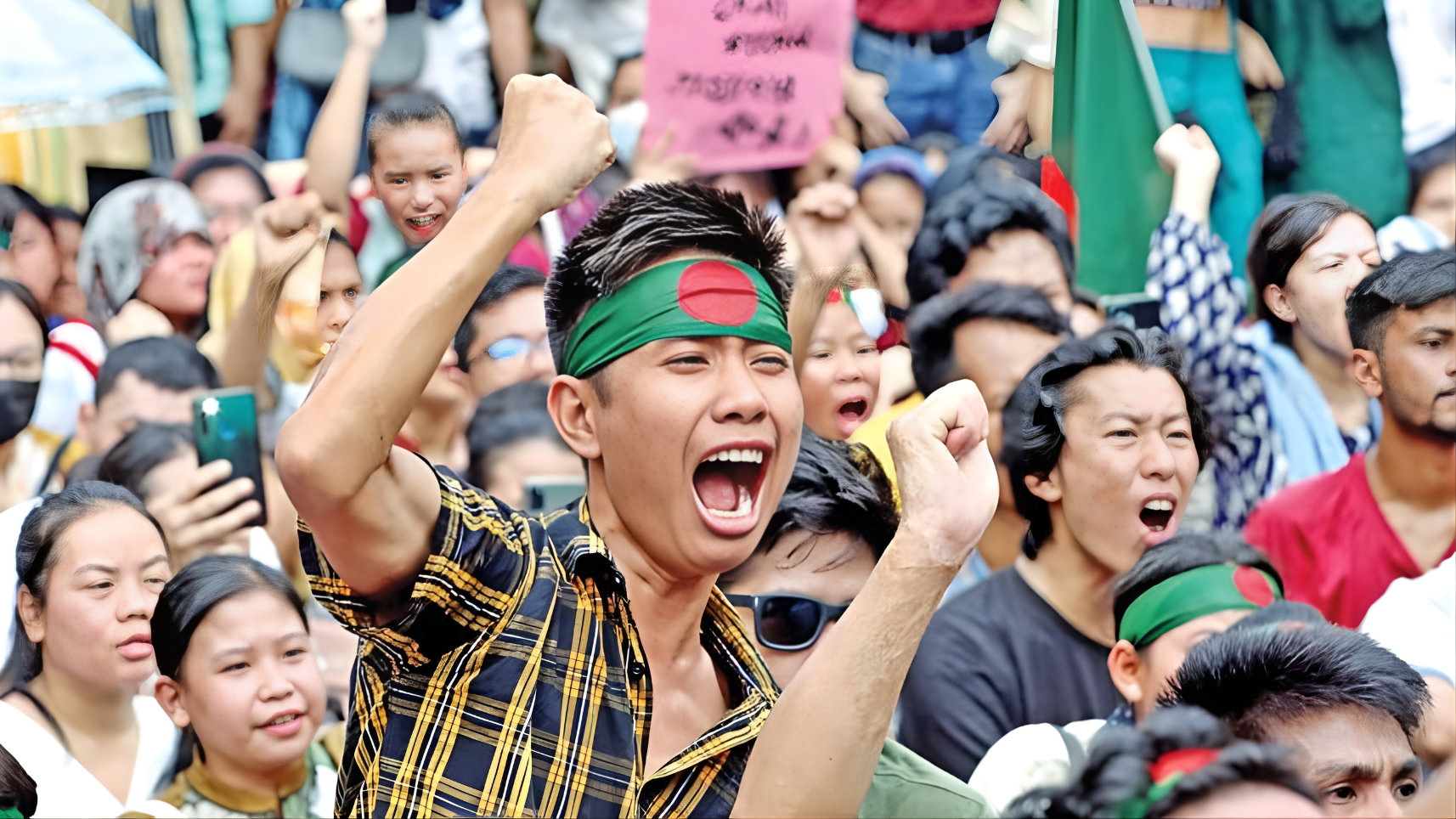
The Chittagong Hill Tracts issue is a long-standing political problem and must not be treated lightly. Achieving lasting peace in the hills requires not only the efforts of the elected government, but also the collective engagement of all political parties, social institutions, and individuals, irrespective of party affiliation. The law enforcement and security forces—key actors in the hills—must also play a special role in restoring peace by maintaining strict neutrality. The armed forces and law enforcement agencies have earned global recognition for their exemplary service in peacekeeping missions around the world. If unrest prevails within our own country, that shame and failure will not belong to those forces alone—it will be a stain on the entire nation.
Through the July uprising, we sought to bring change to a long-decayed system. The people of the country responded to that call for transformation. Therefore, we must uphold the spirit of July 2024 and build a discrimination-free nation. Losing the spirit of July would mean pushing the country further backwards. Learning from history, we must become more flexible, patient, and generous in outlook.
In conclusion, we must change our perspective. Change must begin with ourselves. If I change, the country will change automatically.
The article has been translated by Samia Huda.
Ilira Dewan, Human rights activist and a former member of the Local Government Reform Commission.
Send your articles for Slow Reads to slowreads@thedailystar.net. Check out our submission guidelines for details.