


Potential of Blue Economy remains largely untapped
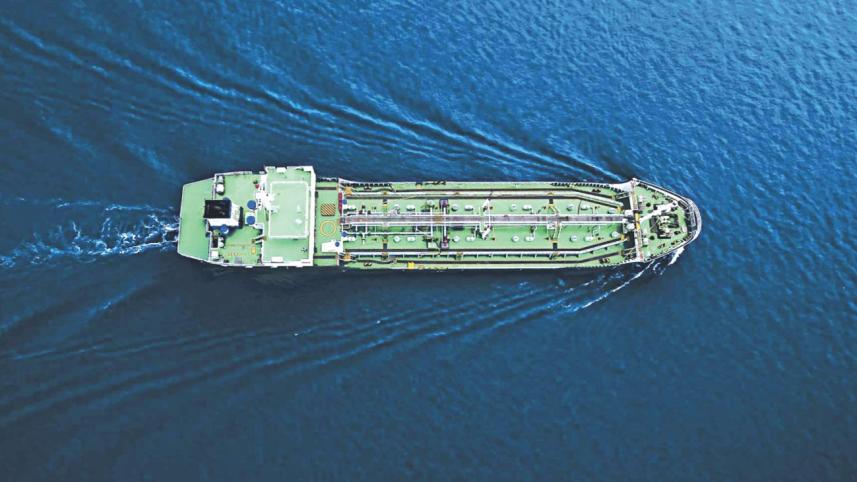
Bangladesh is equipped to catch fish at a maximum depth of 100 metres, or within just 60 square kilometres off the coast of the Bay of Bengal, where the country has exclusive rights to about 118,813 square kilometres.
As such, Bangladesh's share in global fish production is limited to only 2.6 per cent.

And despite having a seaside frontier, there is still a huge amount of offshore oil and gas that remains just out of reach.
Although several plans have been taken in this regard, none of them have come to light.
In contrast, Myanmar has already started to extract mineral resources from near Bangladesh's sea block.
Khurshed Alam, secretary of the maritime affairs unit at the Ministry of Foreign Affairs, highlighted these issues while presenting the keynote paper during a workshop at the office of the Federation of Bangladesh Chambers of Commerce & Industry (FBCCI) yesterday.
The country's apex trade body and the Bangladesh Investment Development Authority (BIDA) jointly organised the workshop, styled "Blue Economy and Course of Actions".
"Not only for fish or mineral resources, rather the ocean economy which relates to all ocean-based industries may change the whole picture of Bangladesh's economy," Alam said.
By utilising marine resources, industries in Bangladesh such as tourism, shipbuilding and breaking, deep sea fishing, medicine, and cosmetics could be developed further.
The oceanic economic zone of Bangladesh is equal to 81 per cent of its mainland.
"There are 1.5 lakh ships transporting goods through ocean ways all over the world in an industry worth around $9 billion dollars but Bangladesh only owns 70 seafaring vessels," he added.
The "Blue Economy" is a new potential sector for investment in Bangladesh, according to Salman F Rahman, private industry and investment adviser to the prime minister.
"It is possible to export billions of dollars from this sector in the next few years," he said.
Rahman advised the FBCCI and BIDA to work together to find out why progress in the once emerging industry of shipbuilding has slowed and to fix the policy strategy.
"Along with the plan to utilise the marine economy, the policy of conservation of these resources should also be adopted," said AKM Enamul Hoque Shameem, deputy minister for water resources.
"An international investment conference is going to be held on November 26-29 and the Blue Economy will be discussed separately at that conference," said Sirajul Islam, executive chairman of BIDA.
The maritime economy could play an effective role in attracting foreign investment and creating employment after Bangladesh graduates from the UN's least developed grouping in 2026 as well.
"The FBCCI will submit recommendations to the government to determine sector-based strategies on issues discussed at the workshop," said Jashim Uddin, president of the FBCCI.
"There is no disagreement about the potential of this sector but still, there are no plans," said Khandaker Golam Moazzem, panel adviser of the FBCCI.
"There are also doubts about who is the guardian of this sector so instead of different ministries working separately, if BIDA takes charge, quick benefits could be obtained," Moazzem added.
 For all latest news, follow The Daily Star's Google News channel.
 The growth of the world economy in the next 10 to 20 years will be blue economy-centric, according to AK Enamul Haque, a professor at East West University.
He called for investment in tourism, shipbuilding, shipbreaking, fishing, ports and maritime equipment to harness the Blue Economy.
However, he urged to eliminate policy discrimination between foreign and local entrepreneurs.
Comments