


Pharma sector faces supply risks amid Iran war fallout
Bangladesh’s pharmaceutical industry is facing mounting pressure as the ongoing US-Israel war on Iran disrupts global supply chains, threatening the availability of raw materials, pushing up freight costs and raising concerns over production stability.
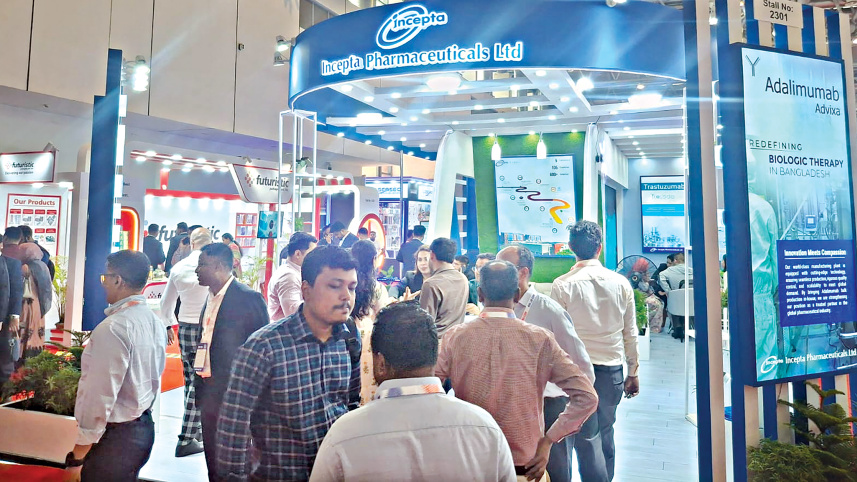
The issue was highlighted at the inaugural session of the 17th Asia Pharma Expo 2026 and Asia Lab Expo 2026, held at the Bangladesh-China Friendship Exhibition Center in Dhaka’s Purbachal yesterday.

Health Minister Sardar Md Sakhawat Hossain, who inaugurated the three-day exposition as the chief guest, said the government is closely monitoring the evolving situation and stressed that ensuring access to quality medicines remains a top priority.
He also reiterated a zero-tolerance stance on corruption and irregularities in the sector.
Industry leaders said the Gulf region unrest has already started to affect the import of active pharmaceutical ingredients (APIs) and other essential inputs, many of which rely on complex shipping routes through the Middle East.
“The war has disrupted logistics, increased freight costs and caused shipment delays,” said Abdul Muktadir, president of the Bangladesh Association of Pharmaceutical Industries (BAPI).
“Rerouting of sea and air cargo is making imports more expensive and unpredictable.”
The disruption is particularly significant for Bangladesh, which remains heavily dependent on imported raw materials despite its strong domestic manufacturing base. Prolonged instability could drive up production costs and put pressure on medicine prices in the coming months, industry insiders said.
According to BAPI, the industry now meets nearly 98 percent of domestic demand and exports medicines to more than 120 countries, reflecting steady expansion over the past decade.
Bangladesh currently exports around $300 million worth of medicines annually and is emerging as a growing player in the global pharmaceutical market.
However, sustaining this momentum will depend on the sector’s ability to navigate external shocks and ensure an uninterrupted supply of inputs.
Muktadir stressed the urgency of accelerating the development of a domestic API industry to reduce reliance on imports.
“The current situation highlights our vulnerability. Policy support is essential to strengthen local capacity,” he said.
He warned that if the conflict persists, rising freight costs and supply uncertainties could erode profit margins and disrupt production cycles, with smaller manufacturers likely to face greater pressure.
Despite the challenges, Bangladesh has so far managed to keep medicine prices relatively lower than in neighbouring countries, supported by strong local production and regulatory oversight, he added.
Md Shameem Haidar, director general of the Directorate General of Drug Administration, said the industry continues to maintain quality and effectiveness, although global disruptions pose new risks.
Industry insiders estimate the market size has already exceeded $3.5 billion, which could surpass $6 billion by 2026, driven by annual growth of 15 to 18 percent.
However, they cautioned that geopolitical tensions could test the sector’s resilience in the near term.
 For all latest news, follow The Daily Star's Google News channel.
Comments