


No food grain export ban, extend TRIPS waiver

Bangladesh has once again called upon nations not to put any restrictions on their food grain exports and sought the continuation of its TRIPS waiver until December 31, 2032, to save the lives of people and newborns.
The current food crisis can lead to a serious nutrition deficiency for people, especially newborns, according to global leaders.

Financially insolvent consumers cannot afford to buy expensive imported food items from their respective markets because of export bans, said Commerce Minister Tipu Munshi.
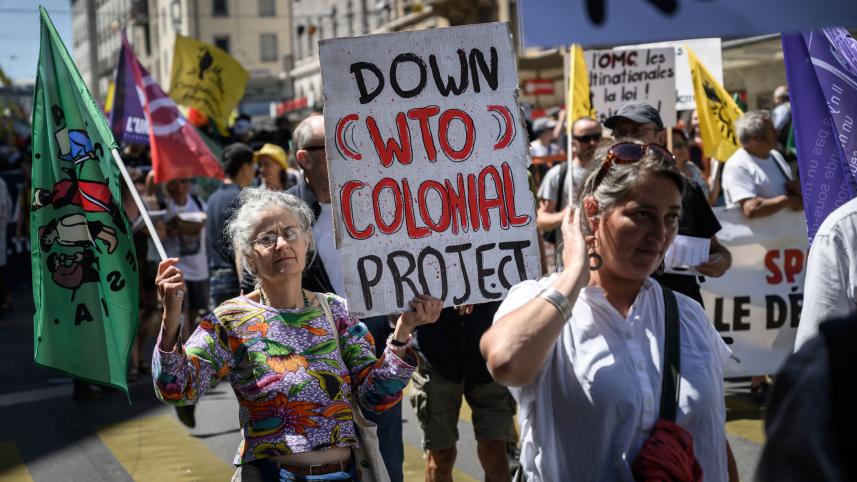
He was talking to journalists at a briefing after a discussion on emergency responses to the food crisis on the second day of the 12th Ministerial Conference of the World Trade Organisation (WTO) in Geneva of Switzerland.
The Russia-Ukraine war has been having serious impacts on the global food supply chain, with some of the major producing nations either stockpiling or imposing export bans to fortify their own stocks for the future. As a result, prices of food items have already skyrocketed in many countries.
For instance, Indonesia had recently put a ban on palm oil exports, although it was later lifted.
Every year two million newborns, alongside 30,000 born to Rohingya parents, are added to the current population of Bangladesh.
So, feeding such a huge population and maintaining the nutritional standards will be difficult if prices of food items go up due to any sudden food grain export ban by the major producing countries.
The minister also demanded that global leaders extend the Trade-Related Aspects of Intellectual Property Rights (TRIPS) waiver for Bangladesh so that the country could prepare for the production of generic medicine.
The WTO has provided the TRIPS waiver to the least-developed countries (LDCs) up to December 2032.
Bangladesh will be excluded from the TRIPS beneficiary list once it makes the United Nations status graduation to a developing country on November 24, 2026.
Tipu Munshi also said Singapore had expressed interest in signing a free trade agreement with Bangladesh.
Moreover, Nepal also demanded duty benefits on the export of some goods to Bangladesh and the activation of a motor vehicle agreement for smooth movement of people among nations of the South Asian Association for Regional Cooperation, the minister said.
He held meetings with both Singapore and Nepal on the sidelines of the conference.
Mustafizur Rahman, a distinguished fellow of the Centre for Policy Dialogue, said the US is arguing for country-specific trade benefits for the graduating countries.
"However, this might not be beneficial for graduating countries like Bangladesh. Here further negotiation is necessary for a conclusion to be reached by the LDCs, including the ones scheduled to graduate," he said.
The LDCs need to form a working group for negotiating the extension, whether it is for six or nine years, he added.
However, Bangladesh should also hold negotiations for availing the trade benefits as a developing country because of the factors amidst which it is graduating, said Rahman.
The TRIPS is very important this year because of the fallout of the Covid-19. The global leaders may reach a consensus on doing away with the need to have licences for vaccine production by countries as this was a very vital health item.
Md Jashim Uddin, president of the Federation of Bangladesh Chambers of Commerce and Industry, said the private sector of Bangladesh also wants the extension of the TRIPS waiver for the growth of the pharmaceutical industry.
 For all latest news, follow The Daily Star's Google News channel.
 Tapan Kanti Ghosh, senior secretary to the commerce ministry, and Hafizur Rahman, director-general of the WTO Cell of the commerce ministry, were also present at the press conference.
Comments