


Mend politics to recover from downturn

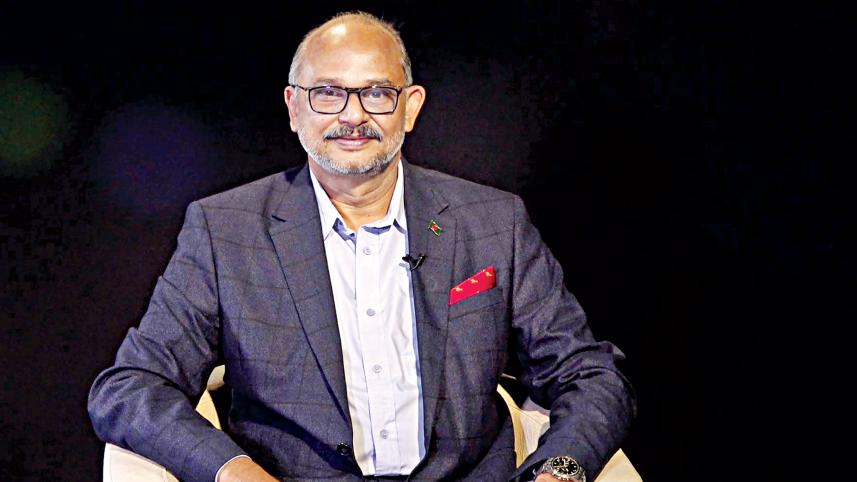
Bangladesh's economy is facing a tough time owing to depleting foreign exchange reserves and persistently higher inflation. Meanwhile, the tension surrounding the upcoming national election has brought about a political crisis that has added further uncertainty to the economic front. Prof Rashed Al Mahmud Titumir, chairman of the development studies department at the University of Dhaka, talked about the root causes of the current woes and remedies during an interview with The Daily Star's senior reporter Ahsan Habib.
DS: What are the factors behind the current economic pressure? Why has the government had to turn to the International Monetary Fund (IMF) for loans?

Prof Titumir: Bangladesh's economy is going through a rough patch. High inflationary pressure, dwindling foreign exchange reserves and low revenue collection are causing the economic slowdown. Owing to escalating prices, the economic security is at higher risk.
The government is faced with mounting shortages of cash and swelling debts in local and foreign currencies. The macroeconomic instability might worsen further if the policymaking follows the unfortunate business-as-usual pathway.
The overall balance slipped to the negative territory for the first time from a surplus. And this was before the Russian invasion of Ukraine. Without any visible action on illicit outflows, the same was observed when it comes to exports. The receipts were 22 percent lower than the shipment value in the last fiscal year.
The unrealised export value was twice the amount recorded in 2021-22 and six times higher than that of 2019-20. Had any forensic audit been carried out mis-invoicing, today's precarity would not have arisen.
The deficit in the financial account of the Balance of Payments has been surging on the account of debt servicing. As a result, the decline in reserves may not stop in the near future.
As the supply of foreign currencies is scarce, the sharp depreciation of the local currency pushed up the cost of imports. Simultaneously, the government has been forced to raise the prices of gas, electricity and petroleum products, stoking inflation further. It is affecting irrigation and agricultural inputs as well as impacting transportation costs, amongst others, which, in turn, have resulted in a spike in retail prices. The small, medium and cottage industries, the largest employer in Bangladesh, have been hit hard.
The government has signed an agreement with the IMF to take a loan of $4.7 billion in order to revive the economy. There are criticisms about IMF conditionalities. Nevertheless, the reforms prescribed are long overdue and should have been taken up much earlier and carried out in the country's best interest.
To make things worse, particularly in a starved-investment situation, three top global agencies downgraded the country's credit ratings over the last six months. Normally, that is not done when a country is under an IMF programme.
DS: Why is inflation rising in Bangladesh whereas it is falling globally?
Prof Titumir: The scourge of prolonged inflation is falling on everyone, with a disproportionate bearing on fixed-income, low-income, and people living below the poverty line. With real wages dropping amidst the record food inflation in recent memories, a section of the population is sliding into poverty rapidly.
The cost of daily necessities from potatoes to onions to eggs and chilies are escalating cyclically while neighbouring countries are witnessing a consistent fall in prices.
The difference between wholesale and retail rates is noticeable, crediting to the allegation that the entire market system is held hostage to rentier syndicates. As a result, large wholesalers or importers are bagging exorbitant profits. The farmers, directly involved in production, remain at bay while intermediaries are cashing in on the crisis.
Central banks are traditionally supposed to reduce the money supply when inflation inches upward. But Bangladesh Bank is playing a major role in fuelling inflation by printing a record amount of money to keep the government afloat.
The central bank has raised the rate of interest, which might not by itself cool off inflation due to the non-stop depreciation of the taka, inadequate foreign currencies at banks, restricted imports, higher energy prices and their cascading effects on associated sectors.
If the current sluggish monetary and fiscal policy regime lingers, inflation will unfortunately remain unabated, adversely hurting most of the population and slipping the stressed economy further into extreme vulnerability.
DS: Tell me about the reasons for a low tax-to-GDP ratio in Bangladesh.
Prof Titumir: Bangladesh's ratio of tax-gross domestic product (GDP) is lower than any other country in South Asia, except the war-torn Afghanistan. The ratio is decreasing gradually.
The recent central bank-driven belt-tightening measures linked to imports have led to a decline in trade-related taxes, which normally account for almost one-third of total receipts.
 For all latest news, follow The Daily Star's Google News channel.
 Income tax collection also weakened because of lesser economic activities by firms. The consumption-based tax, known as VAT, has witnessed a sloth increase due to slackening private consumption and the paltry increase was mostly due to inflation.
In every case, people and institutions are suffering mainly due to a politically driven patronage system. For example, there are collusive contracts through capacity charges, the payments made to power plants throughout the year, whether they are in operation or not.
A Tk 1.05 lakh crore capacity charge in the past 14 years aggravated government borrowing and lowered the scope for financing social development. And there is a huge concentration, and only three companies are amassing one-third of the perks.
DS: The government has taken many infrastructural projects. Can you give us a cost-benefit analysis of them?
Prof Titumir: The so-called narrative of development has become questionable. Roads are being constructed but traffic jams are increasing at the same time.
The cost of construction is the highest in Bangladesh by any standard. While the electricity generation capacity is increasing, the price is increasing too. Load-shedding continues while the capacity charge is increasing.
Poverty is rising in Dhaka city where spending is the highest. Inequality is widening.
The huge delay and cost overruns of the mega projects are causing a colossal drain, with an economic shock looming as the time for repayment nears.
The government expenditure was estimated to have grown by 14.1 percent in the last fiscal year, driven by a rise in current expenses, primarily owing to a spike in interest payments and salaries. The fiscal discipline is, thus, in shambles.
The revenue shortfall has not allowed the government to provide much-needed assistance to the poor amidst the cost-of-living crisis. The two foundational sectors – education and health - are woefully uncared for and underfunded owing to fiscal squeeze.
Since only the wealthy can afford healthcare and education facilities overseas, the citizenry in general has to cope with their lives limited by the state itself. Yet, those dreams of provision of basics by the state are a million miles away for most citizens.
DS: What should be done to be a developed nation by 2041?
Prof Titumir: Bangladesh has the potential to be a developed nation within 2041 and a trillion-dollar economy within 2033, but such aspiration requires a new political settlement.
In the recent past, Bangladesh was touted as a "development wonder". Now the question arises whether this story of "development wonder" is moving towards a "development disaster"?
A reign of oligarchic clientelism has been established, based on the state's unilateral power of using force. There is a collusion of "money maker" and "rule maker". Thus, the market is not allowed to function as an invisible hand due to the visible hand – power and authority – which is skewed and concentrating every day.
The perennial concern of our politics is that no political party has been able to hand over the power to another political party. Another major concern is that the political parties in power have never ensured accountability for their economic policies.
Bangladesh can solve the problem if we can launch a home-grown political settlement process. To achieve a homegrown solution, dialogue among the political parties is necessary.
Comments