


Inflation hits 16-month high, further spike feared

Highlights
- Inflation hits 16-month high of 9.42 percent
- Rising food prices squeeze low-income families
- Further inflationary spike feared in June
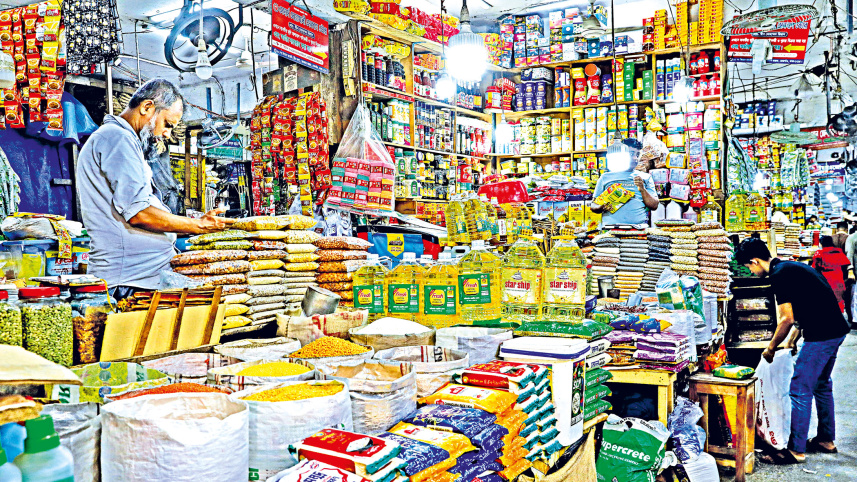
Bangladesh’s overall inflation climbed to a 16-month high of 9.42 percent in May, driven largely by a sharp rise in food prices that is squeezing household budgets, particularly for low- and middle-income families.
According to data released by the Bangladesh Bureau of Statistics (BBS), food inflation rose to 9.06 percent in May from 8.39 percent in April, reflecting higher prices of essential commodities. Non-food inflation also increased, reaching 9.71 percent from 9.57 percent in April.

Rural areas bore the brunt of the rise, with inflation climbing to 9.48 percent from 9.05 percent the previous month. Urban inflation rose from 9.02 percent to 9.25 percent.
A BBS official, speaking on condition of anonymity, said the increase was spread across a range of commodities rather than concentrated in any single category of items.
“It increased in some places and decreased in others. For example, summer vegetable prices have been easing, but year-round and winter vegetables such as tomatoes and carrots are rising again. Egg prices have also gone up,” the official noted.
They added that the full effect of the recent fuel price adjustment had not yet been captured in the May figures, and that a further spike in inflation next month was likely as a result.
Analysts and policy researchers agree that the current trajectory is cause for concern, and that the risks ahead may be greater than the May figures alone suggest.
Ashikur Rahman, principal economist at the Policy Research Institute (PRI) of Bangladesh, said the government was compelled to adjust fuel and electricity prices to tackle the impacts of the US-Israel war on Iran.
It is natural that the impact will eventually spread across the entire supply chain and be reflected in higher prices, he noted.
“What is more concerning is that inflation may rise further in the coming days,” he said, arguing that the financial situation, combined with planned subsidy expansion in the budget, pointed in that direction.
Rahman said judging from the design of the budget, it could no longer be said that the country is pursuing a contractionary monetary policy, since such a policy required a tight fiscal stance alongside a high policy rate.
Instead, he said, the government was moving toward expansionary fiscal policy and a looser monetary environment simultaneously — a combination that carried significant inflation risk.
“If immediate attention is not given to this issue, inflation could rise sharply within a short period,” he cautioned, noting that similar situations have been observed in Pakistan and Sri Lanka.
“When an economy experiences a supply shock, some argue that there is no need for a contractionary monetary policy environment. This view is wrong,” he said. “To bring inflation under control, a tight monetary environment is necessary, accompanied by a correspondingly tight fiscal stance. Unfortunately, we are moving in the opposite direction on both fronts.”
The Centre for Policy Dialogue (CPD) has reached a similar conclusion about the underlying drivers.
In a recent report, the think-tank found that external shocks, including the Covid-19 outbreak, the Russia–Ukraine war, and the Middle East conflict, have exerted significant upward pressure on essential commodity prices in Bangladesh, exposing the economy’s growing vulnerability to international disruptions and their spillover effects on domestic inflation.
Both Rahman and CPD point to structural weaknesses in domestic markets as compounding the problem.
The CPD called for stronger monitoring and regulatory oversight of intermediaries, particularly those who trade in bulks, to curb collusive practices and artificial price manipulation in essential commodity markets.
 For all latest news, follow The Daily Star's Google News channel.
 It also recommended reducing excessive layers of intermediaries in supply chains to narrow the gap between farm-gate and retail prices.
The think-tank also urged the government to maintain strategic reserves of essential food items and release them during supply shocks to stabilise prices. It also recommended strengthening social protection schemes for low-income households in light of recent hikes in cooking gas and transportation costs.
PRI’s Ashikur, meanwhile, noted that with inflation approaching 10 percent, attempting to stimulate growth through expansionary policies was highly risky.
He recommended attracting investment through productivity-enhancing reforms instead, including privatisation of state-owned enterprises, easing of investment and business regulations, and prioritised spending in the energy and logistics sectors.
Comments