


Industries buckle under mounting diesel bills

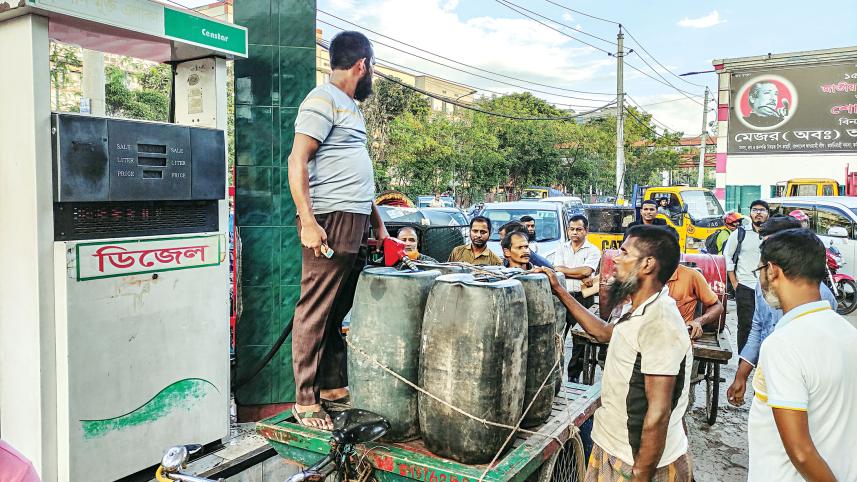
Plummy Fashions, a Narayanganj-based export-oriented knitwear factory, used to spend Tk 65,000 per month on diesel even two months ago. But the same factory now has to consume one month's worth of fuel in a single day owing to rolling blackouts.
The factory is being forced to run the operation with expensive diesel in order to deliver goods on time to its international buyers.

"I don't think about profit now as I have to supply the goods to buyers on time," said Md Fazlul Hoque, managing director of Plummy Fashions.
In Bangladesh, the expenses for diesel-run operations have increased manifold because of regular load-shedding caused by the low pressure of the gas.
It came after the government began putting in place regular load-shedding in July in a bid to cut diesel use since the higher consumption of fuel has stoked an economic crisis in Bangladesh after foreign currency reserves depleted fast for the escalated commodity prices globally.
The US dollar shortage has also forced the country to put the import of liquefied natural gas on hold, affecting the supply of energy to industries.
Since November 2021, the government has hiked the diesel price twice, sending it to Tk 109 per litre from Tk 65 to minimise the subsidy on petroleum products.
"I don't think about profit now as I have to supply the goods to buyers on time," said Md Fazlul Hoque, managing director of Plummy Fashions
As a result, the higher diesel price has emerged as a major concern not only for Plummy Fashions. Rather, it is hurting all factories running on diesel as an alternative to gas and power.
Since output has gone down by half for the energy crisis, industries are desperately looking for alternative sources to keep operating although their profits took a hit amid a 50 per cent spike in the cost of production.
The difficult time emerged at a time when the demand for apparel items is also falling in the western markets for record inflation, fuelled by the Russia-Ukraine war and supply bottlenecks.
"On average, factories have to rely on diesel for 10 hours because of load-shedding," said Faruque Hassan, president of the Bangladesh Garment Manufacturers and Exporters Association.
Mohammad Hatem, executive president of the Bangladesh Knitwear Manufacturers and Exporters Association, says his factory used to consume diesel worth Tk 4 lakh a month. The monthly fuel expenditure has surged to Tk 30 lakh.
"But at the same time, the cost of electricity has not dropped. So, we have to spend more to buy diesel and pay electricity bills."
A factory owner says he used to consume diesel worth Tk 70,000 a month before the energy crisis hit the world and Bangladesh. The fuel now costs him Tk 70,000 per day.
The frequent load-shedding is weighing on the quality of products since workers can't continue seamless production.
Another garment exporter says diesel consumption has been costing him Tk 5 crore per month for the last two months.
"I have forgotten to make a profit as I am struggling to keep my factories up and running," said the exporter, asking not to be named. The factory is sitting on a lot of work orders.
The power supply situation has improved a bit over the last four days as the frequency of load-shedding has declined, according to another major exporter.
This is largely because temperatures are falling all across the country as winter is arriving, driving down the demand for electricity.
 For all latest news, follow The Daily Star's Google News channel.
 One of his factories is using diesel worth Tk 2 crore every month, way higher than Tk 20 lakh he used to spend on diesel bills before the load-shedding kicked in.
"The profit margin has narrowed because of higher diesel consumption," he said.
Comments