


Global clothing retailers should pay more for ‘green’ tag
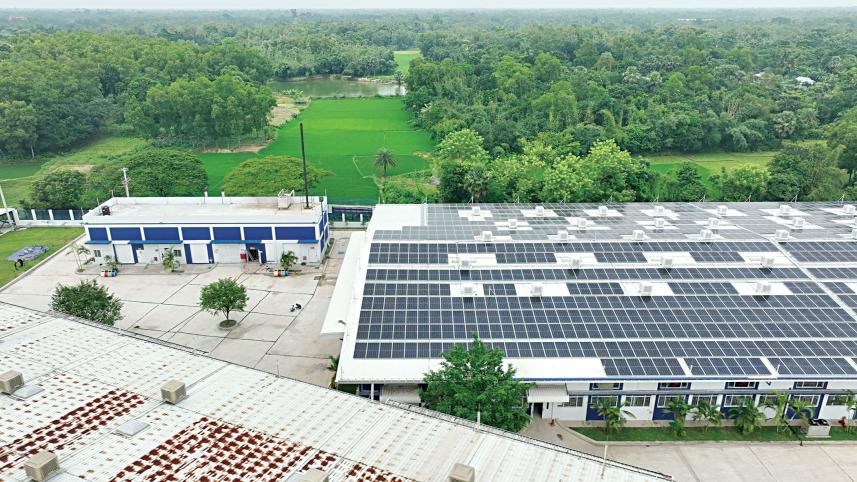
International clothing retailers and brands should pay more for products of local suppliers adopting green initiatives not only for the environment's sake but also for the "green" tag they use to charge customers higher prices, said exporters and experts yesterday.
The local garment manufacturers took it upon themselves to invest millions of US dollars in setting up technologies that reduce water and electricity consumption and reduce pollution, they said. However, they are not getting premium prices, they added.

The international retailers and brands can afford to pay more because end consumers are paying more seeing the tags informing of the green initiatives, said Md Fazlul Hoque, managing director of Narayanganj-based Plummy Fashions.
Hoque also said he was able to reduce water consumption by 42 per cent, carbon emission by 35 per cent and electricity consumption substantially in his green factory.
He kept 50 per cent of the factory premises as an open space as per a requirement of green certifications issued under a Leadership in Energy and Environmental Design building rating system of US Green Building Council.
But the international retailers and brands need to pay more for the green initiative, Hoque told a roundtable on "Greening Bangladesh's Trade" organised by World Bank (WB) at a hotel in Dhaka.
The discussion was on finding ways for trade in services and green trade to become sources of export diversification.
It was participated by representatives from the public and private sectors, chambers of commerce and industries, relevant government agencies, civil society organisations and think tanks, financiers, innovators and entrepreneurs.
Currently the central bank has three financing schemes for green industries – a green transformation fund, green establishment fund and technological upgradation fund, said Ahmed Zubaer Mahbub, joint director of (Sustainable Finance Department) of Bangladesh Bank.
Bangladesh has no time to waste when it comes to starting its green transition to remain internationally competitive, said Nora Dihel, senior economist, macroeconomics and investment, WB.
Reducing tariffs and eliminating non-tariff barriers can help improve access to environment-friendly goods and services through imports, which will play a crucial role, she said.
This is particularly important as Bangladesh is about to make the United Nations status graduation from a least developed to a developing nation, she said.
Several other countries in the region have made significant progress in deepening their trade relations signing new trade agreements, such as Vietnam which is engaging with the EU, she added.
It will be sensible for those adopting green initiatives to demand higher rates, said Zaidi Sattar, chairman of Policy Research Institute.
The government is committed to source 40 per cent of its energy demand from renewable sources by 2041, said Farhina Ahmed, secretary to the Ministry of Environment, Forest and Climate Change. Masrur Reaz, chairman of Policy Exchange Bangladesh, also spoke.
 For all latest news, follow The Daily Star's Google News channel.
Comments